Tongan Student Wins Final William Gearish Award
Vetekina Pau'u is the first Tongan to win the William Gearish Memorial prize and sadly she will also be the last recipient.




 increase font size
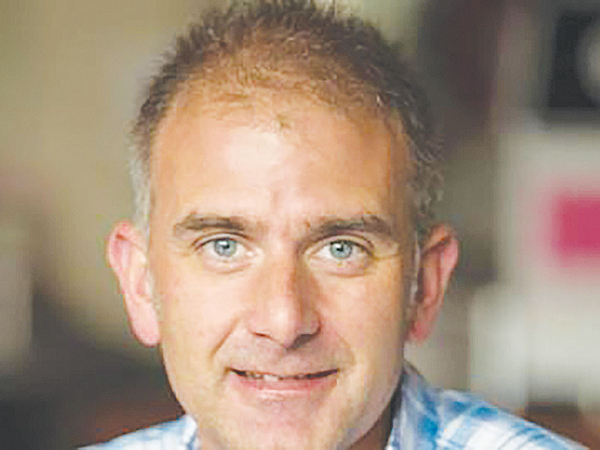 Massey University's Professor Chris Anderson.
With the ongoing chaos caused by Covid, the NZ primary sector needs to develop adaptive strategies if it's to succeed.
That was the message from the director of Massey University's Farmed Landscapes Research Centre (FLRC) Professor Chris Anderson in his opening address to the centre's 34th annual conference. Because of Covid-19 - and in particular Omicron - the conference was staged digitally. However, it still attracted around 170 registrations, which Anderson says was very pleasing.
The theme of 'adaptive strategies for farming' was chosen, Anderson says, because it reflects what is going on right now - with those in the primary sector having to adapt, in some cases almost on a daily basis, to new challenges that arise.
"There is no certainty at the moment and there is huge pressure on the primary production sector through the supply chain, rule changes around fertiliser and water quality - so we have to continually adapt," he told Rural News. "It's not just with our crops anymore, it's our whole systems - so we wanted to highlight that in the workshop."
The sessions covered topics such as climate change, dealing with issues within catchments, the need for specialist people to advise farmers on some of the complex issues and what the options for dealing with greenhouse gas emissions. There were also presentations on soil conservation, new ways to deal with nitrogen and crop solutions to help deal with winter grazing.
There was also a special session devoted to He Waka Eke Noa - the primary sector's proposal on climate change related issues.
Anderson says another objective of this year's workshop was to highlight and celebrate some of the success stories in the primary sector.
"We see ourselves at taking a 'thought leadership' role and providing a platform for people to engage, learn and debate the issues of the day," he says.
Massey's Digital Way
This year, Chris Anderson and his team decided they were going digital, and they wanted to avoid any technical hitches.
So, they engaged a professional company to run that side of the conference, while they focused on the science content of the three-day event.
The event was actually run from a studio in Wellington, with two staff members - Christine Christensen and Lucy Burkitt - directing the 90 speaers participating in the event. Anderson says the system of lining up speakers on the day was essentially no different to what might happen in a normal face-to-face conference.
Speakers were required to send their speeches in before the conference and on the day they were allocated a time they had to log in and present their addresses.
"Once they did that, they were placed in a 'virtual' waiting room and then called on to deliver their respective presentations," he explains. "With that technical support, we had great confidence that we could pull it off and run a professional event that the primary sector deserves."
Anderson says they had no problems getting speakers and the number of these who had to bailout in the end was about normal.
With it being a virtual conference, this saw participants 'cherry pick' the presentations and come on-line for talks they wanted to see and hear. Anderson says he had no problem with this and having an online conference probably worked well for people who could participate from a distance and didn't have to come to Palmerston North. The proceedings were also and these are now available online.
Overall, Anderson says the workshop worked well and delivered an excellent array of ideas and debate on how best to shape the future of the NZ primary sector.
Vetekina Pau'u is the first Tongan to win the William Gearish Memorial prize and sadly she will also be the last recipient.
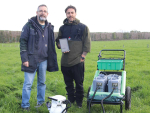
Researchers at Massey University are using a special piece of scientific equipment to improve the measurement of greenhouse gas emissions from pasture soils.
Interest in agritech and production animal systems has prompted Massey University's School of Agriculture and the Environment to new majors to its popular animal science degree.
The industry is crying out for graduates with agricultural related degrees.
A four year trial has reaffirmed that mixing plantain into dairy pastures can help reduce nitrogen losses to freshwater while maintaining milk production and profitability, say researchers.


Federated Farmers has welcomed new rural policies released by ACT, saying they align closely with its own election priorities.

Rural Contractors NZ says proposed changes to land transport rules for agricultural vehicles are a welcome response by the Government to out of date regulations which have seen members hit with huge fines.
Alliance is calling for final applications for its 2027 Graduate Programme, with applications closing on Sunday 25 October.
Decades piloting planes has ensured vet and farmer David Hayes is focused on safety. So, after a serious accident while welding on farm, he is sharing his experience so others can learn from it.
Canterbury milk processor, Synlait Milk has confirmed Leon Fung as its chief executive officer.
OPINION: Making it easier to collect rainwater and use it to grow crops and livestock is a no brainer.



OPINION: The same mainstream media muppets that brought you Jacindamania in 2017 have been flat out pimping for the Opportunities…
OPINION: Your old mate reckons the atrocious way farmers in the UK are treated by their lords and masters in…