McRae Wins Southern South Island B+LNZ Director Vote
Matt McRae, a farmer from Mokoreta in Southland who runs a sheep, beef and dairy support business alongside a sheep stud, has been elected to the Beef +Lamb NZ Board as a farmer director.




 increase font size
Sheep and beef farm input prices rose twice as fast as consumer price inflation in the year to March 2019, says Beef + Lamb New Zealand.
This pushed on-farm inflation to 3%, according to the latest (B+LNZ) Economic Service Sheep and Beef On-Farm Inflation Report.
The report identifies annual changes in the prices of goods and services purchased by New Zealand sheep and beef farms. The overall on-farm inflation rate is determined by weighting the changes in prices for individual input categories by their proportion of total farm expenditure.
B+LNZ Economic Service’s chief economist Andrew Burtt says the biggest three expenditure categories – shearing expenses; fertiliser, lime, and seeds; and council rates – contributed substantially to the 3% percent rate of on-farm inflation.
“Of the 16 input categories, prices were up to some degree in all categories except for weed and pest control – which was down 0.2%,” says Burtt.
The most significant price increases were for shearing expenses (+11.2%); fertiliser, lime, and seeds (+6.2%); and rates (+5.1%). On average these input categories account for a quarter of farm expenditure, and were responsible for nearly 60% of the overall on-farm inflation.
Shearing expenses have also been the biggest increasing expenditure over the last 14 years following the increase in pay rates for shearing contractors by 25%.
“Excluding interest, on-farm inflation was 3.5% – the highest rate since the 2011-12 season,” Burtt says.
“Low interest rates continue to be important because interest expenditure accounts for 14% of total farm expenditure, which makes it the second largest category of sheep and beef farm expenditure.”
In contrast, consumer price inflation, which is measured by the consumer price index (CPI), was up 1.5% in the year to March 2019. Over the last decade, the CPI has increased 6.8% points more than on-farm inflation.
Matt McRae, a farmer from Mokoreta in Southland who runs a sheep, beef and dairy support business alongside a sheep stud, has been elected to the Beef +Lamb NZ Board as a farmer director.
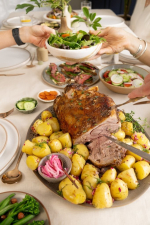
It’s official, lamb will take centre stage on Kiwi Christmas tables this year.
Recent widespread autumn rain will have triggered the germination of subterranean clover seeds, and the resulting seedlings should be allowed to reach the 3–4 trifoliate leaf stage before grazing, says Beef+Lamb NZ.
A Māori-owned agribusiness helping to turn a long-standing animal welfare and waste issue into a high-value protein stream for the dairy and red meat sectors wants more industry support.
The vineyards at Pyramid Farm in Marlborough’s Avon Valley have never been run of the mill, with plantings that follow the natural contours of the land, 250 metres above sea level.
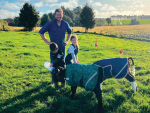

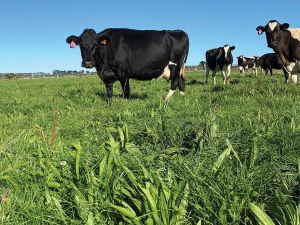
A four year trial has reaffirmed that mixing plantain into dairy pastures can help reduce nitrogen losses to freshwater while maintaining milk production and profitability, say researchers.

Fonterra has opened its upgraded Chengdu Application Centre, bringing New Zealand dairy expertise closer to customers in one of China's fastest-growing regions.
When it comes to annual rebates, it's been a long time between drinks for Ravensdown shareholders.
Special courses for secondary school teachers to help excite kids about agriculture and horticulture are now being run at Massey University.
Running a tight and self-contained ship is the key to the success of the country's largest dairy farmer, says Blair Robinson, the new man at the helm of Dairy Holdings.
Federated Farmers president Colin Hurst and his family raised a glass of milk last week to toast the start of a new addition to their farming operation at Makihihi, south of Timaru.





OPINION: The same mainstream media muppets that brought you Jacindamania in 2017 have been flat out pimping for the Opportunities…
OPINION: Your old mate reckons the atrocious way farmers in the UK are treated by their lords and masters in…