Fonterra FY26 Results: $9.69 Milk Price, $3.4bn Profit
Fonterra has unveiled its annual results for the 2026 financial year, posting $27 billion in revenue and close to $20 billion returned to New Zealand farmer owners and unit holders.




 increase font size
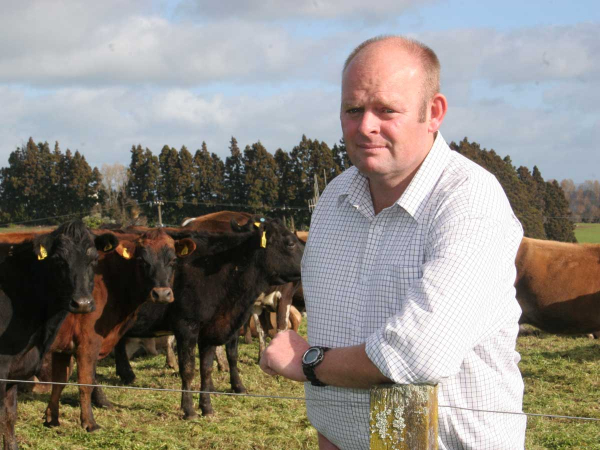 Former Fonterra Co-operative Council chairman Duncan Coull warns that rationalisation will have to occur at some point.
Global food company Olam International is setting up a milk processing plant in South Waikato but there are questions about whether New Zealand dairy needs more stainless steel.
One farmer leader is warning that with NZ milk production flattening, overcapacity could eventually lead to factory closures and pain for rural communities.
Olam International vice president Naval Sabri told Rural News that a formal announcement on the new plant is planned in the coming months.
The Singapore-based conglomerate is no stranger to the NZ dairy industry. Until recently it held a cornerstone stake in NZ's second largest milk processor, Open Country Dairy. It is also a major buyer of dairy products from Fonterra and other processors.
Sabri says Olam has enjoyed a long and successful history in New Zealand through its previous investment in Open Country Dairy.
"There is strong and growing demand from our global customers for high quality, New Zealand dairy products," he says.
"To be able to meet this demand and offer more customised solutions for our customers, we are progressing with plans to directly invest in our own dairy processing facility in New Zealand.
"The plant development is in the early stages and a formal announcement is planned in the coming months.
"Our priority at the moment is to meet with, and listen to, the views of farmers first. This will ensure we deliver on our commitment to develop milk supply partnerships in a way that best meets local needs."
Industry sources say Olam plans to build the factory at Tokoroa and has started recruiting key staff. It will be the second major greenfield dairy project in the Waikato region. Earthworks have started for Happy Valley Milk's $280 million plant in Otorohanga. Synlait and Open Country have also recently built new processing plants in Waikato.
Former Fonterra Co-operative Council chairman Duncan Coull finds it "somewhat surprising that there is a continuum of new investment in stainless steel given that production has plateaued or is in decline".
"Competition for milk at a farmgate level has always been touted as a positive but given the construct of the milk price setting mechanisms set by Fonterra, competition has generally followed, not led," he told Rural News.
Coull warns that overcapacity will lead to inefficiency at the processor level and ultimately affect farmer negtively as processors try and deal with a lower return on their own capital.
"Rationalisation will have to occur at some point to deal with this. The effect on rural communities at this point can be devastating."
Open Country Dairy chief executive Steve Koekemoer told Rural News that there's no question that competition for milk is getting tougher in some regions.
"We have no problem with competition, we have always been pro competition, but surplus stainless steel could bring a bit bring a bit of a challenge for the industry overall and certainly for any new entrant bold enough to enter the sector.
"Once capacity exceeds supply then I assume that some older milk plants in the industry may have to be retired or these plants won't be operating efficiently and that won't be ideal."
Approached for comment, a Fonterra spokesperson referred Rural News to its submission on the Dairy Industry Restructuring Act (DIRA) around over-capacity could lead to industry-wide low returns as milk growth drops.
Fonterra says that this could lead to a long period of stagnation in the sector, as seen in the red meat industry.
"Eventually players might capitulate and close plants," Fonterra's submission said.
Fonterra has unveiled its annual results for the 2026 financial year, posting $27 billion in revenue and close to $20 billion returned to New Zealand farmer owners and unit holders.
Fonterra Co-operative Group has confirmed the independently assessed candidates standing for election to its board in 2026.
Fonterra has revised its Farmgate Milk Price forecast for the 2026/27 season, lifting the midpoint and narrowing the range on the back of improving global dairy commodity prices.
Outgoing Fonterra Co-operative Council chair John Stevenson says that it has been a privilege to represent the co-op's farmer shareholders.
Almond hulls sourced from Australian orchards may have the potential to help New Zealand cows reduce emissions, boost milk yield and lower input costs.


Farmers across parts of Southland and South Otago are continuing to deal with difficult conditions after a prolonged run of wet weather, with pressure building around feed supply, stock management, pasture damage, farm infrastructure and everyday workloads.
Federated Farmers says it welcomes Labour's commitment to reviewing the Sharemilking Agreements Act, calling on other major parties to do the same.
For Canterbury dairy farmers Sian Meijer and Rick Wobben, wearable technology has become one of their most valuable on-farm tools - helping manage 1850 cows across an expansive, high-performing dairy operation while improving efficiency, mating outcomes and day-to-day decision making.
Fonterra has unveiled its annual results for the 2026 financial year, posting $27 billion in revenue and close to $20 billion returned to New Zealand farmer owners and unit holders.
The first major update to the Dairy Cattle Code of Welfare in more than a decade has been released, marking what DairyNZ describes as an important step in ensuring animal welfare standards continue to evolve alongside scientific evidence and on-farm realities.
Ravensdown shareholders have elected Jane Montgomery and Kate Acland to the Ravensdown Board for three-year terms, following a closely contested director election.





OPINION: The same mainstream media muppets that brought you Jacindamania in 2017 have been flat out pimping for the Opportunities…
OPINION: Your old mate reckons the atrocious way farmers in the UK are treated by their lords and masters in…




