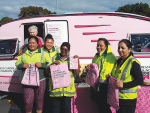
$600k needed for cancer caravan's pink replacement
The Breast Cancer Foundation NZ (BCFNZ) has launched a new fundraising campaign which seeks to expand its early detection education programme into more rural and isolated communities.




 increase font size
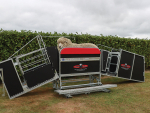
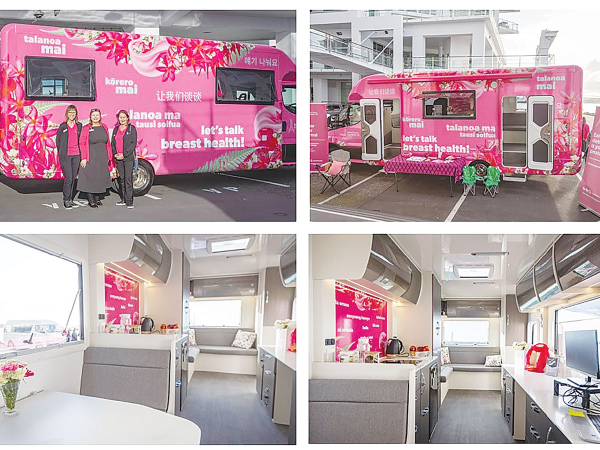 The Breast Cancer Foundation’s new NZ Pink Campervan is hitting the streets of the South Island on its inaugural tour.
A new-look pink Breast Cancer Foundation NZ Pink Campervan is hitting the streets of New Zealand’s South Island on its inaugural tour.
Last year, the Breast Cancer Foundation NZ sought to raise $600,000 to fund the new campervan along with its kit-out and operating costs for the first two years.
The old caravan, nicknamed Pinkie, had been travelling New Zealand for close to a decade. It educated women about the signs and symptoms of breast cancer, family risk and the importance of mammograms and self-checking.
Breast Cancer Foundation NZ chief executive Ah-Leen Rayner says she is thrilled by what the charity will be able to achieve with the addition of the new campervan.
“With this new vehicle, our friendly specialist nurses will be able to reach more New Zealanders with these life-saving messages, visiting remote or isolated communities we’ve never been able to get to before,” she told Rural News.
“We’re excited to be kicking off the campervan’s tour in Nelson-Tasman and then head down the West Coast – two regions we’ve not been able to visit for a long time,” she says.
The new campervan, named ‘Putiputi Ātaahua’ (beautiful flower) had its inaugural stop on its inaugural tour on Sunday 15 October in Tapawera in the Tasman District.
Nurse Alison Smith says she spoke to several young women in their 20s and 30s about being breast aware.
Unlike women aged 45 – 69 years old, those in their 20s and 30s are not entitled to publicly funded mammograms, but Smith says they spoke to the women about breast awareness and symptoms to be on the lookout for “because breast cancer is not just about a lump”.
“It was a good day and lovely to have the pink campervan there,” Smith told Rural News. “We love to talk to women and men – because men get breast cancer too,” Smith says, adding that approximately 3000 women and 25 men are diagnosed every year with some form of breast cancer.
“We encourage all those women to be breast aware and go to see their GPs if they notice any changes and kind of also just saying that ‘Breast cancer is quite unusual in your 20s and 30s but it does happen’.”
Smith says the new campervan is bigger and nurses are able to drive it, compared to the old caravan which had to be towed.
“It allows us to get into some of the more rural areas and it allows us to be a little more flexible because we don’t have to involve towers,” she says.
At the end of the day, Smith says the advisory service the campervan allows the Breast Cancer Foundation to provide is important.
“It’s really, really sad to see people who have left things for quite some time,” she adds. “Because, with most cancers, if picked up early, it can save your life.”
The Breast Cancer Foundation NZ (BCFNZ) has launched a new fundraising campaign which seeks to expand its early detection education programme into more rural and isolated communities.

Women in rural New Zealand could be at risk of missing a vital breast cancer diagnosis due to the impacts of Covid-19.


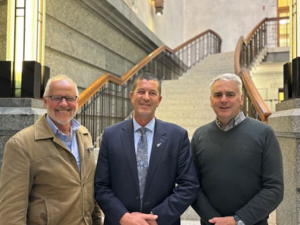
Organics Aotearoa New Zealand (OANZ) spent two days in Wellington last week meeting political parties and key stakeholders to press the case for a National Organic Policy and dedicated investment.

Ravensdown has reported a net profit before tax and rebate of $50.1 million for the year ended 31 May 2026.
Potatoes New Zealand has congratulated Peter Reynolds of TA Reynolds Ltd in Pukekohe on being awarded the Horticulture New Zealand Bledisloe Cup, recognising a lifetime of service and contribution to New Zealand horticulture.
Signing up to a benchmarking tool is not about competition, but about improving collectively, says Ximena Puig and Alvaro Luzardo who are 50-50 sharemilkers at a 164-hectare (effective) dairy farm in Eketāhuna in the Lower North Island.
A leading British farming politician says he's impressed with the positive attitude of New Zealand farmers that he met during his recent trip here.
OPINION: With 10,500 dairy farms, New Zealand continues to punch above its weight around the world.



A fair question has been raised about how member-funded organisations should conduct themselves when taking a public position on any…
OPINION: It really is getting harder to lampoon government bureaucrats when they do such a good job of it themselves.…