Southland Farmers Named 2026 Sustainable Farming Ambassadors
Michelle and Tony Roberts didn't inherit the farming business they have today. They’ve built it from the ground up.




 increase font size
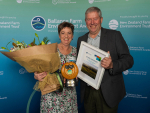
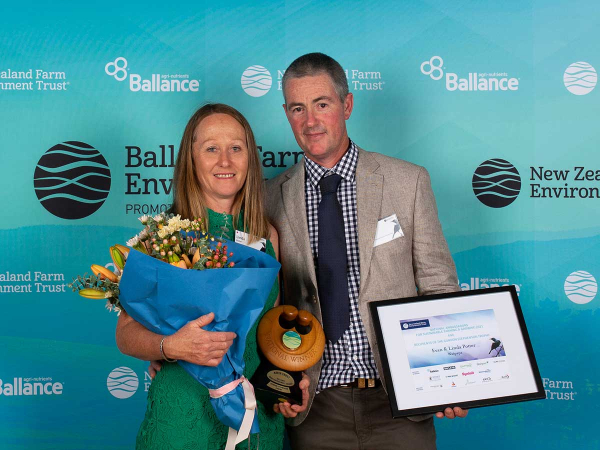 Gordon Stephenson Trophy recipients Linda and Evan Potter.
Hawke's Bay hill country farmers Evan and Linda Potter have been named national ambassadors for sustainable farming and the recipients of the Gordon Stephenson Trophy.
The Potters run Waipapa, a sheep, beef and deer property in Central Hawke's Bay.
They won the award at last night's National Sustainability Showcase at Te Papa, Wellington, attended by all of the regional supreme winners from the 2020 Ballance Farm Environment Awards (BFEA).
The BFEA is an annual celebration and promotion of sustainable farming and growing practices, where regional supreme winners come together to share ideas and information.
Purchasing Waipapa in 1997, the Potters set to work on transforming what they describe as a blank canvas, into an aesthetically pleasing and productive business producing venison, wool, sheep and beef off this 740 hectare property.
There is a focus on biodiversity: trees with 22% of their farm retired into mainly QEII National Trust covenants and plans to continue fencing and retirement of more land in partnership with QEII.
Other initiatives include an annual pole planting programme for shade and erosion control, planting of natives, regular possum, cat and pest control, and wetland and riparian planting.
Chair of the National Judging Panel, Diane Kidd says the Potters demonstrate a sound understanding of industry metrics around key topics of climate change and reducing greenhouse gases.
"They certainly 'walk the talk' with their environmental projects and sustainability initiatives. They are role models as early adopters of change.
"Evan and Linda have an obvious love of farming and a pride in the successful business they have built together over the last 23 years. They are practical and sustainable and tell a very good story that many others will learn from."
Michelle and Tony Roberts didn't inherit the farming business they have today. They’ve built it from the ground up.
Brendan Attrill of Caiseal Trust in Taranaki has been announced as the 2025 National Ambassador for Sustainable Farming and Growing and recipient of the Gordon Stephenson Trophy at the National Sustainability Showcase at in Wellington this evening.
‘Just take the plunge’ - that’s the message from Hamish and Simon Guild of High Peak Station, Canterbury to anyone considering entering the 2025 Ballance Farm Environment Awards.
The winners of the Gordon Stephenson Trophy say farmers are doing better on sustainability than they give themselves credit for.
Hamish and Simon Guild of High Peak Station in Canterbury are the 2024 National Ambassadors for Sustainable Farming and Growing and recipients of the Gordon Stephenson Trophy.
New Zealand dairy farmers are set to be the first in the world to receive access to a new digital physical milk pricing tool that enables them to fix the price for their physical milk.
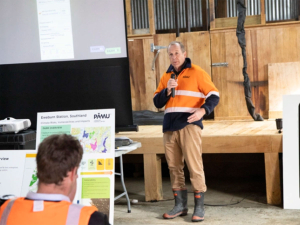
State farmer Pāmu is opening its farm gates this summer in an effort to give the rural sector the opportunity to see how large-scale, multi-system farming is delivering productivity and profitability across New Zealand.
A five-year study has found that the cost of reducing emissions without technology may be significant and unsustainable for Northland dairy farmers.
DairyNZ says Waikato farmers need certainty on Plan Change 1, but they say that certainty must be matched with practical, workable rules and a clear transition that doesn't get ahead of the new resource management system currently under review.
While the Government has moved quickly to make commercial hauliers' lot easier during the current fuel crisis, they appear to be stuck in the creep box when it comes to the agricultural industry.
Waikato farmers have been told that the Government’s new planning system legislation and the region’s Plan Change 1 (PC1) “won’t mesh together very well”.



OPINION: Central Hawke's Bay farmer Mark Warren recently told the Hawke's Bay Times it's time for a conversation about allowing…
OPINION: A nation that relies as heavily as NZ does on functional global shipping lanes will have to do its…