Southland Farmers Named 2026 Sustainable Farming Ambassadors
Michelle and Tony Roberts didn't inherit the farming business they have today. They’ve built it from the ground up.




 increase font size
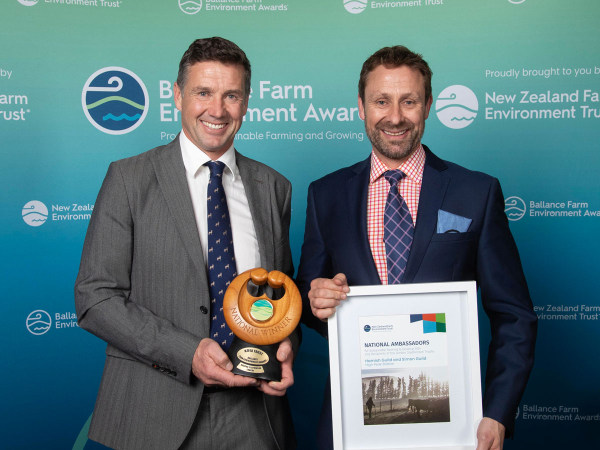 Hamish Guild (left) and Simon Guild of High Peak Station.
The winners of the Gordon Stephenson Trophy say farmers are doing better on sustainability than they give themselves credit for.
Simon and Hamish Guild were announced as the 2024 National Ambassadors for Sustainable Farming and Growing and recipients of the Gordon Stephenson Trophy at the National Sustainability Showcase held at Claudelands Arena in Hamilton last month.
The pair run High Peak Station, a 3670ha (3450ha effective) property managed by an eight-way partnership that runs for different businesses.
The pair say it is an “incredible honour” to have won the trophy and be named national ambassadors.
“We accept it on behalf of the generations that have gone before us, and in particular our parents James and Anna who have put over 50 years into developing High Peak Station,” they told Rural News.
“We also accept it in recognition of every other farmer doing their best for sustainability, especially the other nine NZFEA finalists who represent a very diverse group in many ways, all of whom represent their regions and sectors with excellence.”
The Guilds were praised by judges for their approaches to health and safety and climate resilience.
“They recognise that science will deliver some of the tools to help build resilience, such as adopting more weather tolerant pasture species; they have explored the vulnerabilities to their business in detail; and they have adjusted or enhanced infrastructure to ensure they’re adaptable to climate change and severe weather impacts,” says chair of the national judging panel, Karen Williams.
Simon and Hamish say High Peak Station’s approach to climate resilience starts with recognising they are vulnerable to the effects of climate change, and actively working to mitigate them.
“It could be after the fact in the case of an event (for example, a flood) where we have actively tried to improve our infrastructure for greater resilience, rethought vulnerable assets and campaigned for the mandate… to manage the riverbed as a preventative measure.
“In a broader business sense, it involves trying to predict what the effect a changing climate could have on our farming systems, and moving to mitigate these effects.”
One example of this might be the occurrence of more droughts as a result of climate change. That might lead to looking at a change in pasture species or reducing stock numbers to the benefit of tourism or value-add opportunities.
“This is where having diversity across businesses can work to our advantage.”
They say that sustainability itself is a term that covers many aspects of farming and land management.
“We’d advise looking at what you do well first – are you profitable? Do you have a good work life balance? Are your land inputs in balance with your outputs over time? How does biodiversity and water quality stack up?
“Any one of these can be chalked up as a win, which then means you can focus on the areas that need attention, rather than thinking you need to do it all,” the Guilds say.
“We feel many farmers are actually doing a lot better on these measures than they give themselves credit for.”
Michelle and Tony Roberts didn't inherit the farming business they have today. They’ve built it from the ground up.
Brendan Attrill of Caiseal Trust in Taranaki has been announced as the 2025 National Ambassador for Sustainable Farming and Growing and recipient of the Gordon Stephenson Trophy at the National Sustainability Showcase at in Wellington this evening.
‘Just take the plunge’ - that’s the message from Hamish and Simon Guild of High Peak Station, Canterbury to anyone considering entering the 2025 Ballance Farm Environment Awards.
Hamish and Simon Guild of High Peak Station in Canterbury are the 2024 National Ambassadors for Sustainable Farming and Growing and recipients of the Gordon Stephenson Trophy.
Otago sheep and beef farmers Steven and Kellie Nichol won the coveted Gordon Stephenson Trophy at the recent Ballance Farm Environment Awards. As such, they also become the 2023 national ambassadors for sustainable farming and growing.


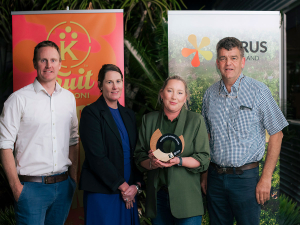
New Zealand's citrus growers were challenged to build their future on the value embedded in their fruit rather than the volume they produce, at Citrus New Zealand's annual gathering in Gisborne on 17 September.
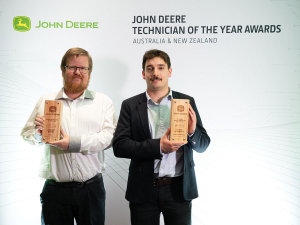
Leading John Deere technicians and apprentices from New Zealand and Australians were recognised at the recent sixth annual JD Technician of the Year Awards, held in Brisbane.
In Dacre, near Invercargill in New Zealand’s South Island, Bruce Dinnington is running a dairy operation unlike any other.
A free online platform aggregating governance vacancies across rural and regional New Zealand has been launched.
Environment Minister Nicola Grigg has announced details of a new rural plastics recycling scheme.
Agricultural drone operators say that a government decision to allow lower-risk drone work without certification won’t lower standards but drive innovation and efficiency.





OPINION: The same mainstream media muppets that brought you Jacindamania in 2017 have been flat out pimping for the Opportunities…
OPINION: Your old mate reckons the atrocious way farmers in the UK are treated by their lords and masters in…