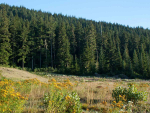
NZ Forestry Exports to India Now Tariff Free
More than 95 per cent of New Zealand’s forestry and wood exports to India can now enter tariff free as the New Zealand-India Free Trade Agreement comes into force today.




 increase font size
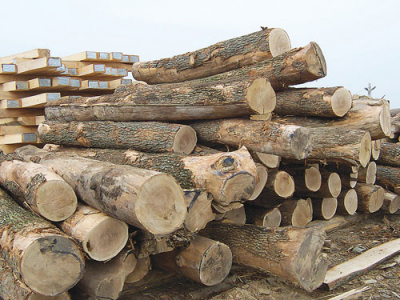 There are both pros and cons for the forestry sector in proposed changes to overseas investment, according to Duncan Cotterill Law’s Christina Lefever.
Changes coming through from the Government on overseas investment in forestry have pros and cons, says Christina Lefever, a special council with law firm Duncan Cotterill.
Forestry cutting rights are being brought under the overseas investment regime but they are making processes more straightforward, Lefever told Rural News.
Currently overseas investors wanting to acquire freehold or leasehold interest in forestry land are screened but overseas investment in forestry rights is not.
Some changes to simplify forestry investment were made by ministerial directive to the Overseas Invest Office (OIO) in December but most of the changes will be made through the Overseas Investment Amendment Bill, she says.
The Government has brought forestry rights under the overseas investment regime whereas previously they were excluded, Lefever says. “Forestry rights will be brought under the OIO regime but they are introducing more streamlined tests to make overseas investment more straightforward for overseas buyers,” Lefever says.
One of those is the counter-factual test – where the investment is compared with a hypothetical New Zealand purchaser that may or may not exist.
“They have eased up the counter-factual test for overseas buyers buying up bare land to plant new forest. Their investment will be compared with the current land use. There will be no requirement to essentially compare their investment against some possibly hypothetical NZ purchaser who might also plant a forest.
“For an overseas buyer who is looking to purchase an existing forest that will look at the current rules on that forestry investment, whether there are supply arrangements in place with NZers, whether there are environmental protections currently in place on specific areas of the land, and whether the overseas investor is willing to commit to retaining all those arrangements; then in itself that will be enough.
“There will probably be a requirement to commit to replanting on harvest as well. But over and above that they don’t need to show some benefit above what any other forestry owner might actually do. That can be difficult to demonstrate when you are buying existing trees that will keep on growing regardless of who owns them.”
Lefever says the Government’s announcement that the Overseas Investment Act would be amended to cut out red tape is a positive signal to potential investors.
Forestry Owners Association president Peter Weir says though he still can’t see the point of including cutting rights in the scope of the OIO, the deepest objection to the working of the OIO seems to have been removed.
“We will welcome a more efficient OIO processing system,” Weir says.
“Forest Owners said when the Billion Trees in Ten Years Government target was formulated during the coalition negotiations that it would be very difficult to achieve that many trees planted if there were onerous obstacles to overseas investment imposed at the same time.
“Our industry as it is will be planting half of the total but to get to the billion trees New Zealand will need a lot of additional land, labour and investment. Investors are very sensitive to market signals, and quite frankly the Government signals have been mixed over the past few months.”
More than 95 per cent of New Zealand’s forestry and wood exports to India can now enter tariff free as the New Zealand-India Free Trade Agreement comes into force today.
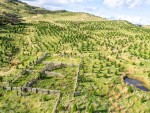
The New Zealand Institute of Forestry (NZIF) says unnecessary changes to New Zealand’s Emissions Trading Scheme (NZ ETS) will seriously erode investor confidence and result in significant reductions in forest planting rates.
New Zealand needs to make sure that it continues to focus on its own food security, according to HortNZ board member and blueberry grower Dermott Malley.
Bank of New Zealand (BNZ) and Pāmu (Landcorp Farming Limited) have developed a new way for landowners to earn revenue from existing native forests.
Forestry Minister Todd McClay has today congratulated the winners of the 2026 Growing Native Forests Champions Awards at Fieldays.


Dairy processors are ready to further boost New Zealand’s export earnings but want the incoming government to match their ambition with good policy.

Massey University is best placed to solve the “problems” facing the dairy industry, says vice chancellor, Pierre Venter.
Synlait's longest serving employee – a man who joined the Canterbury-based milk processor even before it began processing milk – is now its newest executive.
A dairy industry leader believes eradicating the common and costly disease, Bovine Viral Diarrhoea (BVD) is within reach.
A farmgate milk price of $10/kgMS this season is firming up as milk powder prices soar and the New Zealand dollar weakens.
Federated Farmers has welcomed new rural policies released by ACT, saying they align closely with its own election priorities.





OPINION: The same mainstream media muppets that brought you Jacindamania in 2017 have been flat out pimping for the Opportunities…
OPINION: Your old mate reckons the atrocious way farmers in the UK are treated by their lords and masters in…




