US Launches Lamb Safeguard Probe, NZ Exports at Risk
As expected, the US has launched a safeguard investigation into lamb imports, a move that could impact New Zealand sheepmeat returns.




 increase font size
 Meat Industry Association chief executive Sirma Karapeeva says discussions with the EU and UK has been frustratingly slow.
New Zealand meat exporters want the EU and UK to get serious on reaching a deal on post-Brexit quotas.
The Meat Industry Association (MIA) accuses Brussels and London of forcing the split of existing quotas without New Zealand’s agreement.
New Zealand has a sheepmeat quota of 228,389 metric tonnes and beef quota of 1,300MT at a 20% in-tariff quota rate for EU countries, including the UK.
However, the EU and the UK are proposing to split the sheepmeat quota 50:50 between the two markets post-Brexit. The beef quota is to be split 65:35 with the EU getting the bigger quota.
Meat Industry Association chief executive Sirma Karapeeva told Rural News that the proposal to split the quotas has been developed by the EU and UK independently without any consultation with others (including NZ).
“So, in effect, they are forcing through a unilateral decision…we do not accept this proposal at all.”
The UK is no longer a member of the European Union (EU) and rules for the new UK-EU relationship, including trade, starts on January 1. 2021. The NZ Government hopes to have an agreement in place with both London and Brussels by then and discussions are ongoing.
Karapeeva notes that progress in discussions with the EU and UK has been frustratingly slow.
“We are concerned that the EU and UK is not engaging seriously to find a solution here,” she says.
“It is difficult to work up alternative or creative options to the split when the EU and UK are slow to come to the table to negotiate and show no willingness to engage constructively.
“As an industry, we want to be absolutely clear. We are certainly not after windfall gains, but this approach would leave us worse off. That is not what we expect from the UK or the EU, and flies in the face of assurances that they have given us previously.”
Karapeeva says it’s an issue with real-world commercial impacts.
“We are urging the UK and EU to sit down with New Zealand and work seriously together to find a solution, bring fresh ideas and a constructive mindset to the table.
“From our side, there are genuine commercial impacts. From their side, we would have thought that the impact on consumers should be a key consideration.”
The splits will seriously affect NZ’s ability to export to the UK and EU in several different ways.
Firstly, they remove the flexibility that is inherent in the existing tariff-rate quotas (TRQs) to enable NZ to respond to market conditions in the UK and EU27.
For sheepmeat, for example, there may well be disruption and price impacts in the market, especially if the UK has not finalised its negotiations with the EU for access for its sheepmeat, says Karapeeva.
“But the proposed split quota for NZ product will limit our ability to respond to those market conditions by matching up our supply with actual demand in the markets, as is our current practice as responsible exporters.
“The fact that the sheepmeat quota has been underfilled to a greater or lesser extent over recent years just goes to illustrate that we are focused on responding to what our customers and the markets want – whether it comes to volumes or product attributes, such as quality, food safety, sustainable production practices or good animal welfare systems.”
In the case of high-quality beef, the reduced quantities into each market threaten the viability of the trade.
Karapeeva points out that if customers want more than 454MT, NZ exporters simply will not be able to supply them.
As expected, the US has launched a safeguard investigation into lamb imports, a move that could impact New Zealand sheepmeat returns.

New Zealand's red meat sector says it welcomes the Government's focus on trade ahead of the general election in November.
New Zealand red meat exports are booming but a pending decision in the White House, Washington D.C., could dent sheepmeat earnings.
China remains New Zealand’s biggest market, taking $23 billion of our exports, but it’s no longer a commodity story, says Prime Minister Christopher Luxon.
Prime Minister Christopher Luxon says the red meat sector is doing an excellent job promoting our pasture-fed system around the globe.

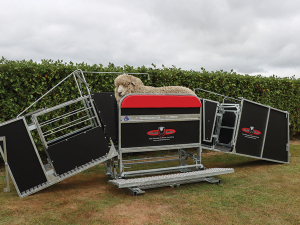
Oamaru-based livestock handling specialist Te Pari has bought Combi Clamp, the New Zealand manufacturer of Combi Clamp manual sheep handlers.
Agriculture Minister Todd McClay has admitted that a scheme bringing workers from Pacific nations to work on orchards has become too hard to navigate but says changes are coming.
A new app designed in New Zealand aims to help sheep, beef and deer farmers capture, analyse and use body condition score data more effectively.
Canterbury farmer Andy Macfarlane has been appointed to the board of AgriZeroNZ, the public-private partnership designed to accelerate the development and deployment of emissions reduction tools for New Zealand farmers.
For over 50 years Mel Ewers has been supporting the apple sector navigate through compliance and quality assurance issues.
The apple sector is enjoying a bumper harvest season.



A fair question has been raised about how member-funded organisations should conduct themselves when taking a public position on any…
OPINION: It really is getting harder to lampoon government bureaucrats when they do such a good job of it themselves.…