Dairy power
OPINION: The good times felt across the dairy sector weren't lost at last week's Beef + Lamb NZ annual meeting.




 increase font size
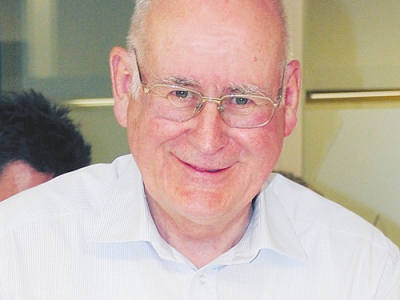 Rob Davison – received an ONZM for services to agriculture.
A man who has devoted virtually all his working life to the collection of statistics about the sheep and beef industry has been recognised in the New Year's honours.
Rob Davison has been the executive director of Beef + Lamb NZ's economic service since 1989. And before that he was a research officer collecting farm data for reports and publications produced by the service.
Davison told Rural News he was greatly humbled and had not expected to receive the ONZM.
Davison started life as a farm cadet in the early 1960s and worked in Wairarapa to learn how to use dogs in hill country. He then went to Southland where the emphasis was on learning to feed stock on crops.
"I then had a stint in Canterbury and then did a diploma in sheep farming at Massey University. After that I worked on farms around Ohakune before deciding to go to Lincoln University to get a degree," he says.
Davison used to attend meetings of the former Farm Management Society and was told he needed a degree. That motivated him to complete a B Ag Com (Hons).
Armed with a degree he joined the economic service under the then director Frank Ward. He later served under Neil Taylor before being appointed director in 1989. "In the early days I was busy writing reports on the need for more farm subsidies. But that changed when the industry was deregulated and de-politicised."
Davison says deregulation was the biggest single change he's experienced in his lifetime in the primary sector.
He believes this has driven change and says the industry can be very proud of what has been achieved. Davison cites the fact that while sheep numbers have been halved this has not affected the sector.
"We are producing a meatier, leaner lamb carcase that is meeting market demand," he explains. "We are now only exporting about 2% of lambs in carcase form, the rest being broken down into cuts. A single lamb carcase can go to many many markets."
Davison believes the economic service has moved with the times in the amount and nature of the data collected. There is greater speed in communications and the way of presenting data has changed.
The fundamental principles of the economic service remain – to provide independent, authoritative data for making good, high-level, policy decisions and good decisions down on the farm.
OPINION: The good times felt across the dairy sector weren't lost at last week's Beef + Lamb NZ annual meeting.
Beef + Lamb New Zealand (B+LNZ) is calling on livestock farmers to take part in a survey measuring the financial impact of facial eczema (FE).
Beef + Lamb New Zealand (B+LNZ) chair Kate Acland says there are clear governance processes in place to ensure fairness and transparency.
The red meat sector is watching anxiously as the US embarks on a tariff war with its key trading partners.
Beef + Lamb NZ wants farmers to complete a survey that will shed light on the financial toll of facial eczema (FE) at the farm level.



Healthy snacking company Rockit has announced Wang Yibo, one of China's most influential celebrities, as its new brand ambassador.
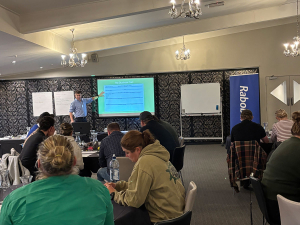
Rabobank has celebrated the tenth anniversary of its AgPathways Programme, with 23 farmers from Otago and Southland gathering for two-and-a-half days to learn new business management and planning skills.
Adopting strategies to reduce worm burden on farm goes hand-in--hand with best practice farm management practices to optimise stock production and performance, veterinarian Andrew Roe says.
Last night saw the winners of the 2026 Beef + Lamb New Zealand (B+LNZ) Awards named at a gala dinner at Te Pae Christchurch Convention Centre.
A 12-month pathway programme has helped kickstart a career in dairy for an 18-year-old student-turned-farmer.
Zespri says its global fruit sales revenue has reached a record NZ$5.9 billion from sales of 248.1 million trays.


OPINION: The old saying 'a new broom sweeps clean' doesn't always hold up, if you ask the Hound.
OPINION: This old mutt went to school to eat his lunch, but still knows the future of the country, and…