
RSE Scheme Changes Coming - McClay
Agriculture Minister Todd McClay has admitted that a scheme bringing workers from Pacific nations to work on orchards has become too hard to navigate but says changes are coming.




 increase font size
 Environment Minister David Parker recently released a report that says the RMA should be scrapped and replaced.
A leading planning academic says people are fixated on doing away with the Resource Management Act (RMA) when they should really be focusing on what its replacement might look like.
Associate Professor Caroline Miller of Massey University, who has spent a lifetime working in local government and resource management, says she was involved in local government when the RMA was introduced 30 years ago.
Recently, Environment Minister David Parker released a report by a panel headed by retired Appeal Court Judge Tony Randerson, which proposes that the RMA should be scrapped and replaced by two new laws – a Natural Built Environment Act and a Strategic Planning Act.
Its recommendations include a proposal for each region in the country to put forward a combined development plan, consolidating the myriad of local council plans that currently exist. The proposal would also see more power being given to Iwi. Parker says the RMA has doubled in size from its original length and become too costly, takes too long, and has not adequately protected the environment.
Miller says the proposal to scrap the existing RMA and effectively start again is revolutionary – just like developing the present RMA was 30 years ago. But she has some concerns about what is being proposed.
Miller says a lot of the planning is going to be regional based. She believes a lot of local government structures are not necessarily set up to do the sort of big picture, collaborative style planning envisaged by the Government.
“In terms of rural interests there are couple of things that people might like to think about,” Miller told Rural News.
“Certainly, there will be a lot of change in the area of water allocation because the report identifies that the ‘first come first served’ model is not necessarily the best one and I think a lot of people would agree with that.
“However, I think the devil is in the detail and what do you replace it with? With climate change we are going to see much more competition for water especially as east coast areas become drier. We know from experience that what sounds wonderful on paper may be hard to implement,” she says.
Miller claims this is essentially the problem with the existing RMA.
She says the Randerson report is trying to simplify the process and predicts there will be fewer consents required as these will be worked through in the regional plans. Miller adds the suggestion is that government will set bottom lines to preserve the environment and also bring in Maori concepts and Maori ways of doing things.
She believes the new proposal has some potential, but it is going to take a lot of work to see how that is going to work at the coal face.
“The part that most people are more interested in is what is this going to mean for me on a day-to-day basis. What I believe everyone should be preparing themselves for is that it will be quite a long transition period,” Miller told Rural News.
“The RMA will not just disappear one day and a new act come in the next day. I believe it will take a lot longer than people think to get the new legislation in place.”
Concerns
One of Caroline Miller’s concerns is the trend to use independent commissioners instead of local elected councils to hear resource consent applications.
She says this means that a small group of people are being given substantial powers and questions should be asked about that.
“They are talking about having much more uniform sets of plans around the country and central government will be much more involved than they have been in the past,” Miller told Rural News. “This means that, in some instances, communities may have less voice in shaping what happens in their areas.”
Miller believes this is the case with the Government’s latest national policy statement on urban development and says if the same principles were applied to rural land use plans it could be quite challenging.
“It also means that central government is going to become much more involved in planning processes than they have in the last 30 years that we have had the RMA.”
Miller says she’ll be intrigued to see what eventually happens and whether the Government accepts all the recommendations in the report.
Agriculture Minister Todd McClay has admitted that a scheme bringing workers from Pacific nations to work on orchards has become too hard to navigate but says changes are coming.

A pause on Waikato Regional Council's (WRC) plan change that sets new freshwater rules for farming could be announced in the coming weeks.
Certainty and a clear understanding of the needs of rural communities is a critical outcome in the series of government reforms that are taking place at present.
DairyNZ says Waikato farmers need certainty on Plan Change 1, but they say that certainty must be matched with practical, workable rules and a clear transition that doesn't get ahead of the new resource management system currently under review.
Waikato farmers have been told that the Government’s new planning system legislation and the region’s Plan Change 1 (PC1) “won’t mesh together very well”.


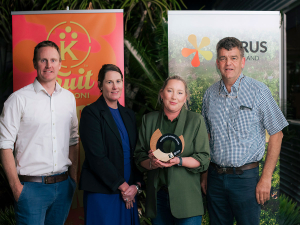
New Zealand's citrus growers were challenged to build their future on the value embedded in their fruit rather than the volume they produce, at Citrus New Zealand's annual gathering in Gisborne on 17 September.
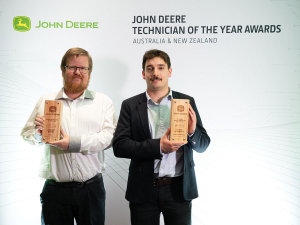
Leading John Deere technicians and apprentices from New Zealand and Australians were recognised at the recent sixth annual JD Technician of the Year Awards, held in Brisbane.
In Dacre, near Invercargill in New Zealand’s South Island, Bruce Dinnington is running a dairy operation unlike any other.
A free online platform aggregating governance vacancies across rural and regional New Zealand has been launched.
Environment Minister Nicola Grigg has announced details of a new rural plastics recycling scheme.
Agricultural drone operators say that a government decision to allow lower-risk drone work without certification won’t lower standards but drive innovation and efficiency.





OPINION: The same mainstream media muppets that brought you Jacindamania in 2017 have been flat out pimping for the Opportunities…
OPINION: Your old mate reckons the atrocious way farmers in the UK are treated by their lords and masters in…




