
Faulkner: Take Rural Infrastructure Out of Politics
Federated Farmers' new vice president Sandra Faulkner says the issue of adverse events emergency management and infrastructure needs to be taken out of the three-year political cycle.




 increase font size
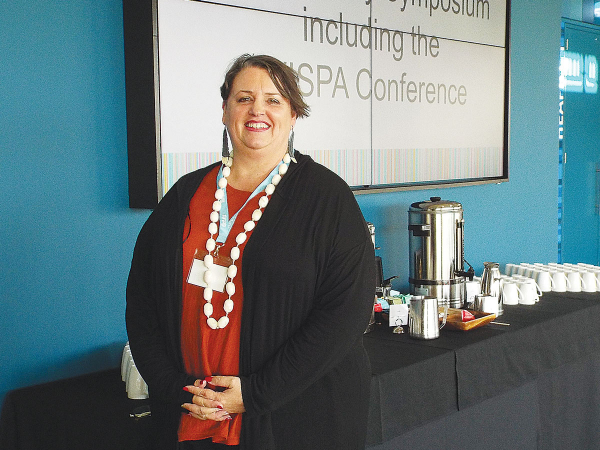 Rural Women NZ's Angela McLeod says poor connectivity is putting lives at risk out on farms.
"Imagine if John Lennon's famous words could be applied to rural connectivity."
Speaking at the recent TUANZ Rural Connectivity Symposium, held in Hamilton, Angela McLeod of Rural Women NZ said there needs to be an assurance that rural NZ is not left behind.
"Imagine that every farm and rural property had cellular coverage and a good internet connection," she added. "It's not enough for our country's economic and social fabric to be told that 5G is being rolled out in urban NZ, when vast tracts of the rural landscape can't even experience 3G."
McLeod berated the claim often used that it's "not economical" to offer exceptional service to farmers and lifestyle block owners in rural regions.
She says, at the same time, we hear that the same rural economy is responsible for around $55b worth of revenue and kept the country afloat during the Covid.
McLeod suggested that the most important use of digital connectivity is around rural health and safety, particularly when out on the farm to summon help when an accident occurs.
"Putting it bluntly, poor connectivity is putting lives at risk out on the farm every day," she adds.
"Can you imagine if everyone felt safe out on the farm and reached their full potential, both on a personal and a business level - just imagine."
Andrew Cushen, of Internet NZ, suggested that around 87% of the NZ population now had access to a fibre connection. However, he acknowledged that the remaining 13% (about 650,000 people) are still crying out for a reliable and effective connection.
Cushen sais that while great strides had been made, the problem couldn't be solved by a one-off investment, but this needed to be ongoing.
"Covid showed us that connectivity was and is vitally important, to do business, carry out home schooling and interact with family and friends."
Likewise, Federater Farmers chief executive Terry Copeland talked about his own organisations' problems interacting with rural members and staff. At board level, especially during Covid, online meetings had proven to be troublesome because of poor connectivity, while the increasing need from industry and government for more online reporting was also challenging.
"Farmers are no less tech-savvy than other parts of the NZ community and generally happy to invest in new technologies if they can see a benefit and return," Copeland explained.
"The issue lies that, currently, many only work at a limited capacity. There is also a need for the communications industry to do more work in bringing farmers up to speed with regards to understanding the options available, where they need to go for good info and help with installation and ongoing tech support."
Copeland went on to ask if the end game was full rural coverage, who should administer the roll-out and who should pick up the bill? He suggested that all parties needed to work together.
Copeland pointed a finger towards Government, reminding it that the IRD, who had a preference for online tax returns, was still operating systems because of rural connectivity.
"If 5G is really the answer, why does it not figure in rural NZ and only in urban situations?"
Federated Farmers' new vice president Sandra Faulkner says the issue of adverse events emergency management and infrastructure needs to be taken out of the three-year political cycle.

The Infrastructure Commission has endorsed a plan by Chorus to expand fibre broadband to 95% of New Zealand much to the delight of rural women.
Coming to the fore following the carnage of Cyclone Gabrielle, Starlink became well known for providing internet access even in NZ's most inaccessible places.
The director-general of the Food and Agriculture Organization of the United Nations (FAO) says the UN has a role to play in leveraging the power of digital technologies.
Chorus says rural New Zealand is at risk of losing real opportunities if it can’t stay connected.


National’s pledge to introduce 19 new national standards shows the party is serious about getting Wellington out of farming, Federated Farmers says.
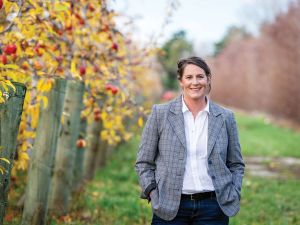
The National Party’s policies to make it easier to grow fresh vegetables, secure reliable water and energy and simplify farm planning are practical changes that will give growers the confidence to invest, according to Horticulture New Zealand (HortNZ).
Fonterra Co-operative Group chief financial officer Andrew Murray has resigned to take up a role outside the dairy giant.
A major move is about to get underway to improve the quality and viability of dairy beef and cattle in NZ.
Veterinarians say changes to the code of welfare for dairy cattle provides a positive foundation for improved cattle welfare across the country.
Today, 15 October, is the International Day of Rural Women, which recognises rural women’s contribution to farming, communities and the environment.



OPINION: The same mainstream media muppets that brought you Jacindamania in 2017 have been flat out pimping for the Opportunities…
OPINION: Your old mate reckons the atrocious way farmers in the UK are treated by their lords and masters in…




