
Pāmu FY26 Report: Profit More Than Doubles to $113m
Pāmu has released its FY26 Integrated Annual Report, reporting a Net Operating Profit of $113 million, more than double the $49 million recorded in FY25.




 increase font size
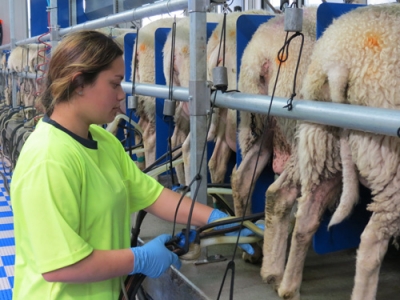 Milking at the St Kilda farm in the north Taupo area.
Landcorp chief executive Steven Carden says his company plans to set up a second sheep milking farm on one of their properties near Taupo.
Landcorp have recently begun milking 2,700 East Fresian ewes at their St Kilda farm in the north Taupo area. Carden says while this is in some ways a pilot project, the aspiration of the company is to make this into a substantial business and an industry in its own right. Spring Sheep Dairy as it is known, is a joint venture with the agribusiness investment company SLC Group to produce high quality sheep milk for mostly Asian markets.
In just eight months Landcorp has achieved the almost impossible by turning bare pasture land north of Taupo into one of the world's most high tech sheep milking operations.
Twenty two year old Thomas Macdonald, a Landcorp business manager has project managed this unique $3.9 million greenfield operation which includes the building of the new shed, the purchase of stock and recruitment of a manager, five full time staff and twenty casual staff.
The milk is being processed by Waikato Innovation in Hamilton.
Unlike a typical cow shed, the sheep milking shed is quiet, there is less water being used because there is less effluent and the milking of each sheep is over in just a couple of minutes. This shed can milk 1000 sheep an hour. Milking is twice a day. But it's the array of technology that catches the eye of first time visitors to the shed.
"This parlour was built from the ground up with technology in mind. We have got individual metering of animals per day we are the first one the world to measure fat protein per animal per day," says Macdonald.
It's the data gathered in the shed which will later to be used to select the best animals to breed from in the future. At present about half the flock being milked are pure East Fresian with remainder crosses and milk production varies between these, with the pure breds producing about two litres at each milking and some of the crosses about 500mls. The aim is to produce a much higher yielding flock with surplus lambs being reared for the meat industry.
Pāmu has released its FY26 Integrated Annual Report, reporting a Net Operating Profit of $113 million, more than double the $49 million recorded in FY25.
With lambing underway in many regions, Beef + Lamb New Zealand is encouraging farmers to put together a wellequipped lambing kit to help minimise lamb losses, particularly in bad weather.
A partnership between state-owned enterprise Pāmu (Landcorp Farming Limited) and charity Meet the Need is putting more than quality New Zealand beef into food bank parcels this year.
Will a stronger, more coordinated voice help rebuild confidence and improve returns in the wool sector?
State farmer Pamu has delivered its strongest operating result on record.



Dairy processors are ready to further boost New Zealand’s export earnings but want the incoming government to match their ambition with good policy.

Massey University is best placed to solve the “problems” facing the dairy industry, says vice chancellor, Pierre Venter.
Synlait's longest serving employee – a man who joined the Canterbury-based milk processor even before it began processing milk – is now its newest executive.
A dairy industry leader believes eradicating the common and costly disease, Bovine Viral Diarrhoea (BVD) is within reach.
A farmgate milk price of $10/kgMS this season is firming up as milk powder prices soar and the New Zealand dollar weakens.
Federated Farmers has welcomed new rural policies released by ACT, saying they align closely with its own election priorities.





OPINION: The same mainstream media muppets that brought you Jacindamania in 2017 have been flat out pimping for the Opportunities…
OPINION: Your old mate reckons the atrocious way farmers in the UK are treated by their lords and masters in…




