
Federated Farmers Welcomes ACT’s New Farming Policies
Federated Farmers has welcomed new rural policies released by ACT, saying they align closely with its own election priorities.




 increase font size
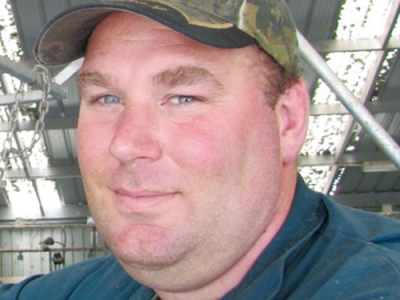 Andrew Hoggard.
The advent of closed circuit television is now making it easier for farmers to protect themselves from 'industrial sabotage', according to an industry leader.
Federated Farmers dairy chairman Andrew Hoggard's comments follow a recent incident in Manawatu where a dairy farm worker was prosecuted for deliberately contaminating 18,000L of milk worth nearly $11,000, stored in a vat.
Hoggard says such vandalism is not unusual and he is unsure whether the problem is getting worse. The incident in Manawatu coincides with claims by the Council of Trade Unions that some farm workers are poorly paid and have poor working conditions.
Hoggard says farmers are particularly vulnerable because they have to leave their sheds open for the tankers. Now he is seeing more farmers using CCTV at their vats and cowsheds.
"A CCTV camera can be bought for about $120. This can have a motion-sensor built in which sends an email to the farmer so he can find out what's going on. There are cheap technology options available for farmers to keep an eye on their farms."
Hoggard says farmers normally carry insurance to cover any loss of milk because of power cuts or other incidents. The latest case, where the farm worker is paying back the farmer $20 a week in reparation, is an insult to the farmer in question.
Many of the problems farmers face are out on their properties, he says.
"Most farmers would have a story about some illegal [growing] activities taking place on their farms. There is always a risk in harvesting maize too early," Hoggard adds. "Farmers face the dilemma of reporting such activities. If they report them, strange things start happening around their farms."
Hoggard has discovered people have been on his farm at night drinking beer and spirits at the end of a road by the river.
"Often you wonder what sort of strange people go and park up in the middle of the night and drink themselves silly. Weird stuff like that happens," he says.
Federated Farmers has welcomed new rural policies released by ACT, saying they align closely with its own election priorities.

A farmgate milk price of $10/kgMS this season is firming up as milk powder prices soar and the New Zealand dollar weakens.
Federated Farmers is backing Feilding High School’s call to keep Agriculture and Horticultural Science as a standalone subject in Year 11.
As part of its Election 2026 coverage, Rural News asked political parties how they would help pull the arable sector out of the doldrums. Here's what they said:
National’s pledge to introduce 19 new national standards shows the party is serious about getting Wellington out of farming, Federated Farmers says.


Dairy processors are ready to further boost New Zealand’s export earnings but want the incoming government to match their ambition with good policy.

Massey University is best placed to solve the “problems” facing the dairy industry, says vice chancellor, Pierre Venter.
Synlait's longest serving employee – a man who joined the Canterbury-based milk processor even before it began processing milk – is now its newest executive.
A dairy industry leader believes eradicating the common and costly disease, Bovine Viral Diarrhoea (BVD) is within reach.
A farmgate milk price of $10/kgMS this season is firming up as milk powder prices soar and the New Zealand dollar weakens.
Federated Farmers has welcomed new rural policies released by ACT, saying they align closely with its own election priorities.





OPINION: The same mainstream media muppets that brought you Jacindamania in 2017 have been flat out pimping for the Opportunities…
OPINION: Your old mate reckons the atrocious way farmers in the UK are treated by their lords and masters in…




