AgFirst Warns Dairy Farmers Not to Expect Repeat Season
A warning to dairy farmers not to expect the same good conditions that they experienced last season, has been issued by a leading farm consultant.




 increase font size
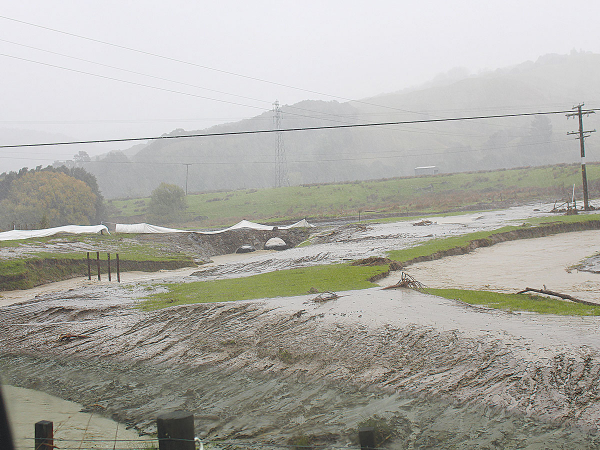 Sodden and wet: Some of the flood damage around Tokomaru. Photo Credit: Peter Andrew.
Peter Andrew, director of AgFirst in Gisborne, says farmers are starting to put things back together following the recent storm that caused massive slips on hill country farms and damaged crops on the flats.
Peter Andrew says the second storm a week ago, when about 200mm of rain fell, just left the ground sodden and along with the wind was responsible for many trees being blown down.
He adds that the latest rain has compounded the problems of the first event and made clearing tracks even more difficult. One farmer reported having 300 slips on their property.
"The rivers up the coast from Tolaga Bay to Ruatoria rose again in this latest event and were just as bad as the first event," Andrew told Rural News.
He says the worst part is that it has been raining almost every second day with few sunny days over Easter and this is having a depressing effect on people trying to repair damage to their farms.
"I was talking to a farmr who said that some of the slips are actually best fixed when the soil is really dry, not in the middle of winter. Farmers are trying to restore some access to all parts of their farms, but the soil is just too wet for any significant repairs and many will leave it till summer to do permanent repairs."
Andrew says in some cases boundary fences have been damaged by the slips and there are instaces of "mixed flocks". Some horticultural crops including squash have been badly affected by the floods.
He says people trying to harvest apples and kiwifruit have also had a difficult time with the rain and the resulting sodden soils.
"It would have been a struggle to keep the harvesting going."
Major Problems in the Ruakituri Valley
One group of farmers who have been especially badly hit are those in the Ruakituri Valley north west of Wairoa.
Not only have they had to cope with huge slips on their farms, but their main access road has also been cut. The Te Reinga bridge at the bottom of the valley is badly damaged and is now closed to vehicles and pedestrians.
Mangaroa Station's Bart and Nuku Hadfield say their only access to the outside world is by what they call a "goat track". Bart Hadfield says the usual 55 minutes trip from their farm to Wairoa now takes over an hour and a half.
The loss of the bridge is a massive inconvenience to people in the valley, including students who travel to Wairoa daily. Hadfield says the word is that the bridge may be repaired for people to walk over in about a month, but it is likely to take much longer for permanent repairs to be made. "On our place, things are going well. We've got a digger here working on tracks and so far we have access to between a third and half of the farm. We have also done a bit of fencing but there is a lot more to do."
Hadfield reckons they got off fairly lightly in the most recent event and says - apart from the odd bit of flooding - damage was minimal.
A warning to dairy farmers not to expect the same good conditions that they experienced last season, has been issued by a leading farm consultant.

As fuel and fertiliser prices rise and with uncertainty in the future, farmers are being urged to go over their budgets with a fine-tooth comb.
For the most part, dairy farmers in the Waikato, Bay of Plenty, Tairawhiti and the Manawatu appear to have not been too badly affected by recent storms across the upper North Island.
Fears of a serious early drought in Hawke’s Bay have been allayed – for the moment at least.
Many farmers around the country are taking advantage of the high dairy payout to get maximum production out of their cows.

A leading British farming politician says he's impressed with the positive attitude of New Zealand farmers that he met during his recent trip here.
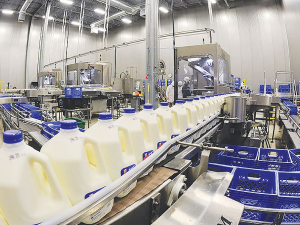
OPINION: With 10,500 dairy farms, New Zealand continues to punch above its weight around the world.
The Southern Dairy Hub (SDH), which runs a demonstration farm for South Island farmers, has a new general manager.
Esther Guy-Meakin has been announced as the new chief executive of the New Zealand Meat Board (NZMB).
According to a progress report on the Aotearoa Horticulture Action Plan (AHAP), New Zealand's horticulture sector is making real progress on the big issues facing growers.
A team effort that is paying dividends for the wider New Zealand economy.



A fair question has been raised about how member-funded organisations should conduct themselves when taking a public position on any…
OPINION: It really is getting harder to lampoon government bureaucrats when they do such a good job of it themselves.…