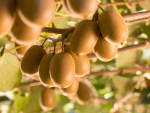
NZKGI Responds to Migrant Worker Exploitation Reports
Where any worker in the kiwifruit industry is mistreated, we expect the authorities to take action.




 increase font size
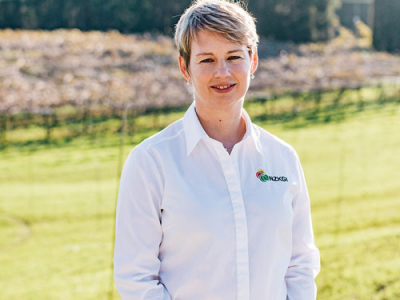 NZKGI chief executive Nikki Johnson.
Publicity on a labour shortage in the kiwifruit industry last season had an interesting side effect: it attracted people to come and work in the industry, says New Zealand Kiwifruit Growers (NZKGI) chief executive Nikki Johnson.
The industry came into the media spotlight when a labour shortage was officially declared by the Government. The experience has encouraged the industry to look at other ways to get the word out about jobs available.
The industry was 1200 workers short last season but Johnson says they know they eventually filled about 600 of those.
About 200 positions were filled through Work and Income (WINZ). And other New Zealanders -- not necessarily WINZ clients -- filled some positions. Plus they had additional interest from backpackers and the ‘VOC’ process which is the temporary change of a visitor visa to a work visa.
“We [reckon] we filled 600 of those vacancies at the time of the labour shortage declaration. We got through the season – no fruit was left on the vine -- but it put pressure on the people who were working in the industry. That isn’t something we want to repeat if we can avoid it.
“The most interesting part about declaring the labour shortage was the publicity that came with that; a number of people came forward to the industry for work as a result.”
That was both through WINZ and the wider public.
“We are working on an attraction strategy right now to attract people without actually having to declare a labour shortage. So how can we utilise media, how can we utilise streams of social media, what can we use to attract people to the industry before we get to a crisis situation?”
Johnson says more people need to know about industry opportunities.
“Partly it is about dealing with some of the misconceptions about working in the industry. For example there is a common assumption that pay rates are really low, but orchard work actually pays really well.
“There are misconceptions about the types of hours you can work in the industry and we need to make sure people understand there are both fulltime roles and fulltime seasonal roles available.
“It is challenging for someone to work for eight weeks in the harvest season and then have to find something else to do. It is about making employees aware of the follow-on work that is also available for, say, winter pruning which we are just coming to the end of now. Pruning has been really difficult for the industry; we haven’t had enough labour.
“Then we will move into the summer pruning and thinning. So the kiwifruit industry is able to provide work for around 10 months of the year, possibly longer.
“It is a matter of letting people know those opportunities are available and how to get involved that is part of the story as well.
“There are absolutely a lot of roles available and there is training for people as well if they want it.”
Weather related stoppages are an issue for the industry and they are considering how to give workers a consistent income so more people are attracted to roles.
The NZKGI Critical Labour Shortage report delivered to the Government in August was designed to start a conversation on quantifying the extent of the issue and frame discussions on where to from here, says Johnson.
One outcome is that Minister for Immigration Iain Lees-Galloway has issued the industry with challenges on how it works in the labour space, she says.
“Many of those are already recognised in our report, like flexibility of working hours and employing more New Zealanders. He has indicated we need to demonstrate some commitment to resolving those issues and then come back to Government and talk about the other issues. They are happy to support the industry once it has done some of those things. So it is a longer term conversation.”
They are talking with the Ministry for Social Development on projects they can test-case with WINZ to employ more NZers including pre-employment training. Further announcements will be made in the near future.
The ‘Pipeline’ project that identified WINZ clients who could be placed with contractors into fulltime employment was very successful but has finished because they ran out of candidates for the positions. Pipeline provided some pastoral care and pre-screening to ensure placement into roles where they were physically able to do the work and it supported them to stay in the role.
Johnson says she is now talking to the Ministry for Social Development on how to replace the Pipeline project with other initiatives.
Meanwhile an announcement on the cap for the Recognised Seasonal Employment (RSE), which brings in temporary overseas seasonal workers, is expected at the end of next month.
Where any worker in the kiwifruit industry is mistreated, we expect the authorities to take action.

Kiwifruit growers are watchful but remain optimistic as concerns around the potential effects of the El Niño weather pattern this season.
More signs of a booming kiwifruit sector.
After delivering a strong financial year, rural trader PGG Wrightson says the coming months will depend on customer confidence and weather.
New Zealand growers have always adapted to changing conditions, but one challenge is steadily gaining ground across the horticulture sector: resistance.


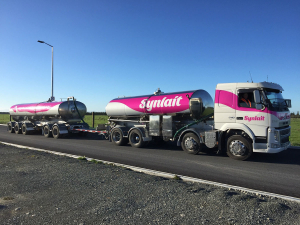
Synlait has swung to second-half profit as operations stabilise, but the dairy processor still posted a $75.4m annual loss.

LIC shareholders have elected a new North Island representative to the co-operative's Board, along with five representatives to its Shareholder Reference Group (SRG), following the company's Annual Meeting held in Invercargill.
Farmers across parts of Southland and South Otago are continuing to deal with difficult conditions after a prolonged run of wet weather, with pressure building around feed supply, stock management, pasture damage, farm infrastructure and everyday workloads.
Federated Farmers says it welcomes Labour's commitment to reviewing the Sharemilking Agreements Act, calling on other major parties to do the same.
For Canterbury dairy farmers Sian Meijer and Rick Wobben, wearable technology has become one of their most valuable on-farm tools - helping manage 1850 cows across an expansive, high-performing dairy operation while improving efficiency, mating outcomes and day-to-day decision making.
Fonterra has unveiled its annual results for the 2026 financial year, posting $27 billion in revenue and close to $20 billion returned to New Zealand farmer owners and unit holders.



OPINION: The same mainstream media muppets that brought you Jacindamania in 2017 have been flat out pimping for the Opportunities…
OPINION: Your old mate reckons the atrocious way farmers in the UK are treated by their lords and masters in…




