Subsidies handed to European farmers are partly responsible for the dip in global dairy prices, says Federated Farmers Dairy chairman Andrew Hoggard.
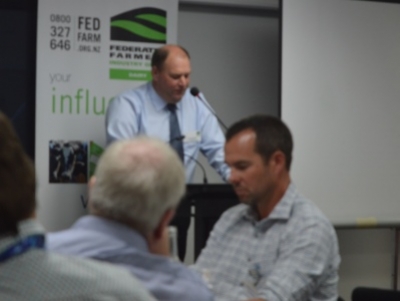
Opening the Dairy Council and Sharemilkers' section conference in Nelson today, Hoggard says this structural issue is adding downward pressure on prices.
Hoggard attributed the dairy downturn to both "cyclical and structural nature".
"It started with a single cyclical event; low demand from China and high levels of supply worldwide," he says.
"But what is holding down prices is an underlying structural issue with the global dairy market."
Dairy remains one of the most highly protected marketed products in the world.
Only 13% of global dairy consumption is accessible to NZ dairy exports at tariffs below 10%, Hoggard says.
These barriers mean only a small volume of global products is traded; liquidity of the global dairy market is constrained making it more prone to volatility.
"And then this volatility is compounded because some of the large developed milk producing countries continue to use subsidies and supports to shift the price risk from their farmers and onto the international market," says Hoggard.
"And then it is the international market that shifts the milk price."
Hoggard says its hypocrisy for these subsidised farmers to declare they want to export but not import.
"Sorry guys it's a two way street.
"Subsidies and support payments have the effect of insulating farmers from the reality of the world markets."