Southerly Winds Hit Taranaki Dairy Pasture Growth
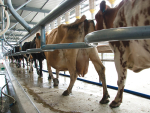
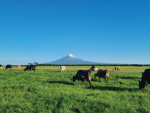
A spate of southerly winds bringing cold temperatures has presented challenges for Taranaki dairy farmers.




 increase font size
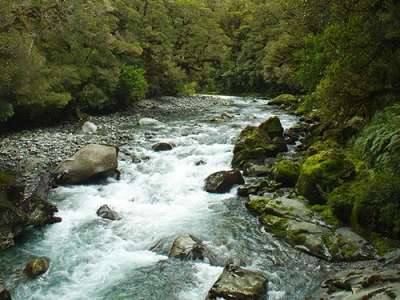 There are no ecological monitoring sites in Taranaki showing significant negative trends. Image: Paul Nelhams.
Taranaki's latest freshwater report shows ecological health for the region's waterways are showing some of the best results ever in the past 19 years.
Ecological water health is largely determined by macroinvertebrate monitoring, the number of tiny insects and species found in streams. Taranaki's 2014-15 results of macroinvertebrate (MCI) monitoring show some Taranaki sites have the best ever results since records began in 1995. These latest results were released in March 2016.
MCI is a nationally recognised measure of water health, used by many regions, which TRC scientists helped develop in the 1980s. MCI assigns a score to each species (from 1 -10), based on its tolerance or sensitivity to organic pollution, then calculates the average score of all species present at a site to rate the water quality.
Currently more than half of monitoring sites (29 out of 57) are in the two positive categories for water health – 22 have a positive and very significant MCI trend, up from 15 just three years ago, and a further seven sites have a significant positive trend.
There are no ecological monitoring sites in Taranaki showing significant negative trends.
There are also more than four times as many sites showing strong, significant improvement compared to seven years ago.
Taranaki streams and rivers showing the strongest evidence of MCI statistical and ecological improvement in water quality are:
· Kaupokonui Stream upstream of the Fonterra Kapuni factory
· Mangaehu River at Raupuha Rd
· Punehu Stream at SH45
· Kapoaiaia Stream at Wiremu Rd
· Mangawhero Stream upstream of Waingongoro River confluence
· Kaupokonui Stream upstream of STDC Kaponga WWTP
· Kapoaiaia Stream at Wataroa Rd
· Mangati Stream at Bell Block.
The full technical report, titled Freshwater Macroinvertebrate Fauna Biological Monitoring Programme 2014-2015 can be seen here: http://www.trc.govt.nz/assets/Publications/state-of-the-environment-monitoring/environmental-monitoring-technical-reports/1603850w.pdf
The findings were presented to the council's policy and planning committee on March 17, 2016.
A spate of southerly winds bringing cold temperatures has presented challenges for Taranaki dairy farmers.
With forecasters advising El Niño conditions will develop through winter and strengthen into spring and summer, Ballance Agri-Nutrients is encouraging farmers and growers to think ahead about nutrient planning and be prepared to work around challenging weather conditions.
Halter has announced the six winners of its 2026 One Year Free competition, marking the biggest year yet for the annual award and the first time the company has expanded the field beyond its usual line-up.
On a farm in Tikorangi, North Taranaki, Brent Stevenson is sharemilking 1,400 cows.


Beef + Lamb New Zealand (B+LNZ) says it welcomes the passage of the Natural Environment Bill and Planning Bill, calling the bills a positive step for sheep and beef farmers.
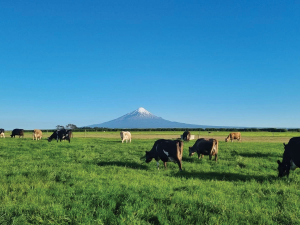
A spate of southerly winds bringing cold temperatures has presented challenges for Taranaki dairy farmers.
Converting a longstanding cropping farm to dairy was the only way to ensure the land stayed in the family long term, says new dairy farmer Rod May.
As the election heats up, Organics Aotearoa New Zealand (OANZ) has launched its election scorecard designed to help voters wanting to support policies that grow organic and New Zealand's organic sector.
A 'tsunami' of milk from key exporting countries is winding down and this may be good news for New Zealand dairy farmers.
Will the good times last? That's one of the key issues to come out of the latest Federated Farmers confidence survey.




OPINION: The same mainstream media muppets that brought you Jacindamania in 2017 have been flat out pimping for the Opportunities…
OPINION: Your old mate reckons the atrocious way farmers in the UK are treated by their lords and masters in…