Damien O’Connor Criticises Budget 2026 as ‘Miserable’ for Rural New Zealand
A miserable budget that didn’t deliver much for anyone.




 increase font size
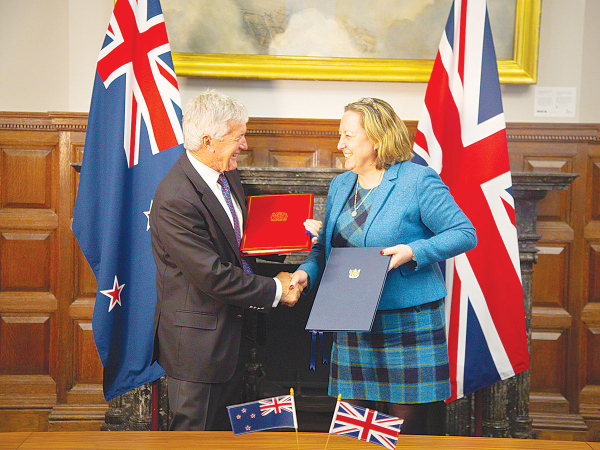 New Zealand Trade and Export Minister Damien O'Connor with then-UK Secretary of State for International Trade Anne-Marie Trevelyan at the signing of the free trade deal in 2022.
The Government says that, from today, New Zealand businesses will start reaping the benefits of the country's free trade agreement with the United Kingdom.
The deal signed in 2022 and approved by the New Zealand Government last year and the UK Government earlier this month, on the eve of the coronation of King Charles III, comes into effect today.
This means that from today, tariffs and duties will be eliminated on numerous products, including dairy, honey, and wine.
Prime Minister Chris Hipkins says the FTA will provide a sizeable boost to the New Zealand economy, bringing up to a $1 billion increase in the annual GDP.
“Our earlier-than-expected implementation means that from today New Zealand businesses will immediately save around $37 million, with the instant elimination of tariffs and new duty-free quotas covering 99.5% of current exports,” Hipkins says.
Trade and Export Minister Damien O’Connor says that while trade agreements can at times appear more academic than tangible, but that changes when they come into effect and the benefits can be seen.
“Our wine industry is New Zealand’s biggest export to the UK – and will see at least $25 million in tariffs disappear overnight,” O’Connor says. “Honey producers will no longer face a 16% duty and our dairy and red meat sectors will transition to duty and quota-free access for the first time in 50 years.”
“This is a major delivery milestone and sits alongside the seven new or upgraded FTAs secured since 2017, which is helping to contribute to record earnings for our exporters,” O’Connor says.
He says the proportion of New Zealand export goods covered by a FTA have expanded from 52.5% to 73.5% since 2017, something O’Connor says proves the importance of the agreements to growing exports.
“In a cost of living crisis, the UK FTA cuts costs for exporters, boosts opportunities for small businesses, and will protect and create more jobs for New Zealanders,” he says. “One in four jobs depend on trade – showing the importance of trade to our nation’s growing economy.”
“As the first FTA launched and concluded under New Zealand’s Trade for All agenda, this agreement sets high ambition commitments in inclusive and sustainable trade with outcomes on environment, gender, and a dedicated chapter on Māori Trade and Economic Cooperation,” O’Connor says.
A miserable budget that didn’t deliver much for anyone.

National's decision to ‘dribble’ information about the NZ/India to Labour contributed to the delay in it deciding to supported the FTA.
The Labour Party has announced it will support New Zealand's free trade agreement (FTA) with India.
Labour Party Leader Chris Hipkins has announced a reshuffle of the party's caucus portfolios.
OPINION: November 7 has been set by Christopher Luxon as ‘E day’ – election day.

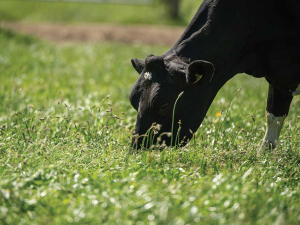
Farms across the upper North Island are trialling different pasture mixes as part of a research programme that aims to build greater resilience into farming systems.
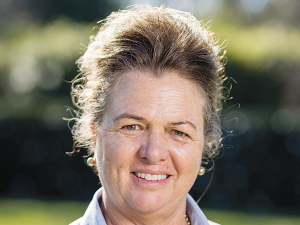
Election years are always a concerning time for farmers, according to DairyNZ chair Tracy Brown.
The Ballance Farm Environment Awards are coming to the West Coast of the South Island.
Most dairy regions around the country have had a pretty good season so far says Tracy Brown.
Rural leader Mark Hooper has been appointed as an independent director to the NZPork board, bringing extensive farming, governance and advocacy experience to the role.
Opportunity says its land value tax (LVT) is unlikely to force farmers into a position where asset sales or increased debt are required.


OPINION: The same mainstream media muppets that brought you Jacindamania in 2017 have been flat out pimping for the Opportunities…
OPINION: Your old mate reckons the atrocious way farmers in the UK are treated by their lords and masters in…