
Pāmu FY26 Report: Profit More Than Doubles to $113m
Pāmu has released its FY26 Integrated Annual Report, reporting a Net Operating Profit of $113 million, more than double the $49 million recorded in FY25.




 increase font size
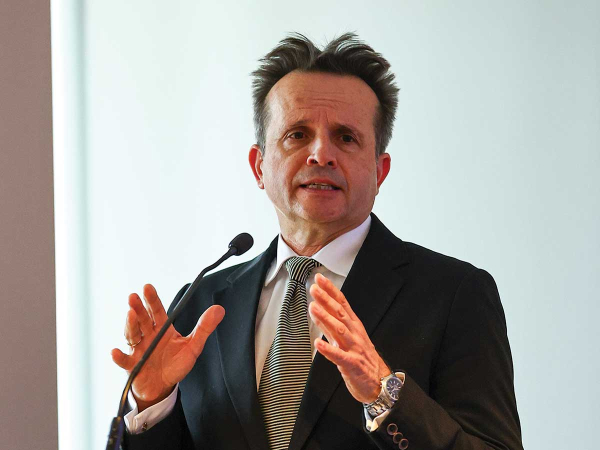 Vangelis Vitalis
Supply chain problems, growing protectionism and a move to greater food security are some of the key challenges facing New Zealand exporters, according to our top trade negotiator, Vangelis Vitalis.
Speaking at the recent HortNZ conference, he said that the geopolitical tensions between the US and China and the Middle East and Russia are having a significant impact on NZ's trade. He added that the supply chain challenges that have emerged are a refreshing reminder of what we faced during Covid.
Vitalis says in the future NZ needs to be more focused on resilience and how that needs to be handled in an international context. He says this is so that the supply and value chains that we have developed and rely on to export can be sustained.
"The second big feature in the trade policy sense is rising protectionism and that is well and truly back. I think there was a time when some of us were briefly optimistic that protectionism was reducing and the future was looking good for agricultural exporters, but unfortunately, it's not possible to be quite so optimistic anymore," he says.
The other issue he noted was the rise in non-tariff trade barriers. It's well-known that many economies are finding novel and interesting ways to protect their ag sector, often to the detriment of NZ.
One example of this is the USA which has, for whatever reason, imposed 12.5% tariffs on many of our exports. Other countries have from time to time mad last minute 'technical changes' such as new food labelling rules which delay or prevent exports reach destinations.
Vitalis says another factor that NZ is having to deal with is a focus by some key export destinations on the issue of food security. With problems in the Middle East, jurisdictions such as the EU are now thinking about what they call 'strategic autonomy' - code for protectionism and food security.
"So, given all these things, the jungle has grown back and there will be more disorder and uncertainty," he says.
Vitalis says NZ's trade strategy is now about getting a more rules-based trading environment, developing resilience and innovating to try and mitigate the problems we face. He says we are a small country and need to be creative in developing new free trade agreements and dealing with the plethora of non-tariff trade barriers.
Trade Minister Todd McClay says he'll be making a concerted effort over the next five years to obtain more FTAs.
He says the process has already begun with Switzerland with an agreement to establish a Trade and Investment Dialogue. He says Switzerland is an important partner for NZ and one of the world's most innovative and advanced economies.
Two-way trade between the two countries were worth NZ$1.88 billion as at the end of last year.
McClay says the Trade and Investment Dialogue will lead to closer economic cooperation and enhanced collaboration, through bilateral trade and investment forums like the World Trade Organisation, the OECD, and the FIT Partnership.
"At a time of growing global economic uncertainty, it is more important than ever that like-minded countries work together to strengthen trade and investment," he says.
Beside Switzerland, McClay says Brazil and Columbia are high on the agenda for trade talks, as are Sri Lanka and Bangladesh - the latter country, which has 170 million people, has done a trade deal with the USA. He says NZ is also looking towards Africa and in particular Rwanda and Nigeria.
Pāmu has released its FY26 Integrated Annual Report, reporting a Net Operating Profit of $113 million, more than double the $49 million recorded in FY25.

Meat Industry Association data, released alongside the Red Meat Sector conference in Wellington, shows export value climbing across the US, China, UK and Canada.
Applications are set to open for the 2027 Zanda McDonald Award, a trans-Tasman award recognised for identifying and fast-tracking talented young leaders in agriculture and agribusiness.
Synlait has swung to second-half profit as operations stabilise, but the dairy processor still posted a $75.4m annual loss.
LIC shareholders have elected a new North Island representative to the co-operative's Board, along with five representatives to its Shareholder Reference Group (SRG), following the company's Annual Meeting held in Invercargill.


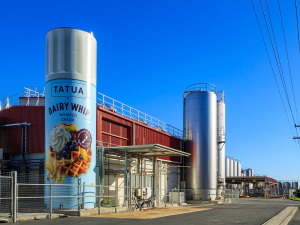
Waikato milk processor Tatua has again declared a record milk payout to farmer shareholders, leaving other processors in the dust.

A Labour-led Government won’t be bringing back the controversial freshwater rules of 2020.
National’s much-touted free trade deal with India featured in the Rural Issues Debate at Mystery Creek, Hamilton on Wednesday night.
New Zealand's 2026-27 freshwater fishing season has opened, with anglers encouraged to head to rivers and lakes over the coming days as conditions look favourable across much of the country.
Central Otago District Council (CODC) has voted against a plan to spread treated sewage sludge from Cromwell and Alexandra on farmland near Lauder, a decision Federated Farmers says reflects strong opposition from rural residents.
Pāmu has released its FY26 Integrated Annual Report, reporting a Net Operating Profit of $113 million, more than double the $49 million recorded in FY25.





OPINION: The same mainstream media muppets that brought you Jacindamania in 2017 have been flat out pimping for the Opportunities…
OPINION: Your old mate reckons the atrocious way farmers in the UK are treated by their lords and masters in…




