North Otago expansion ready to flow
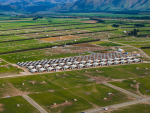
The North Otago Irrigation Company (NOIC) expects its $53 million stage two expansion to be fully operational by the end of September, following a year’s delay caused by construction problems.




 increase font size
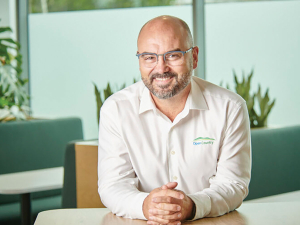
 NOIC chief executive Robyn Wells.
“A blunt instrument that is unclear in its purpose.”
That is how North Otago Irrigation Company (NOIC) chief executive Robyn Wells describes the Labour Party’s proposed water royalty or irrigation tax.
“On the face of it, it’s inequitable and nonsensical to apply a royalty to water as if it’s a finite resource such as coal or gold,” said Wells.
“We all know that when we take water and irrigate, some of it goes back into groundwater flows and some of it goes into growing of grasses and plants,” she told Rural News.
“From those plants there’s evapo-transpiration, so it goes back into the atmosphere and it comes back into the cycle. That’s basic science – a water cycle.”
Wells says if the purpose was to tax water take, then everybody should be taxed.
“If the purpose was to tax pollution coming from the use of water, then the polluters should pay.”
Wells pointed out that no-one now pays for water; they pay for the capital and operation of the infrastructure.
“Even in Auckland, people are paying for the infrastructure -- the pipes and the operation of the pipes to bring the water to the door. We already charge our farmers for that at NOIC.”
She says NOIC also spent substantially on environmental management and enhancement.
Wells noted that the Waitaki River is a good quality river in an area where a lot of good environmental work is done.
She says the farmers of North Otago would be paying a royalty which would probably have to go somewhere else in NZ.
The North Otago Irrigation Company (NOIC) expects its $53 million stage two expansion to be fully operational by the end of September, following a year’s delay caused by construction problems.

The country's second largest milk processor is warning against 'complacency' during a review of competition regulations in the dairy sector.
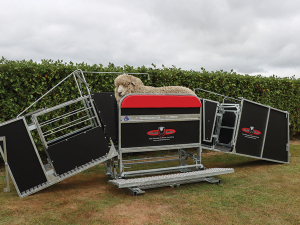
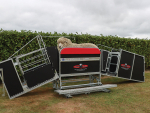
Oamaru-based livestock handling specialist Te Pari has bought Combi Clamp, the New Zealand manufacturer of Combi Clamp manual sheep handlers.
Agriculture Minister Todd McClay has admitted that a scheme bringing workers from Pacific nations to work on orchards has become too hard to navigate but says changes are coming.
A new app designed in New Zealand aims to help sheep, beef and deer farmers capture, analyse and use body condition score data more effectively.
Canterbury farmer Andy Macfarlane has been appointed to the board of AgriZeroNZ, the public-private partnership designed to accelerate the development and deployment of emissions reduction tools for New Zealand farmers.
For over 50 years Mel Ewers has been supporting the apple sector navigate through compliance and quality assurance issues.



A fair question has been raised about how member-funded organisations should conduct themselves when taking a public position on any…
OPINION: It really is getting harder to lampoon government bureaucrats when they do such a good job of it themselves.…