China No Longer Just A Commodity Story - Luxon
China remains New Zealand’s biggest market, taking $23 billion of our exports, but it’s no longer a commodity story, says Prime Minister Christopher Luxon.




 increase font size
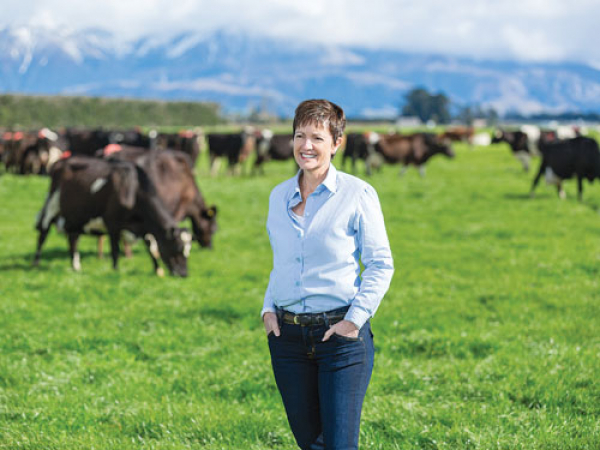 Westland chief executive Toni Brendish.
Westland Milk Products says Covid-19 is causing “minimal disruption” to its supply chains, with the company working to meet rising demand from China.
The second-largest dairy enterprise in New Zealand says domestic demand for its product range is also remaining consistent.
To keep up with demand in the face of the Covid-19 pandemic, the company this morning announced that it is issuing measures to keep staff well and the factory running.
Westland says it has stopped all non-critical travel for staff and is trialling working from home measures where possible following recent developments in the spread of Covid-19.
Chief executive Toni Brendish says the company is aware of its importance to the West Coast community at such an unprecedented and stressful time.
“As the largest employer on the West Coast, directly employing more than 500 people, we’re also well aware of how many more hundreds of people are contracted or employed in areas which rely on the factory and the 374 farms supplying milk to the plant every day,’’ says Brendish.
“The economic benefits the dairy sector and the Westland Milk Products facilities in Hokitika bring to the region and beyond are significant so it’s important that we do everything we can to keep everyone safe, well and the factory able to meet with demand.’’
Westland staff are also being asked to restrict travel in their own time to avoid spread of the infection and to advise the company if they have, while non-essential visits to the Hokitika site have also been halted.
The company has introduced a range of measures which will be reviewed daily subject to Ministry of Health advice.
“I can also reassure our valued customers that our quality control measures in the factory ensure that our food safety protocols adhere to the highest global standards,’’ says Brendish.
She says Westland’s product safety and quality control measures are being continually reviewed to ensure they meet global best practice and quality control standards.
China remains New Zealand’s biggest market, taking $23 billion of our exports, but it’s no longer a commodity story, says Prime Minister Christopher Luxon.

Fonterra is strengthening its foodservice presence in China with the launch of a new cream for professional bakeries at Bakery China 2026 in Shanghai.
Westgold butter has been named New Zealand's tastiest in a blind tasting conducted by Consumer New Zealand.
Yili's New Zealand businesses have reported record profits following a major organisational and strategic transformation.
OPINION: What does the birth rate in China have to do with stock trading? Just ask a2 Milk Company.



During the nesting season, from September to December, industrious starlings can quickly build nests in the darker areas behind tractor and vehicle, usually close to hot engines, typically resulting in localised damage or in some cases complete write-offs.

The meat processing industry is much more collegial than it was in the past and is now more focused on common goals.
With the last couple of months having seen some potential tractor purchases put on hold with the impending election and continued input cost rises, year-to-date figures, ending September, has seen deliveries up around 5% over the same period in 2025, with a total of 2026 units.
Beef+Lamb New Zealand is calling for nominations for director roles in the Northern South Island and Northern North Island electoral districts.
Fonterra chief executive, Richard Allen says being resilient has helped the dairy industry overcome extreme volatility in recent years.
The head of the Ministry for Primary Industries (MPI) trade and international relations group says New Zealand is well-positioned to secure trade access and compete internationally as the world becomes more complicated, demanding and uncertain.





OPINION: The same mainstream media muppets that brought you Jacindamania in 2017 have been flat out pimping for the Opportunities…
OPINION: Your old mate reckons the atrocious way farmers in the UK are treated by their lords and masters in…