Cameron Henderson Reappointed Unopposed as DairyNZ Deputy Chair
DairyNZ deputy chair Cameron Henderson has been re-appointed unopposed for another term.




 increase font size
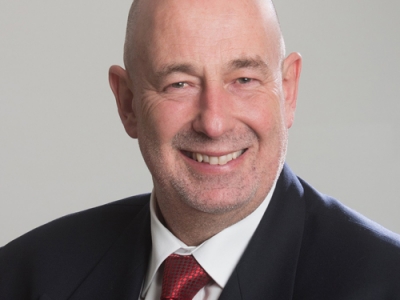 New Hort NZ boss Mike Chapman takes over an industry on the rise.
Horticulture claims to be the little brother growing up fast, Beef + Lamb NZ welcomes the possibilities new trade agreements will bring and the dairy industry is being urged to stay strong and keep enhancing its reputation.
Here are some key messages from industry leaders for the year ahead in the primary sector.
Horticulture
In New Zealand horticulture is the little brother to the major primary industry powers of the dairy, meat, forestry and wine sectors, says HortNZ in its crystal ball gazing piece for Rural News.
"But this little brother is growing up fast," it says. "At the end of 2015 MPI predicted that the rise and rise of horticulture will make a considerable contribution towards offsetting the slump in the primary sector's export earnings caused by the dairy downturn."
The growth is built on years of long-term strategic planning, commitment to developing new markets, constant evolution of production systems and old fashioned hard work.
MPI's outlook for 2016 predicts a rise in industry returns of about $700 million, thanks to the recovery of kiwifruit post-Psa, increasing apple exports and improved market access with lower tariffs and exchange rates for products like onions, buttercup squash and cherries.
Mike Chapman, former chief executive of Kiwifruit Growers Inc, is taking over as Horticulture NZ chief executive following the departure of long-serving chief executive Peter Silcock.
He has also worked for the Commerce Commission, the Auckland District Law Society and as chief executive of the regulatory body Kiwifruit NZ, and for NZ Kiwifruit Growers.
Chapman says the appeal of his new role with Horticulture NZ lies in the opportunity to work across the entire horticulture industry, which has enormous potential and scope for better collaboration and development.
"What really excites me is being in the position to strengthen all the existing networks in horticulture," he says.
Horticulture is NZ's fourth-largest export industry with at least 100 different products, with a total value of just over $5 billion – export returns making up half of that figure.
The industry has a strategic plan to make horticulture a $10 billion industry by 2020. "And I'm excited about being part of the industry as we close in on that goal. I have every confidence that we can get there," says Chapman.
Beef + Lamb
Last year was a good year for progressing free trade agreements and the Trans-Pacific Partnership (TPP) could be the best deal yet, says BLNZ chief executive Scott Champion.
The NZ Korea FTA came into force in December and given Korea is our fourth-largest beef market by volume this will be significant for NZ beef farmers.
But the TPP is a 'mega-FTA' involving NZ and 11 other countries around the Pacific Rim including the world's first- and third-largest economies US and Japan, he says.
"It will secure our trading position in some vitally important markets, and prepare the way for possible expansion into others with exciting growth potential," says Champion.
"The TPP will wipe out all tariffs on our sector's exports into 10 of those 11 TPP countries. Even factoring in the zero tariff treatment we already get in markets like Australia and Singapore, that is a major achievement.
"But it will be in Japan – the only TPP market where not all sheep and beef sector tariffs will be
eliminated – where the really big win will come for Kiwi sheep and beef farmers."
On another issue, Champion says supporting farmers as they manage increasing environmental commitments is an area where BLNZ added more resource last year, ensuring farmers can cope with increasing climatic challenges.
Focus on environmental policy work has also increased.
"It's important that farmers are at the table when decisions are being made on farming within nutrient limits," he says.
"We've now held two environmental conferences to help equip farmers with the information they need to ensure their interests are represented on their local catchment groups and councils. This ensures sheep and beef farmers' voices are heard as decisions on farming within limits are developed.
"We know that local voices count for plenty in community discussions and these conferences have provided opportunities for farmers to understand how to engage in their own community discussions and ensure their views are listened to."
Champion has resigned from BLNZ. "It's been a privilege to work for sheep and beef farmers for the past 10 years and at the end of March it will be time to hand over to the next BLNZ chief executive to take the organisation onwards," he says.
Dairy
As we look to 2016, we are not out of the woods yet, says DairyNZ chief executive Tim Mackle.
"The milk price is still low and on top of that we are facing a potentially dry summer in some regions because of an El Nino weather pattern," he says.
We are also dealing with the questioning of our reputation – where the action of a few let us all down, he says
"When video footage of the treatment of bobby calves was recorded by animal rights group Farmwatch and released as part of a SAFE campaign in November, I was immensely proud of how dairy farmers stood up and wanted to be counted and heard through various channels, including social media," says Mackle.
"Their only concern, despite a tough year and low milk price, was the welfare of those animals. You all showed how much you cared. NZ heard you and got in behind the need to show support for our industry and our farmers."
The dairy industry must continue to focus on building character.
"We also want to keep hearing from farmers about the kind of support they value the most and want us to deliver," he says.
"We've worked together as an industry to survive a tough year. Now we have to look forward to a new year, and make sure our resolutions as well as our reputation are strong."
Last year was certainly a testing time for dairy farming, he says.
"With the low milk price, we had around 40 farmers nationwide open their farm gates and their books so that others could learn from their experiences – good and bad," he says.
"They were happy to share this information as part of DairyNZ's Tactics campaign through events, online and in the news."
DairyNZ also had to look at doing things a bit differently and asked farmers what they wanted in support. In August 2015, as part of the Tactics campaign, DairyNZ staff made one-on-one feed review visits to help assess feed allocation and discuss spring feed management plans.
Around 900 dairy farmers were visited nationwide.
DairyNZ deputy chair Cameron Henderson has been re-appointed unopposed for another term.

OPINION: Succession and long-term planning are perennial topics because it is perpetually sidelined on busy farms.
OPINION: The stats speak for themselves.
Farms across the upper North Island are trialling different pasture mixes as part of a research programme that aims to build greater resilience into farming systems.
Election years are always a concerning time for farmers, according to DairyNZ chair Tracy Brown.



Now in its fourth year, the 2026 Fencing Industry Awards, formed part of the proceedings of the FCANZ Conference, held in Nelson during August.
DairyNZ deputy chair Cameron Henderson has been re-appointed unopposed for another term.
OPINION: The stats speak for themselves.
Farms across the upper North Island are trialling different pasture mixes as part of a research programme that aims to build greater resilience into farming systems.
Election years are always a concerning time for farmers, according to DairyNZ chair Tracy Brown.
The Ballance Farm Environment Awards are coming to the West Coast of the South Island.


OPINION: The same mainstream media muppets that brought you Jacindamania in 2017 have been flat out pimping for the Opportunities…
OPINION: Your old mate reckons the atrocious way farmers in the UK are treated by their lords and masters in…