
Canterbury Boosts Wallaby Control With $2M Funding Push
Wallaby control efforts in Canterbury have received a major boost, with Canterbury Regional Council releasing $2 million from its Pest Management Reserve.




 increase font size
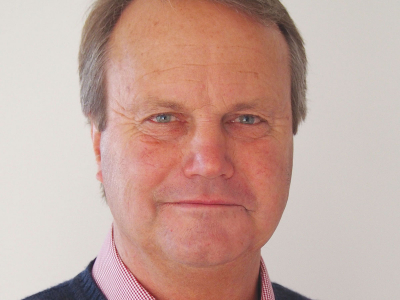 Newly-elected councillor Ian Mackenzie.
Regional councils won’t be anything more than “unpopular policemen” if the discussion document on freshwater goes the way the Government is proposing, says a newly elected Canterbury regional councillor.
In the recent local body elections, Ian Mackenzie topped the poll in the Environment Canterury (Ecan) council’s Mid-Canterbury constituency.
Mackenzie brought an impressive CV to a region where politics are dominated by water, environment and land use.
He has farmed in the Ashburton District for 40 years, served on the national board of Federated Farmers as environment and water spokesman, and on the Land and Water Forum. He was on the national objectives framework reference group which made recommendations to the then Minister for the Environment Amy Adams for the first National Policy Statement on Fresh Water.
“Some of what I hope to be able to achieve will depend on the outcomes of this discussion document on fresh water,” he told Rural News.
“If that goes through the way the Government is proposing then there’s not much scope for the regional councils to be anything other than an unpopular policeman – which is not why I put my name forward as a candidate.
“But assuming the Government sees sense and we get some sensible outcomes more in line with the first NPS on freshwater then there’s quite a lot of scope,” he said.
Mackenzie’s election helps bolster a strong farming sector representation on the first fully democratically elected Canterbury Regional Council since 2010.
The council was replaced by Government appointed commissioners for two terms, then in 2016 seven councillors were elected and joined by a number of commissioners in a transitional council.
Of the seven councillors elected in 2016, five sought re-election this year and four have been successful.
Re-elected were the deputy chair Peter Scott, an arable farmer from Pleasant Point representing the South Canterbury constituency; Leeston dairy farmer John Sunckell in Mid-Canterbury; and Cust farmer and veterinarian Claire McKay in North Canterbury.
Sunckell says he is happy to have been re-elected.
“You don’t know how people see you and how they view your first term, so I’m really pleased to be back.”
Sunckell was impressed by some in the new line-up.
“There’s some really strong people with good education and backgrounds in water and science and governance so that’s a positive.”
Another with strong farming connections is Darfield farm environment consultant Megan Hands, who has been elected to one of the mostly urban Christchurch constituencies.
Hands is from a Hawkes Bay farming family and grew up on a dairy farm in Manawatu before studying at Lincoln and now runs her own consultancy, LandSavvy.
Wallaby control efforts in Canterbury have received a major boost, with Canterbury Regional Council releasing $2 million from its Pest Management Reserve.

Newly released data from Environment Canterbury (ECan) Farm Environment Plan (FEP) audits are showing a dramatic lift in environmental performance across the region.
Buying or building a rural or semi-rural property? Make sure you know where the wastewater goes, says Environment Canterbury.
OPINION: Canterbury grows most of the country's wheat, barley and oat crops. But persistently low wheat prices, coupled with a high milk payout, are believed to be driving farmers out of the industry in the hunt for the dairy dollar, according to media reports.
Environment Canterbury, alongside industry partners and a group of farmers, is encouraging farmers to consider composting as an environmentally friendly alternative to offal pits.


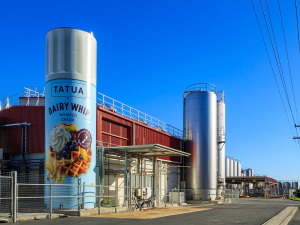
Waikato milk processor Tatua has again declared a record milk payout to farmer shareholders, leaving other processors in the dust.
A Labour-led Government won’t be bringing back the controversial freshwater rules of 2020.
National’s much-touted free trade deal with India featured in the Rural Issues Debate at Mystery Creek, Hamilton on Wednesday night.
New Zealand's 2026-27 freshwater fishing season has opened, with anglers encouraged to head to rivers and lakes over the coming days as conditions look favourable across much of the country.
Central Otago District Council (CODC) has voted against a plan to spread treated sewage sludge from Cromwell and Alexandra on farmland near Lauder, a decision Federated Farmers says reflects strong opposition from rural residents.
Pāmu has released its FY26 Integrated Annual Report, reporting a Net Operating Profit of $113 million, more than double the $49 million recorded in FY25.





OPINION: The same mainstream media muppets that brought you Jacindamania in 2017 have been flat out pimping for the Opportunities…
OPINION: Your old mate reckons the atrocious way farmers in the UK are treated by their lords and masters in…