
Lanaco and Blueair Launch World-First NZ Wool Air Filter
New Zealand wool is reaching new heights as air filtration companies move away from synthetic products to biodegradable alternatives.




 increase font size

An after-tax profit of $1.08 million for the six months to December 31, 2011, is ahead of budget, says New Zealand Wool Services International Ltd (WSI).
"While this was lower than the record result of $3.058 m achieved in the corresponding period for 2010, the result is ahead of budget for the six months and was the second strongest first half year in the company's history," the company says in a statement releasing the interim result.
"The board is particularly pleased with this result in light of the exceptional conditions that prevailed in the previous year, which did not continue into the first half of the current financial year."
Group revenue was $107.564m, compared to $84.801 million attained for the 2010 half year driven by increased values but declining volumes.
Although the dollar turnover for the period was higher than last year, weakness re-surfaced in the world economy, particularly in Europe. As a consequence, in the latter part of the period, wool trading declined in volume.
Because international demand reduced, in the six months under review, the amount of wool scoured was less than for the same period of the previous year, the company says. Also affecting the volume of wool scoured was the increase in greasy wool sought by China with record high wool grease prices stimulating this demand.
The company says it traditionally performs more strongly in the second half of its financial year.
"On that basis, we believe the six months to June 2012 should produce a satisfactory year end result. However, due to the vagaries of the international market, we remain cautious. In addition, the current level of the New Zealand dollar is making exporting of all products from New Zealand more difficult and less profitable.
"A declining wool clip, the deteriorating world economy and a high NZ dollar pose difficulties beyond our control and for these reasons the company has invested in new research that we believe will have a positive impact during the next financial year and longer term."
The board has resolved to pay shareholders an interim imputed dividend of 1.5c/share. This dividend will be paid on Friday, May 4, based on the record date of Friday, April 27, 2012.
New Zealand wool is reaching new heights as air filtration companies move away from synthetic products to biodegradable alternatives.
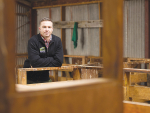
Will a stronger, more coordinated voice help rebuild confidence and improve returns in the wool sector?
OPINION: Confidence in the wool sector is rebounding as prices hit levels not seen in more than 15 years.
The recently signed free trade agreement with India is an invitation to strengthen relationships between the New Zealand and Indian strong wool industries, says Wool Impact chief executive Andy Caughey.
Strong competition and tightening supply have seen wool reach its highest prices paid at auction since 2011.



During the nesting season, from September to December, industrious starlings can quickly build nests in the darker areas behind tractor and vehicle, usually close to hot engines, typically resulting in localised damage or in some cases complete write-offs.
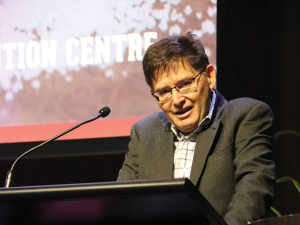
The meat processing industry is much more collegial than it was in the past and is now more focused on common goals.
With the last couple of months having seen some potential tractor purchases put on hold with the impending election and continued input cost rises, year-to-date figures, ending September, has seen deliveries up around 5% over the same period in 2025, with a total of 2026 units.
Beef+Lamb New Zealand is calling for nominations for director roles in the Northern South Island and Northern North Island electoral districts.
Fonterra chief executive, Richard Allen says being resilient has helped the dairy industry overcome extreme volatility in recent years.
The head of the Ministry for Primary Industries (MPI) trade and international relations group says New Zealand is well-positioned to secure trade access and compete internationally as the world becomes more complicated, demanding and uncertain.


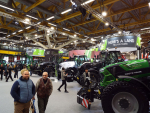

OPINION: The same mainstream media muppets that brought you Jacindamania in 2017 have been flat out pimping for the Opportunities…
OPINION: Your old mate reckons the atrocious way farmers in the UK are treated by their lords and masters in…