Kuhn Group Sales Dip 9% in 2025 but Orders Signal Recovery
Kuhn Group recorded net sales of NZ$2.27 billion in 2025, finishing around 9% lower than in 2024.




 increase font size
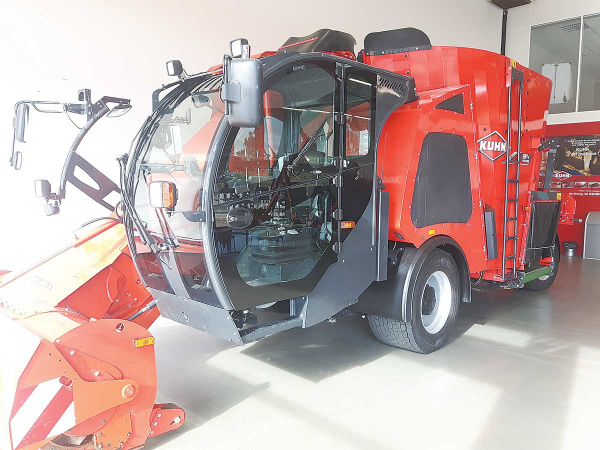 KUHN's VISIOSPACE cab.
KUHN's VISIOSPACE cab offers the largest window surface area and best field of vision on the market.
Self-propelled mixer wagons offer the advantages of being able to load, cut, mix and feed livestock rations, all with the same machine.
As a result, the extended use of such machines means users are expecting increased comfort, ergonomics and visibility.
Since early 2019, KUHN has been installing the new generation VISIOSPACE cabs on all self-propelled SPV and SPW single and twin vertical auger mixers.
The VISIOSPACE cab satisfies several expectations: cab offers the largest window surface area and best field of vision on the market.
From right to left, the driver has a 360° panoramic view, making it particularly suitable for users who operate livestock buildings or tight confines.
Featuring a layout that has no visual obstacles at the foot of the cab, the driver is allowed a clear view of the milling head at the bottom of the silage clamp or when loading fibre bales.
Downtime is reduced as the driver can easily assess the distances and see clumps of fodder that may cause a potential blockage issue for the machine.
With feeding typically carried out at the beginning or end of the day, the ventilation and heating system capacities have been increased by 50% and 30% respectively same generous dimensions of the first generation, are retained for spaciousness, and accessibility.
To service a wide range of users, the VISIOSPACE cab is available in Standard, Edition and Attractive specifications.
Kuhn Group recorded net sales of NZ$2.27 billion in 2025, finishing around 9% lower than in 2024.
ZED, the dedicated wholesale division of CB Norwood Distributors, and the importer and distributor for Kuhn in New Zealand, has announced investment in local expertise and stock availability for customers in 2026.
Kuhn has announced an expansion of its range of disc mowers, distributed by Norwood in New Zealand, with the addition of two new vertically folding rear mounted models, the GMD 3515 and GMD 4015.
With most forage harvester manufacturers offering machines touching 1000hp, the logistics puzzle has always been ‘dropping” grass and pulling into a swath big enough to feed the “beast”.
French company KUHN has won a EIMA Technical Innovation Award for its Baler Automation Technology.


Dairy processors are ready to further boost New Zealand’s export earnings but want the incoming government to match their ambition with good policy.
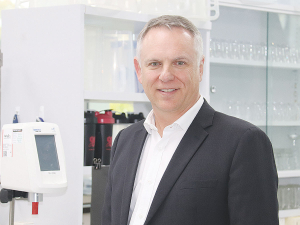
Massey University is best placed to solve the “problems” facing the dairy industry, says vice chancellor, Pierre Venter.
Synlait's longest serving employee – a man who joined the Canterbury-based milk processor even before it began processing milk – is now its newest executive.
A dairy industry leader believes eradicating the common and costly disease, Bovine Viral Diarrhoea (BVD) is within reach.
A farmgate milk price of $10/kgMS this season is firming up as milk powder prices soar and the New Zealand dollar weakens.
Federated Farmers has welcomed new rural policies released by ACT, saying they align closely with its own election priorities.

OPINION: The same mainstream media muppets that brought you Jacindamania in 2017 have been flat out pimping for the Opportunities…
OPINION: Your old mate reckons the atrocious way farmers in the UK are treated by their lords and masters in…




