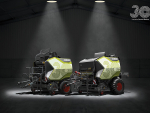
Claas Balers Turn 30
Claas built its first variable chamber round baler - the Variant 100 - in 1996, so 2026 marks 30 years and the fifth generation of the Variant name, recently complemented by the new Cerex Series introduced in 2025.




 increase font size
 The Xerion 5000 (530hp) TS.
Claas has introduced crawler tracks, Stage V engines and the next generation CEBIS operating system to its advanced technology Xerion tractors.
Claas claims the Xerion is now among the most technologically advanced tractors available.
The machines have permanent 4x4 drive, all-wheel steering, continuously variable transmission and a choice of fixed, rotating or front-mounted cabins.
The new Trac TS variation, available on the Xerion 5000 (530 hp) and 4500 (490 hp) models, have four crawler units fitted with 762 mm (30”) tracks. The larger tracks are said to increase the machine’s footprint by 25% -- compared with the largest single tyre available – yet maintain an external width no bigger than 3m.
A pendular suspension system allows the crawler tracks to adapt to changing terrain and ensures a high level of driver comfort in combination with the existing cab suspension.
Both models now have MTU OM 471 Stage V engines that deliver higher torque at lower speeds. Peak torque has increased 6.1% to 2600 Nm on the Xerion 5000 and 4.3% to 2400 Nm on the 4500. And engine idling speeds have been reduced from 800 to 730 rpm, helping to reduce fuel consumption and unnecessary noise.
Both models have a three-way exhaust gas aftertreatment system. This includes a diesel oxidation catalyst (DOC), diesel particulate filter (DPF) and selective catalytic reduction (SCR) technologies. The after-treatment system is located under the right side of the cab, avoiding the need for an external canister.
The service interval for the new engines has been doubled to 1000 hours, and the traditional dipstick has been replaced by a sensor; the oil level and top-up amount is displayed in the CEBIS terminal.
The cab now has an armrest with an integrated CMotion multifunction control lever and touchscreen CEBIS operating system. The 300 mm (12”) display gives a clear overview of all key machine settings and allows direct access to steering, transmission and hydraulics settings.
The function buttons on the CMotion control lever and the armrest can be freely assigned. Up to 20 different tractor/ implement combinations can be saved and directly accessed within CEBIS, which also includes a total of 10 different function buttons which can be freely configured with a range of control functions, depending on operator preference.
Claas built its first variable chamber round baler - the Variant 100 - in 1996, so 2026 marks 30 years and the fifth generation of the Variant name, recently complemented by the new Cerex Series introduced in 2025.
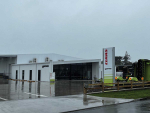
At a time when many businesses are taking a cautious investment approach, Landpower continues to back its customers, having officially opened the doors to its new CLAAS Harvest Centre dealership in Feilding, marking a significant investment in the future of agriculture across the lower North Island.
Twin rotor swathers have become the ‘go-to’ for forming swaths to feed hungry harvesters and balers, however, the design layout often means that crop located between the two rotors is not picked up, turned over or incorporated into the swath formed for subsequent harvesting.
Fifty Eight years ago, on the 16th of August 1968, August Claas, the founder of the harvesting company and father of Helmut Claas, personally presented a Claas Senator combine harvester to Scottish farmer John Steven.
Scheduled to replace its Axion 800 series, Claas has released details of the new, three model, Axion 8 CMATIC range.

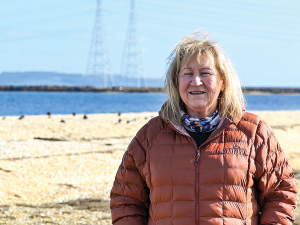
For 15 years, Glenda Rees has travelled from Gore to Awarua, often several times a week, to keep watch over one of the country’s rarest birds.
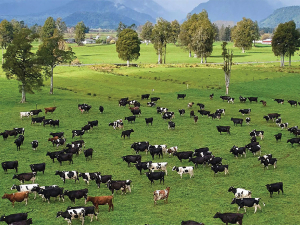
With some farmers opposing a government-industry partnership set up to develop methane reducing products, one NZ company claims that it already has a product on the market.
During the nesting season, from September to December, industrious starlings can quickly build nests in the darker areas behind tractor and vehicle, usually close to hot engines, typically resulting in localised damage or in some cases complete write-offs.
The meat processing industry is much more collegial than it was in the past and is now more focused on common goals.
With the last couple of months having seen some potential tractor purchases put on hold with the impending election and continued input cost rises, year-to-date figures, ending September, has seen deliveries up around 5% over the same period in 2025, with a total of 2026 units.
Beef+Lamb New Zealand is calling for nominations for director roles in the Northern South Island and Northern North Island electoral districts.



OPINION: The same mainstream media muppets that brought you Jacindamania in 2017 have been flat out pimping for the Opportunities…
OPINION: Your old mate reckons the atrocious way farmers in the UK are treated by their lords and masters in…