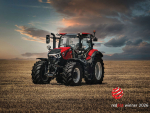
Case IH Unveils Next Generation Puma Series Tractors
Case IH has unveiled its redesigned next generation Puma Series tractors, said to offer improvements in connectivity, operator comfort, fuel efficiency and drivability.




 increase font size
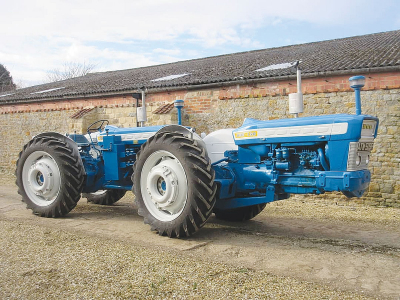 This 1968 Doe 130 tractor sold for $NZ141,000 at the Cambridge Vintage Auction in the UK.
The success of a recent UK auction of 1960s tractors should be a prompt to see what’s lurking in the gloom of your old machinery shed.
At the Cambridge Vintage Auction, a 1968 Doe 130 tractor sold for GBP 71,000 (NZ$141,000) with an additional 5% buyer’s premium on top.
The tandem tractor (serial number D663) was based on bringing together two well-known Ford 5000 tractors. The auctioned machine was reckoned among the last of the 130s to be made.
Its provenance was even more interesting. It was sold new to George Pryor, of Navestock, Essex. He was the farmer and inventor whose original concept led to the famous Doe Triple-D tractor.
The 130 designation reflects the combined horsepower of the two 65hp Pre-Force Ford 5000 skid units. The first of these units was launched in 1964 when the Doe 130 retailed for GBP2850 (NZ$5700). It was a roaring success, with 73 sold in 1965, of which 14 were exported.
Production of the 130 ended in 1968 by which time 170 units had been built. Then demand dropped away as mainstream tractor manufacturers began selling their own higher horsepower machines.
After 1968 only three new tandem tractors were built, in this case using Ford Force 5000 ‘skids’ of 75hp, resulting in the Doe 150 model.
The original tractors emerged from George Pryor’s experiments in 1957 to bring together two Fordson Major tractors around a central pivot point. His large acreages of heavy Essex clay soils spurred him into developing a powerful 4WD tractor.
The tractor performed beyond expectations and Pryor, then a customer of local dealer Ernest Doe and Son, received a visit from Ernest Charles Doe. They agreed to put the tractor into production.
The first production machines were based on Fordson Power Major ‘skids’ and launched in 1958 as the Doe Dual Power. In 1959 the tractors were re-badged as Doe Dual Drive, leading to the now familiar Triple-D for short.
George Pryor kept the original tractor, which was extensively modified, for 10 years. Then he and his brother each bought a Triple-D in 1961, followed by the auctioned Doe 130 in 1968.
Case IH has unveiled its redesigned next generation Puma Series tractors, said to offer improvements in connectivity, operator comfort, fuel efficiency and drivability.
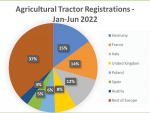
A total of 108,800 tractors were registered across Europe in the first six months of 2022, with 31,900 tractors of 37kW (50 hp) and under and 76,900 of 38kW and above.
Choosing the right new vineyard tractor is an important decision, given the major capital outlay.
Recently released in Europe, with expected delivery yet to be confirmed for New Zealand, the new Valtra A series tractors see a range of new transmission options that will get those looking for a compact workhorse.
New Zealand tractor sales finished 2020 on a strong note, with December sales up 18.4 % on 2019.


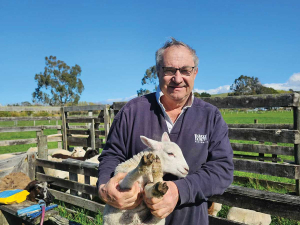
Decades piloting planes has ensured vet and farmer David Hayes is focused on safety. So, after a serious accident while welding on farm, he is sharing his experience so others can learn from it.
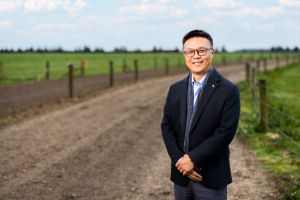
Canterbury milk processor, Synlait Milk has confirmed Leon Fung as its chief executive officer.
OPINION: Making it easier to collect rainwater and use it to grow crops and livestock is a no brainer.
As part of its Election 2026 coverage, Rural News asked political parties how they would help pull the arable sector out of the doldrums. Here's what they said:
Farmers are being encouraged to rethink how they manage waste on farm with the launch of ruralwastesorted.co.nz, a new website bringing together practical tips, real farmer experiences and resources.
New Zealand Winegrowers (NZW) is celebrating the India-New Zealand Free Trade Agreement (FTA) coming into force today, bringing New Zealand wine improved access to one of the world’s fastest-growing economies.

OPINION: The same mainstream media muppets that brought you Jacindamania in 2017 have been flat out pimping for the Opportunities…
OPINION: Your old mate reckons the atrocious way farmers in the UK are treated by their lords and masters in…




