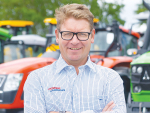
Power Farming Launches Southland Joint Venture
Power Farming has launched a joint venture in Southland.




 increase font size
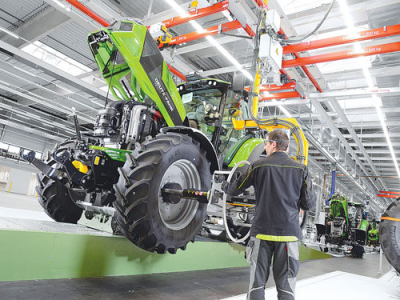 The Power Farming Euro Tour saw 63 New Zealand farmers, contractors and dealers hit Italy and Germany to see the latest tractor technologies from the SDF Group including production of the series 6, 7 and 9 Deutz Fahr.
While the All Blacks were well into planning their end-of-year tour, another group of Kiwis headed to the northern hemisphere in the middle of July during the European summer.
The Power Farming Euro Tour saw 63 New Zealand farmers, contractors and dealers hit Italy and Germany to see the latest tractor technologies from the SDF Group, which recently commissioned the most modern tractor factory in the world.
First stop was at the SDF headquarters in Treviglio, east of Milan in northern Italy.
This is the home of Deutz Fahr tractors up to 130hp and the capable and versatile Series 5 tractors. Guests could take in the heritage of a business that saw the Cassani brothers build their first diesel tractor in 1927, and the SAME DA, the world’s first 4WD tractor, launched in 1952.
On the production lines an upgrade is underway to produce automated guided vehicles (AGV) that carry the emerging tractors around the site and allow the factory to build up to 100 tractors each day.
Following a trip to a local dairy farm, which supplemented milk production with a large biogas plant, the party headed over the Alps to Munich and on to Lauingen, the home of Deutz Fahr.
Said to be the fastest growing brand in Europe, Deutz Fahr has recently commissioned a state-of-the art tractor assembly plant aptly named Deutz Fahr Land. In a building of 42,000sq.m on a site of 160,000sq.m and built at a cost of NZ$145 million, the mission is to build tractors right first time (RTF). A completed tractor leaves the production line every 12 minutes; the factory is said to be capable of producing up to 6000 units per annum on a one-shift basis.
Production centres on the Series 6, 7 and 9 tractors of 130-350hp. The RFT strategy is impressive given that a Series 9 tractor comprises over 5000 individual parts (a premium car has 3500-3800 parts).
At the start of production, engine and transmission assemblies are carried on a line that passes through 20 workstations. Uniquely, workers travel on parallel moving conveyors said to reduce stress and mistakes during the process.
Once the powertrain is completed it is subjected to a full hydraulic test on one of three rigs, using pneumatic pressure testing up to 220 bar, to ensure that quality is 100% before the units hit the paint-shop.
Prior to painting, dirt, dust and any silicones are removed, while an alkaline wash produces a keyed surface for the two automated painting robots. The paint process – said to have cost Euro 20m of the overall investment – combines application, heat curing and cooling before the final fit-out.
Interestingly, the final finish can endure 720 hours in the industry salt-spray test before signs of rusting appear. This contrasts with the car industry, where premium brands such as BMW or Mercedes are only able to endure about 240 hours.
After painting, the drive train meets the cabin assembly, body panels, wheels and tyres, before final accessories like drawbars, lighting and weight packs are added. Finally, the ability of the 90 workers to meet RFT is put to the test, with a rolling road test to ensure all functions operate properly.
And the final test? That involved a bunch of Kiwis taking the tractors to the paddock, using cultivators, harrows and heavily-laden trailers to see what RFT is all about.
Watch the video below:
If the video's not loading, watch it here.
Power Farming has launched a joint venture in Southland.
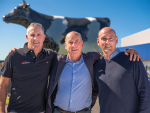
Morrinsville-based agribusiness leader Geoff Maber has been appointed an Officer of the New Zealand Order of Merit (ONZM) in the King’s Birthday Honours, recognising a lifetime of service to agribusiness, the rural sector and the wider community.
Waikato agribusiness leader Geoff Maber has been appointed an Officer of the New Zealand Order of Merit (ONZM) in the 2026 King's Birthday Honours.
Founded in Germany as recently as 1977, today, the Fliegl Group employs more than 1100 workers, offering an expansive range of transport solutions, from their base in Bavaria.
Distributed by Power Farming Group, the Kioti tractor brand has carved a niche for itself over the past two decades by offering productive, reliable and well- priced machines in the sub-compact, compact and agricultural utility sectors, from 22 to 115hp.


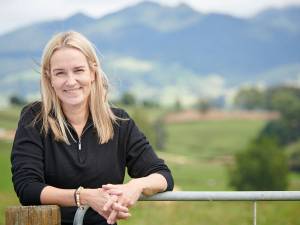
Minister of Conservation Hon Tama Potaka has appointed Susan O'Regan as Chair of the Queen Elizabeth II National Trust (QEII) for a three-year term.
Red meat farmers are welcoming Labour’s plan to review the Emissions Trading Scheme and not to campaign on pricing agricultural emissions.
Where any worker in the kiwifruit industry is mistreated, we expect the authorities to take action.
Mid Canterbury Federated Farmers arable chair, Bevan Lill, said Beef + Lamb NZ data indicated that for the last six years, the average arable return on investment was about 0.8% while inflation ran about 4% - so the average arable farm was going backwards at about 3% a year.
Seed and grain companies share the concerns of arable farmers about the viability of their sector, says Seed and Grain New Zealand chief executive Dr Sarah Clark.
The New Zealand Institute of Forestry (NZIF) says unnecessary changes to New Zealand’s Emissions Trading Scheme (NZ ETS) will seriously erode investor confidence and result in significant reductions in forest planting rates.

OPINION: The same mainstream media muppets that brought you Jacindamania in 2017 have been flat out pimping for the Opportunities…
OPINION: Your old mate reckons the atrocious way farmers in the UK are treated by their lords and masters in…




