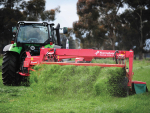
How to Make High-Quality Grass Silage
Grass silage is pickled pasture, preserved through the conversion of its sugars into lactic acid by bacteria.




 increase font size
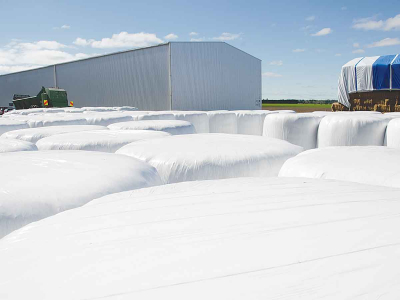 Silotite and Silotite Pro Stretch film has been independently tested.
Silage wrap's key role in baleage production for winter feed has manufacturers pushing the boundaries of polymer production.
But they haven’t all been buying the best technology to extrude silage wrap that is longer, stronger and stretch and puncture resistant.
So to verify its film wrap quality, the Berry/bpi group has had its Silotite range of silage wrap tested by an independent certifier.
Silotite and Silotite Pro stretch films, imported to New Zealand by Agpac, now bear the P-mark awarded by the Swedish government’s SP Technical Research Institute.
The P-mark logo confirms that Silotite films have been independently assessed and quality tested, with a focus on raw materials and manufacturing processes. It also shows the manufacturer is subject to ongoing random inspections and product sampling, says Agpac general manager Chris Dawson.
“When extruding polyethylene films it is possible to produce thinner stretch films which can be sold in longer rolls, sometimes resulting in thinner, not better film,” he said.
He says silage contractors should be cautious about the claims manufacturers make about their products and if they’re unsure should rely on an independent guarantee. In the case of P-mark certification this includes tensile strength, stretch, cling, UV resistance, impact resistance and airtightness. Each roll of Silotite film is guaranteed to have the stated length, thickness and width, and to achieve 70% pre-stretch when wrapping bales.
“Contractors who upgrade their wrappers with cogs which can pre-stretch the film to 70% have a real advantage because they can wrap more bales per roll of film,” said Dawson. “But few films sold today on extra long rolls can withstand this degree of stretch.”
Silotite Pro is available in 1650m and 1950m roll lengths, with patented plastic sleeve packaging that can be recycled with used film -- no need to dispose of cardboard boxes.
Grass silage is pickled pasture, preserved through the conversion of its sugars into lactic acid by bacteria.
As I write this article, we have just had our first frost in the Waikato, a change in weather signalling that winter is upon us.
Waikato farmer Dave Muggeridge was fed up with water seeping in through his maize silage cover and spoiling feed.
Creating perfect silage is both a science and an art, and it all begins with the right tools, according to machinery maker Claas.
Good silage starts by cutting the crop at the correct growth stage, followed by reducing moisture content, chopping to a consistent length, then stacking in a clamp.



Federated Farmers has welcomed new rural policies released by ACT, saying they align closely with its own election priorities.

Rural Contractors NZ says proposed changes to land transport rules for agricultural vehicles are a welcome response by the Government to out of date regulations which have seen members hit with huge fines.
Alliance is calling for final applications for its 2027 Graduate Programme, with applications closing on Sunday 25 October.
Decades piloting planes has ensured vet and farmer David Hayes is focused on safety. So, after a serious accident while welding on farm, he is sharing his experience so others can learn from it.
Canterbury milk processor, Synlait Milk has confirmed Leon Fung as its chief executive officer.
OPINION: Making it easier to collect rainwater and use it to grow crops and livestock is a no brainer.



OPINION: The same mainstream media muppets that brought you Jacindamania in 2017 have been flat out pimping for the Opportunities…
OPINION: Your old mate reckons the atrocious way farmers in the UK are treated by their lords and masters in…




