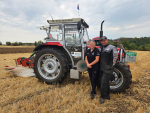
NZ Ploughing Team to Use Borrowed Gear After Shipping Mix-Up
The New Zealand ploughing team to the world championship in Croatia next month will be banking on borrowed equipment as they seek glory.




 increase font size
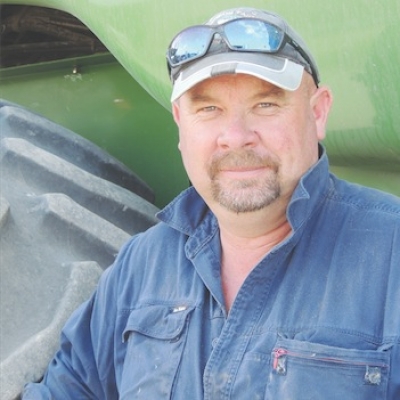 Norm Styles
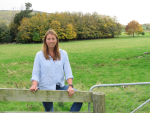
If you're going to plough, do it well, says the president of the New Zealand Ploughing Association, South Canterbury farmer Norm Styles.
Whether it’s on a 0.2ha match plot or a 20ha paddock, the principles are the same: cut all the roots with your opening split and bury everything thereafter, leaving a level finish that will facilitate subsequent operations, he says.
“It comes down to the quality of weed control and seedbed produced. If you do a good job it will save you one or two passes in follow-up cultivations.”
It also reduces the number of weeds herbicides have to control. That reduction in weed pressure is seeing the plough make a comeback in many cropping systems around the world as growers attempt to prevent herbicide resistant weed populations developing, or battle already resistant populations by burying seed.
“The chemistry’s not been able to keep up with the grassweed control,” notes Styles.
In such situations making a good job with the plough is more important than ever, as every weed and, perhaps more importantly, every weed seed, needs to be buried so deep it won’t grow.
Once seed has been ploughed down, typically best practice is to leave it there for two or three years by using non-inversion tillage, or direct-drilling, until the seed becomes non-viable. Then the plough might be used again to bury another potentially resistant population of weeds that may have built up on the surface, safe in the knowledge that little if any old seed brought to the surface will grow.
But Styles doesn’t plough an inch of his 400ha farm about 20km inland from Timaru and with good reason.
“I don’t plough here because of the nature of the terrain. By direct drilling we cut the erosion in bad weather so if it pours we know the soil is going to stay on the hillside. Basically I stopped ploughing on the farm when we moved here,” he explains.
He also has a diverse rotation of crops – cereals, peas, and grass and clover seeds – integrated with pasture to make herbicide resistance less of a risk.
So if he doesn’t plough, how did he become president of the New Zealand association? A neighbour noted his neat furrow work on a previous farm on flats near Timaru and suggested he try match ploughing. In due course he qualified for half a dozen national finals.
“My last was in 2006. Mainly I’m involved with judging now and administration with the local championship and with the national [Ploughing Association] executive.”
He’s also judged at a World Championship, in Canada in 2013. “You’ve got to be on top of the job at the ‘worlds’ because there are so many plots.”
This year’s world championship is in Denmark, October 3-4, with Ian Woolley of Blenheim representing New Zealand in the conventional, and Malcolm Taylor of Putaruru, Waikato, the reversible representative. Styles is team manager and Bruce Redmond, a former NZ and world champion, coach.
Woolley will be among competitors at this year’s NZ national championship which is at Palmerston, Otago, April 18-19, (see panel) having qualified at Rakaia. The nationals will be his first competition using a new John Deere 5720 tractor.
“With the help of Gordon Handy Machinery we’re altering the wheel spacing and getting the rims refitted, then we’ll start practicing. It’ll be a bit of a learning curve.”
In June, the tractor and his Kverneland plough will go in a container for the 6-8 week trip to Denmark. The team will follow by plane to arrive early September.
“It’s a huge expense but we want to give ourselves a good chance. We’re not just going to make up the numbers.”
As for this year’s NZ championships at Palmerston, the winners of the conventional and reversible classes there will qualify for the World Championships to be held in Yorkshire, England, September 2016.
60th New Zealand Ploughing Championships
When: Sat April 18 (stubble) and Sunday April 19 (grass)
Where: Sheat family’s Harpsdale Farm, Palmerston, Otago
Host association : East Otago Vintage Ploughing Committee
Site: Flat, river silt soil.
Major sponsors: Case IH; Famlands Fuel; Mainland Minerals; Rural News.
The New Zealand ploughing team to the world championship in Croatia next month will be banking on borrowed equipment as they seek glory.
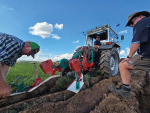
Ploughing champions Mark Dillon and Malcolm Taylor earned the right to represent the country at the World Ploughing Championships in Osijek, Croatia, on 5 and 6 September, after winning their titles at the New Zealand Ploughing Championships in Middlemarch in 2025.
Sean Leslie and Casey Tilson from Middlemarch, with horses Beau and Dough, took out the Rural News Horse Plough award at the Power Farming NZ Ploughing Championships at Horotiu, near Hamilton, on April 13-14.
The mood is relaxed as father and son ploughmen Paul and Derek Houghton get some practice in, but when the national championship starts this Saturday it will be a different story.
With our own National Fieldays only few weeks away, Rural News took the opportunity to take a trip overseas – as a guest of Enterprise Ireland, which invited 190 guests from 19 countries – to look at Ireland’s own national event, locally known as The Ploughing.



LIC shareholders have elected a new North Island representative to the co-operative's Board, along with five representatives to its Shareholder Reference Group (SRG), following the company's Annual Meeting held in Invercargill.
Farmers across parts of Southland and South Otago are continuing to deal with difficult conditions after a prolonged run of wet weather, with pressure building around feed supply, stock management, pasture damage, farm infrastructure and everyday workloads.
Federated Farmers says it welcomes Labour's commitment to reviewing the Sharemilking Agreements Act, calling on other major parties to do the same.
For Canterbury dairy farmers Sian Meijer and Rick Wobben, wearable technology has become one of their most valuable on-farm tools - helping manage 1850 cows across an expansive, high-performing dairy operation while improving efficiency, mating outcomes and day-to-day decision making.
Fonterra has unveiled its annual results for the 2026 financial year, posting $27 billion in revenue and close to $20 billion returned to New Zealand farmer owners and unit holders.
The first major update to the Dairy Cattle Code of Welfare in more than a decade has been released, marking what DairyNZ describes as an important step in ensuring animal welfare standards continue to evolve alongside scientific evidence and on-farm realities.




OPINION: The same mainstream media muppets that brought you Jacindamania in 2017 have been flat out pimping for the Opportunities…
OPINION: Your old mate reckons the atrocious way farmers in the UK are treated by their lords and masters in…




