Stihl Launches BT140, Its First Battery-Powered Auger
With battery tools becoming more widespread and more importantly, productive and reliable, it was only time before we saw augers or post-hole borers.




 increase font size
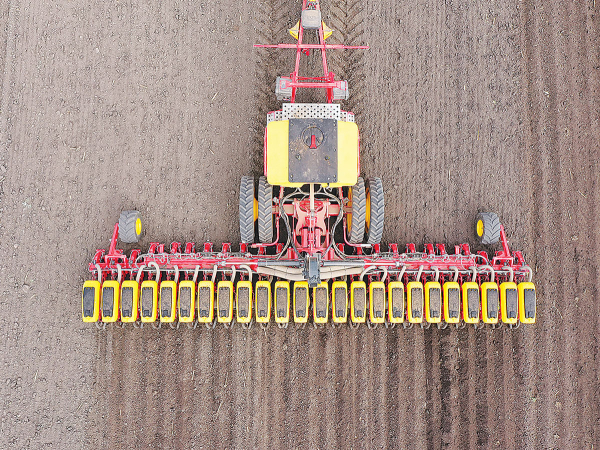 Precision planter Tempo is to get two key updates for 2024, with the addition of new electronics to optimise accuracy, alongside the introduction of a liquid fertiliser system.
Vaderstad's high speed precision planter Tempo is to get two key updates for 2024, with the addition of new electronics to optimise accuracy, alongside the introduction of a liquid fertiliser system.
The Tempo row unit will be upgraded with Väderstad’s own in-house, newly developed electronic system WSX that features brushless motors and improved cabling performance. While the WSX itself is new technology on the Tempo, its new features enables it to further optimise the Tempo’s planting accuracy.
“The new WSX system enables the integration of three new features to further improve the already market leading accuracy of the Tempo planter,” says Greg Moore, imported brands manager for Norwood.
These include Automatic seed singulation, introduced to ensure a precise seed singulation in the seed meter, without the need for manual setting. Each row unit uses sensors to continuously monitor the seed singulation and automatically adjust the singulators for the optimum setting. This is said to save time and increase productivity in the field.
Active hydraulic row unit downforce has been introduced to ensure precise planting depth, working by automatically adjusting row unit ground pressure depending on the soil conditions. In lighter field areas, pressure will decrease and by contrast, increase in harder or heavier areas of a paddock. The full machine width can be equipped with a single active hydraulic row downforce unit, or individual row units with their own active hydraulic downforce, which helps improve tramlining and preparing un-planted tracks for the sprayer.
Curve compensation ensures a consistent metering output over the entire planter width when turning, meaning inner row units will temporarily decrease their metering rate, while outer row units will increase it. Gyro sensors identify when the machine is turning and adjust the metering output of each row unit to always ensure a consistent rate over the full planter width.
The new features and electronic WSX system for Tempo L 8-32, Tempo V 6-12 and Tempo F 6-8 units will be available in New Zealand for planting in Spring 2025.
The Tempo L 8-24 also gets an upgrade with a liquid fertiliser system equal to the performance of the Tempo L planter, including easier setting, full control, and row-by-row precision.
Featuring a 2000-litre plastic hopper for liquid fertilisers, application can be in the seed row via the row units or beside the seed row via fertiliser coulters. The system is designed for a wide range of different liquid fertiliser rates without changing nozzles to make it user friendly for the operator. The Tempo can handle standard liquid fertiliser doses from 30 to 200 litres per hectare at a row spacing of 750mm and at speeds of up to 15km/h driving speed.
To control the liquid fertiliser metering, flow sensors constantly monitor the output rate, using real-time feedback to automatically maintain the selected output rate
With battery tools becoming more widespread and more importantly, productive and reliable, it was only time before we saw augers or post-hole borers.
Austrian manufacturer Pottinger has released details of a new compact, linkage-mounted compact twin rotor rake, without a chassis, that is said to deliver impressive manoeuvrability.
The new Lemken Saphir XMR mechanical seed drill has been introduced as the successor to the proven Saphir 10m, with the manufacturer claiming new standards for precision, ease of use and area coverage.
Krone's XDisc 710 direct-cut header can now be used by John Deere and New Holland forage harvesters, as well as the Krone Big X it was originally designed for.
Fifty Eight years ago, on the 16th of August 1968, August Claas, the founder of the harvesting company and father of Helmut Claas, personally presented a Claas Senator combine harvester to Scottish farmer John Steven.


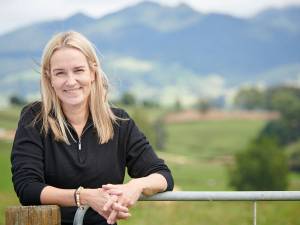
Minister of Conservation Hon Tama Potaka has appointed Susan O'Regan as Chair of the Queen Elizabeth II National Trust (QEII) for a three-year term.
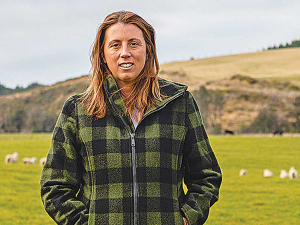
Red meat farmers are welcoming Labour’s plan to review the Emissions Trading Scheme and not to campaign on pricing agricultural emissions.
Where any worker in the kiwifruit industry is mistreated, we expect the authorities to take action.
Mid Canterbury Federated Farmers arable chair, Bevan Lill, said Beef + Lamb NZ data indicated that for the last six years, the average arable return on investment was about 0.8% while inflation ran about 4% - so the average arable farm was going backwards at about 3% a year.
Seed and grain companies share the concerns of arable farmers about the viability of their sector, says Seed and Grain New Zealand chief executive Dr Sarah Clark.
The New Zealand Institute of Forestry (NZIF) says unnecessary changes to New Zealand’s Emissions Trading Scheme (NZ ETS) will seriously erode investor confidence and result in significant reductions in forest planting rates.


OPINION: The same mainstream media muppets that brought you Jacindamania in 2017 have been flat out pimping for the Opportunities…
OPINION: Your old mate reckons the atrocious way farmers in the UK are treated by their lords and masters in…