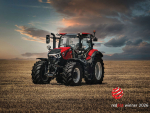
Case IH Unveils Next Generation Puma Series Tractors
Case IH has unveiled its redesigned next generation Puma Series tractors, said to offer improvements in connectivity, operator comfort, fuel efficiency and drivability.




 increase font size
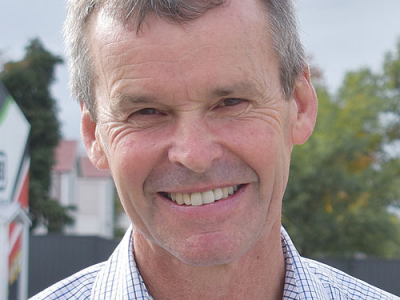 TAMA president John Tulloch says tractor sales are on track to set a record this year.
Sales of tractors are up 17% on this time last year and could set a record by year-end, says NZ Tractor and Machinery Association (TAMA) president John Tulloch.
TAMA year-to-date figures to the end of September showed 3355 retail sales in all horsepower categories versus 2865 in 2017.
Tulloch says there was a cautionary approach to spending in the industry. However, despite this he says sales could hit 4500 for a calendar year record.
“Although the reduced Fonterra forecast of $6.25 to $6.50 per kg/MS (down from $6.75) had taken a bit of a shine off the optimism in the dairy sector.” [Editor note: The 2018-19 forecast has now fallen further to is $6 to $6.30/kgM]
Tulloch recently visited Europe and was shocked at the effects of the drought; some European dairy farmers will have to sell stock because they can’t get or afford extra feed, he says.
“That might translate into demand for our milk products.”
He says the sheep and beef sectors are still buoyant and the drop in the New Zealand dollar will further assist this buoyancy. The horticulture and viticulture sectors are also looking confident.
However, Tulloch says all farming sectors are also facing increased costs with high fuel prices and the currency drop.
“You also can’t control the weather, so seeing the effects in Europe it reinforces the need for all of us in the New Zealand industry to be in a strong position to withstand adverse events,” he told Rural News.
“For farmers, this means being in a robust enough position to ride out unfavourable weather or market conditions. It is also important that farmers support their local farm contractors as this retains strength in the industry.”
Tulloch says that in recent years some contractors – especially in the North Island – had had complaints regarding their prices and had faced deferred payment, meaning their business were being put at risk.
“In some areas, contractors were making a loss because prices had been driven so low.”
He said a new trend is also emerging where contractors are buying crops before harvesting them, then on-selling. Tulloch believes this also creates a further layer of risk for contractors.
“The contractor system is the most efficient use of machinery in a cost effective way. If this system falls over then everyone loses. It’s important that the system is supported as it helps create resilience across the industry.”
Case IH has unveiled its redesigned next generation Puma Series tractors, said to offer improvements in connectivity, operator comfort, fuel efficiency and drivability.
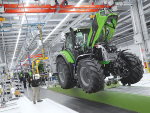
As we move into the second half of 2026, the Tractor and Machinery Association (TAMA) reports that Year-to-Date figures ending June 30 saw new tractor deliveries hitting 1,386 units or 10.7% ahead of the same period in 2025.
Coming in at a year-end total at 3088 units, a rise of around 10% over the 2806 total for 2024, the signs are that the New Zealand farm machinery industry is turning the corner after a difficult couple of years.
New tractor deliveries for 2025 jumped 10% compared to the previous year, a reflection of the positive primary sector outlook, according to the Tractor and Machinery Association (TAMA).
As we move into the 2025/26 growing season, the Tractor and Machinery Association (TAMA) reports that the third quarter results for the year to date is showing that the stagnated tractor market of the last 18 months is showing signs of recovery.


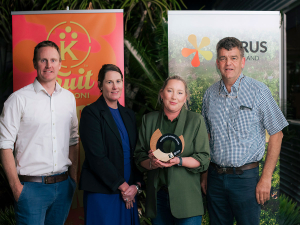
New Zealand's citrus growers were challenged to build their future on the value embedded in their fruit rather than the volume they produce, at Citrus New Zealand's annual gathering in Gisborne on 17 September.
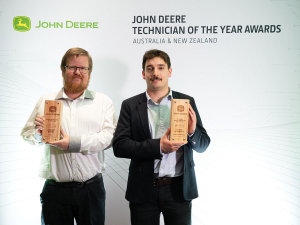
Leading John Deere technicians and apprentices from New Zealand and Australians were recognised at the recent sixth annual JD Technician of the Year Awards, held in Brisbane.
In Dacre, near Invercargill in New Zealand’s South Island, Bruce Dinnington is running a dairy operation unlike any other.
A free online platform aggregating governance vacancies across rural and regional New Zealand has been launched.
Environment Minister Nicola Grigg has announced details of a new rural plastics recycling scheme.
Agricultural drone operators say that a government decision to allow lower-risk drone work without certification won’t lower standards but drive innovation and efficiency.





OPINION: The same mainstream media muppets that brought you Jacindamania in 2017 have been flat out pimping for the Opportunities…
OPINION: Your old mate reckons the atrocious way farmers in the UK are treated by their lords and masters in…




