Unmanned aerial vehicles – or drones – have become increasingly popular over the last few years.
However, most use a wing or multi-rotor layout, so it's interesting to see a new player enter the market in the shape of the newly formed Yamaha Sky Division.
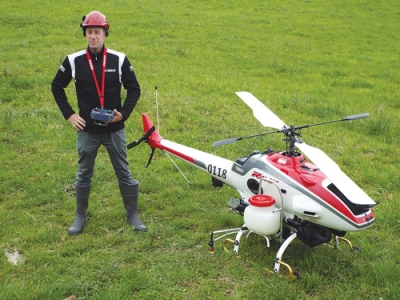
The Yamaha RMAX uses a helicopter layout, to all intents and purposes a scaled-down version of the real thing. The machines are about 2m long with a similar rotor diameter and capable of a maximum speed of 100km/h.
Powered by a 250cc two stroke engine, it can do spraying and seeding and suits camera operations; it carries up to 28kg and flies for one hour between re-fuelling stops.
The machine is currently controlled from an operator-controlled terminal and relies on visual line of sight. However, plans are advanced for the introduction of an auto-pilot system in the next few months, which will allow the machine to fly a pre-loaded route.
Yamaha says the machine, used widely in farming in Japan, has its first buyer in New Zealand.
The company reckons it could sell 5-6 units per annum here.
A choice of purchase or lease includes a three training package and a set of manuals. The lease option offers the benefit of a piggy-back on Yamaha's certification to meet Civil Aviation Authority requirements.
At a recent demonstration – under the Kaimai ranges, near the Wairere Falls — a unit sprayed thistles and blackberry on near vertical ground, coping well with wind gusts up to 8m/sec and showing its ability to cover tough terrain.
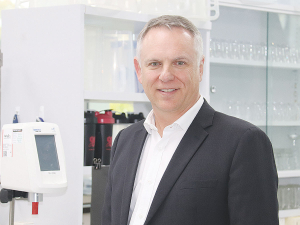
Asked about the benefits of the Yamaha RMAX over traditional drone layouts, business development manager Geoff Lamb says it has a far superior payload.
"The increased flying time of the R-Max is far more productive on a daily basis, while the quality of build and back-up from the Yamaha organisation is second to none."
www.yamaha.co.nz