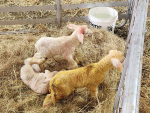
Beef + Lamb NZ's Lambing Kit Checklist for a Tough Season
With lambing underway in many regions, Beef + Lamb New Zealand is encouraging farmers to put together a wellequipped lambing kit to help minimise lamb losses, particularly in bad weather.




 increase font size
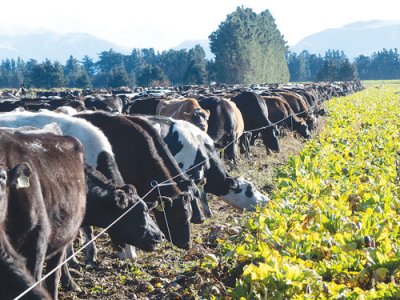 The project has found that farmers are increasingly using hill country forage crops and pastures to finish stock and that the increased erosion risk is being partly mitigated by farming practices.
Sheep and beef farmers are increasingly finishing stock on hill country forage crops and pastures, with a resultant drop in erosion risk.
But some farmers had difficulty assessing the potential environmental impact and the financial return of hill country development, due to the unpredictability of sediment loss and the costs.
This was discovered by studies done as part of the Sustainable Hill Farming Tool project (SHiFT), says Paul Hulse, of Environment Canterbury (ECan).
The SHiFT project is to tell landowners the best ways to address these concerns, says Hulse.
“Three related studies were commissioned to better understand farmers’ hill country development practices,” he says.
“Initial interviews were held with 150 hill country farmers in Canterbury and Manawatu. This was followed up by in-depth interviews with 16 farmers, advisors and helicopter pilots, focusing on the use of helicopters for developing hill country land.
“And AgResearch reported on relevant research about the environmental impacts of forage cropping in hill country.”
The findings will be used to help develop a free advisory tool for farmers and advisors.
“ECan recognises that forage crops are important but they need to be managed so that sediment does not enter waterways.
“We’re expecting the tool to identify high and low risk areas on a property, estimate the potential sediment losses and provide a reference guide... so that sediment losses to waterways and estuaries can be minimised.”
Farm consultant Dave Lucock, of The Agribusiness Group, says farmers need to be aware of the risks in developing hill country and plan to avoid or mitigate those risks.
“It is no longer acceptable to have large quantities of sediment flowing from poorly managed winter feed paddocks.” Only about 50% of farmers consider sediment loss factors before developing their hill country, he said.
“We expect this tool will help farmers... to get the best results for their farm business and the local environment.”
The AgResearch review of research into soil losses from grazed forage crops showed the importance of block selection, and smart, timely decisionmaking to avoid soil loss. It also identified some of the success factors in hill country development.
Dr Seth Laurenson, author of the AgResearch report, says that the research review showed that management, in combination with climate, soil and slope, are important.
“The timing, duration and location of grazing animals relative to swales and gullies that act as overland flow paths is important for protecting waterways.
“Using riparian buffers and fencing to exclude stock from streambanks are all measures that can be included in a farm environment plan and are easily adapted as part of a farmer’s good management practices.”
Using helicopters to sow and spray hill country terrain requires good advice, he said. The survey found that farmers using heli-spraying do so because it is safer and more precise than using wheeled vehicles.
With lambing underway in many regions, Beef + Lamb New Zealand is encouraging farmers to put together a wellequipped lambing kit to help minimise lamb losses, particularly in bad weather.

Chinese beef trade quotas and a looming suspension of Brazilian beef imports into the European Union are expected to reshape global beef trade flows over the remainder of 2026, with implications for New Zealand exporters, according to Rabobank's Q3 Global Beef Quarterly report.
Will a stronger, more coordinated voice help rebuild confidence and improve returns in the wool sector?
Bovine Viral Diarrhoea (BVD) is sometimes viewed as a dairy industry issue, but the reality is that the disease can have serious consequences for beef breeding herds as well.
New Zealand needs to make sure that it continues to focus on its own food security, according to HortNZ board member and blueberry grower Dermott Malley.


Federated Farmers has welcomed new rural policies released by ACT, saying they align closely with its own election priorities.

Rural Contractors NZ says proposed changes to land transport rules for agricultural vehicles are a welcome response by the Government to out of date regulations which have seen members hit with huge fines.
Alliance is calling for final applications for its 2027 Graduate Programme, with applications closing on Sunday 25 October.
Decades piloting planes has ensured vet and farmer David Hayes is focused on safety. So, after a serious accident while welding on farm, he is sharing his experience so others can learn from it.
Canterbury milk processor, Synlait Milk has confirmed Leon Fung as its chief executive officer.
OPINION: Making it easier to collect rainwater and use it to grow crops and livestock is a no brainer.


OPINION: The same mainstream media muppets that brought you Jacindamania in 2017 have been flat out pimping for the Opportunities…
OPINION: Your old mate reckons the atrocious way farmers in the UK are treated by their lords and masters in…




