New insights into rural fire risk
New student research from the University of Canterbury in partnership with Fire and Emergency New Zealand (FENZ) could improve knowledge surrounding the risk of wildfire.




 increase font size
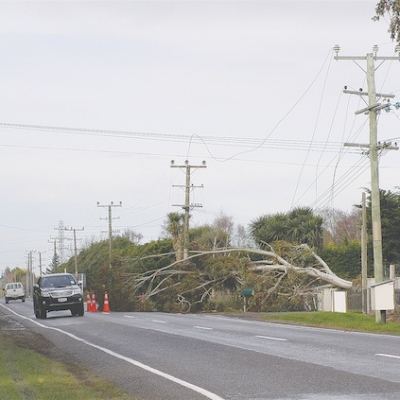 Maintain trees near power lines.
The large grass fire near Christchurch early this month highlights the need to prune or fell trees likely to touch overhead lines in high winds, says Orion chief executive Rob Jamieson.
“We are continually urging landowners to maintain trees near power lines to avoid power outages,” he says. “That message is doubly important in these tinder dry conditions when tree damage can cause fires.”
Jamieson says it’s essential people assume all fallen lines are live and stay well clear. He says the Canterbury company has done all it can to prevent fires being sparked by electrical equipment. One of these steps means it will take longer to restore power in rural areas, but cuts the risk of fire.
“Several weeks ago as the region was drying out we changed our operating practices because of the heightened fire risk. For example, normally a piece of equipment called a “recloser” automatically restores power to an overhead line after a momentary power cut. So if a tree branch falls on a line in high winds it may cut power for a second or two. When the branch then falls to the ground the recloser automatically reinstates power to the line.
“Automatic reclosers are a great means of restoring power quickly but every time they try to reinstate the power they can create a spark.”
Orion has shut down all automatic reclosers on its rural network and will manually check overhead lines to find the cause of power cuts while the fire danger remains high. “Unfortunately this means it will take longer to get the power back on, but we can’t take the risk of starting a fire in the current conditions.”
Selwyn deputy principal rural fire officer Douglas Marshall says “currently the fire risk in Selwyn is very high, and on days with high winds or hot weather, or both, the fire risk becomes extreme”.
He says property owners must now consider what they can do to reduce the chance of a fire damaging their home.
“It’s important that people don’t light fires,” says Marshall.
“Even if we do receive some rain the fire risk will remain very high as vegetation is extremely dry and rain is not a signal that people can light fires.”
He says the council will seek to recover fire callout costs from anyone who breaches the fire restrictions. People can also be liable for the cost of fire damage. To date this year nine individuals have been billed for fire callout costs in Selwyn.
Do all you can
To help reduce the risk of a fire damaging your property you can take the following steps:
New student research from the University of Canterbury in partnership with Fire and Emergency New Zealand (FENZ) could improve knowledge surrounding the risk of wildfire.



Healthy snacking company Rockit has announced Wang Yibo, one of China's most influential celebrities, as its new brand ambassador.
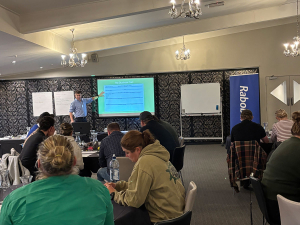
Rabobank has celebrated the tenth anniversary of its AgPathways Programme, with 23 farmers from Otago and Southland gathering for two-and-a-half days to learn new business management and planning skills.
Adopting strategies to reduce worm burden on farm goes hand-in--hand with best practice farm management practices to optimise stock production and performance, veterinarian Andrew Roe says.
Last night saw the winners of the 2026 Beef + Lamb New Zealand (B+LNZ) Awards named at a gala dinner at Te Pae Christchurch Convention Centre.
A 12-month pathway programme has helped kickstart a career in dairy for an 18-year-old student-turned-farmer.
Zespri says its global fruit sales revenue has reached a record NZ$5.9 billion from sales of 248.1 million trays.





OPINION: The old saying 'a new broom sweeps clean' doesn't always hold up, if you ask the Hound.
OPINION: This old mutt went to school to eat his lunch, but still knows the future of the country, and…