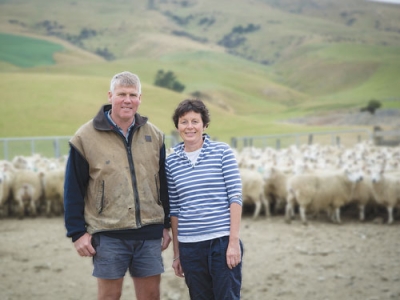
The couple live in a district otherwise known for producing store animals with only limited finishing.
And though it's a low input/low output system, they won't hesitate to intervene when a manageable threat to productivity emerges, such as toxoplasmosis, reports MSD Animal Health.
Toxoplasmosis in 2010 caused 300 of their 2500 two-tooth Perendales to abort. The outbreak was almost certainly caused by Toxoplasma gondii left by wild cats on the farm and tests at the time confirmed most sheep had been exposed to the parasite.
James Anderson says the two-tooths had been grazing in an area with a "dead hole" that was a hideout for the wild felines and these were the likely culprits. He didn't need much convincing by his veterinarian that managing the ongoing risk from toxoplasmosis losses by vaccination was a no-brainer and he's been vaccinating his two-tooths every year since then. (Maiden ewes require only one vaccination with Toxovax for lifetime immunity.)
It's just one of many challenges he has to juggle. The Andersons' 3000ha property in Southland's Waikaia district, north of Gore, is a mix of rolling to hill country of which 1200 ha is cultivated. A further 800ha is bush and uncultivated land, and the balance is oversown and topdressed hill country.
The Andersons run 18,000 stock units – 10,000 Perendale ewes and 500 Hereford cows – in an integrated system that uses the cattle to clean up surplus grass. The sheep are wintered using an all-grass system with some Pasja grown for the lambs and kale and swedes for the calves.
The conditions can be challenging. "We only get autumn and winter here," Anderson jokes. That said, it is generally summer safe, with late spring being the pinch period.
In addition to production-limiting animal diseases such as toxoplasmosis and campylobacter, weed control is another major constraint on farm outputs.
"We spend $100,000 a year on weed control and we could easily have to double that," he says.
The major culprits are Darwin's barberry, gorse and broom, which thrive especially on land formerly mined for gold. A big effort is needed to keep the invading weeds at bay.
Anderson accepts that applying new technology such as regular weighing and recording has a part to play in productivity. However, he likes to see the wrinkles being ironed out of any innovations before he uses them. He's also prepared to spend to control preventable animal diseases: scabby mouth, clostridial diseases and internal parasites are all covered in his animal health programme.
Anderson says the smaller-framed Perendales are ideal for their type of country and their conception rate of around 160% is good. The key, of course, is minimising losses between scanning and tailing.
"Normally survival to sale is 125–135%, but the gap can be bigger," he says. "Last year, for example, they scanned an excellent 165%, but tailed at 127%, so the higher conception rate didn't flow through."