Otago Regional Council to launch winter flyovers
Otago Regional Council is set to begin its annual winter farm flyovers in the next three weeks.




 increase font size
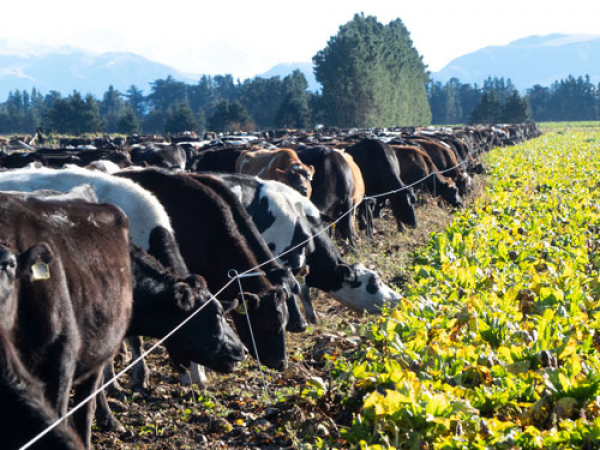 Otago Regional Council is urging farmers to get their intensive winter grazing consent applications early.
The deadline for farmers to apply for future winter grazing consents is just over three months away, but Otago Regional Council (ORC) is encouraging farmers to act now and apply.
ORC manager consents Joanna Gilroy says farmer engagement since new regulations came into effect in November 2022 had been “really good so far”, but to ensure consents are in place by 1 May, farmers need to begin the application process now.
To date the process has been taking ORC’s consents team five working days to get completed.
“A lot of farmers are being both pro-active and innovative and are already working on having their consents applied for and their grazing management plans in place,” Gilroy says.
She says ORC’s catchment advisors and consents and compliance teams are happy to do site visits and have sessions with catchment groups, something she says has been “very successful” to date.
“We’ve done more than 20 sessions with catchment and farmer groups and one-on-one visits, from September to December last year,” Gilroy says.
“The Council is here to help and has plenty of resources and people in place to support the farmers and their applications.”
She says the application for consent should cover multiple years, with any consents then granted for a specific duration.
“In most instances we’re encouraging farmers to apply for consent for the next three to five years,” she says.
Farmers will then need to update their management plan annually, telling ORC where they have grazed in the previous year, and where they plan to graze during the next season. They only need to apply for the consent once.
While farmers need to apply for the paddocks they’re likely to graze over the next few years, actual paddock selection and the day to day farm operation is still in the farmer’s hands.
“The process we’ve developed provides for farmers to change their plan in response to the many factors which can influence day to day management,” Gilroy says.
Otago Regional Council is set to begin its annual winter farm flyovers in the next three weeks.

OPINION: A reader recently called out the Hound for not giving Federated Farmers enough credit for taking Otago Regional Council to task on its dodgy rule changes.
OPINION: The Otago Regional Council needs to be honest about what the new proposed freshwater rules might mean for our community and how much it could cost local ratepayers.
Federated Farmers is calling for transparency from Otago Regional Council amid a debate over proposed freshwater rules.
Applying effluent to saturated soils is prohibited, and if a farmer is found to be in breach of this rule, they could face enforcement action.



There was much theatre in the Beehive before the Government's new Resource Management Act (RMA) reform bills were introduced into Parliament last week.

The government has unveiled yet another move which it claims will unlock the potential of the country’s cities and region.
The government is hailing the news that food and fibre exports are predicted to reach a record $62 billion in the next year.
The final Global Dairy Trade (GDT) auction has delivered bad news for dairy farmers.
One person intimately involved in the new legislation to replace the Resource Management Act (RMA) is the outgoing chief executive of the Ministry for the Environment, James Palmer, who's also worked in local government.
Horticulture New Zealand (HortNZ) says a new report projects strong export growth for New Zealand's horticulture sector highlights the industry's increasing contribution to the national economy.





OPINION: The release of the Natural Environment Bill and Planning Bill to replace the Resource Management Act is a red-letter day…
OPINION: Federated Farmers has launched a new campaign, swapping ‘The Twelve Days of Christmas’ for ‘The Twelve Pests of Christmas’ to…