Cashing in on goat fibre
Last month's inaugural New Zealand Cashmere Conference saw the opening of a new fibre processing facility.




 increase font size
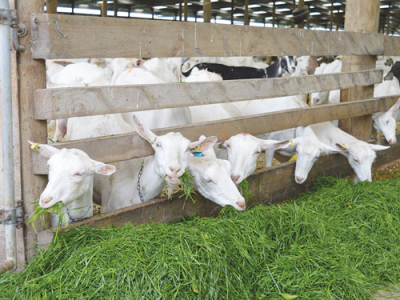 Goats fed freshly cut grass.
The Schuler Brothers Ltd (SBL) dairy goat farm in Te Aroha has a unique milking shed.
Two 40-a-side Waikato Milking System Loopline herringbones, each with its own pit, makes the milking platform one of a handful in New Zealand.
The herringbones were part of SBL’s cow farm; it lay unused for 15 years until the dairy goat farm was set up three years ago.
With 500 cows milked year-round on the dairy farm, Kevin Schuler says the business owners looked at diversifying. Then an opportunity arose to supply Dairy Goat Co-op, Hamilton.
The farm milks 1400 goats twice daily, each goat yielding about 4L/day.
“Goats now are a big part of our operation, cashflow and revenue,” says Schuler. “We were 100% reliant on the cow cheque, but two years later we are only 25% reliant on it.”
Schuler says running the goat and cow operations side by side has its challenges; pasture management is critical.
Fresh grass is supplied to both lots of animals. The goats are also fed silage and dried distillers grain (DDG) from Oilseed Products.
Schuler says dairy goats are more of a challenge to manage than cows.
“Goats can be fickle; if you change something quickly they will throw their toys out of the cot.”
Schuler says WMS herringbones make milking goats easier for him and farm manager Rudolph Van Zuydam. Two persons milk the 1400 goats daily, each milking taking about two and a half hours.
One advantage of the herringbone is that 45-50 goats can be lined up on each side at a time, depending on the goats’ size.
Goats milk quickly: the first group’s finish coincides with cups-on for the next group.
“Milking takes up a big chunk of your day; the efficient herringbone system means you don’t get too fatigued.”
Last month's inaugural New Zealand Cashmere Conference saw the opening of a new fibre processing facility.
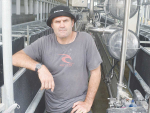
Former All Black Kevin Schuler says diversifying the family farm with his brother Paul into three milking systems – cows, goats and sheep – is all about creating a better and stable business.
Garrick Batten on why there should be more farmed goats.
Goats can add simple and low-cost production benefits to bottom-line profitability for sheep and beef operations, explains Garrick Batten.
Garrick Batten on why there aren't more goats on pastoral farms.
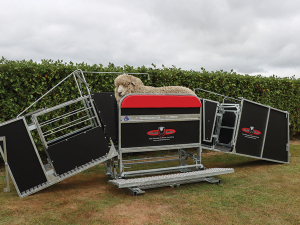
Oamaru-based livestock handling specialist Te Pari has bought Combi Clamp, the New Zealand manufacturer of Combi Clamp manual sheep handlers.
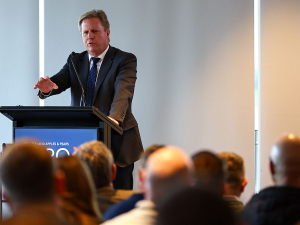
Agriculture Minister Todd McClay has admitted that a scheme bringing workers from Pacific nations to work on orchards has become too hard to navigate but says changes are coming.
A new app designed in New Zealand aims to help sheep, beef and deer farmers capture, analyse and use body condition score data more effectively.
Canterbury farmer Andy Macfarlane has been appointed to the board of AgriZeroNZ, the public-private partnership designed to accelerate the development and deployment of emissions reduction tools for New Zealand farmers.
For over 50 years Mel Ewers has been supporting the apple sector navigate through compliance and quality assurance issues.
The apple sector is enjoying a bumper harvest season.


A fair question has been raised about how member-funded organisations should conduct themselves when taking a public position on any…
OPINION: It really is getting harder to lampoon government bureaucrats when they do such a good job of it themselves.…