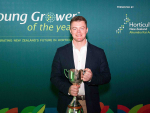
James Blair Named 2026 Young Grower of the Year
The potato industry is celebrating the success of two rising stars - James Blair, the 2026 Young Grower of the Year and runner-up and innovation award winner, Amber Davy.




 increase font size
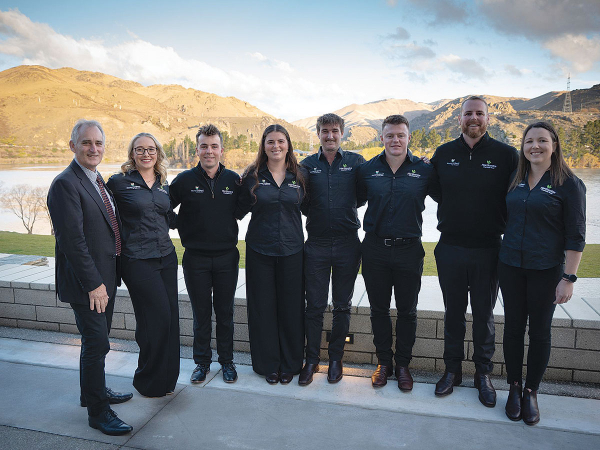 Warwick Catto, Ballance Agri-Nutrients (left) with Young Grower of the Year finalists.
OPINION: Recently I had the privilege of hosting the leadership panel for the 2026 Young Grower of the Year competition and seeing firsthand how the next generation of growers will drive horticulture forward in New Zealand.
The questions posed to the regional finalists varied from what they think about future land allocation, where they source technology and information, to where they believe horticulture’s biggest opportunities lie over the next two years.
Finalists were also asked their perspectives on how climate change will alter decisions, what trade agreements mean locally, and in their view, what it takes to retain social licence to operate.
These are big questions, and the reality is the next generation will need to join the dots on all of them. The future grower in New Zealand will need to become part scientist, part technologist, part employer, part environmental manager and part storyteller, with future success determined by how well they are able to integrate all those aspects together.
In the example of land use, we saw a lot of good insight into the smarter use of the right land - protecting highly productive soils, securing reliable water and matching crops to changing conditions in order to lift value from every hectare.
Then there’s technology. When asked where they get their information, tomorrow’s leaders name a much wider network than previous generations: experienced growers, advisors and researchers, alongside podcasts, online grower groups, manufacturers, nutrient specialists, field trials and data from their own orchards and paddocks.
While they’re confident in using digital tools and artificial intelligence, they also retain a healthy dose of scepticism. Data does not replace on the ground observation, and an algorithm is only useful if its assumptions take in to account the realities of soil, weather and the commercial crop they’re working with.
That points to the biggest near-term opportunity, which is that they, the next generation understand the opportunities of using technology to make better decisions.
Whether that’s through business automation or genetics, protected cropping or improved systems that help build climate resilience and traceability, technology is emerging as an important factor in creating value. But that’s only true when it solves a real problem, is simple enough to use and delivers a return on investment.
Insights into how climate change will alter decisions highlight that the next generation is unlikely to wait for perfect certainty. They understand the need to adapt by diversifying risk, improving water efficiency, build soil function, refine nutrient timing, strengthen biosecurity and plan ahead for more volatile seasons.
They also see opportunity in new varieties, new regions and different production windows. Adaptation then becomes a routine management discipline, rather than only emerging when it’s urgent.
Questions on trade and provenance raised good insights on value. New agreements may open doors, but market access is not the same as market success. Young growers understand New Zealand must compete on quality, reliability and safety alongside developing a transparent production story.
This is also where social licence becomes tangible, this is the trust that’s earned through daily practice. Whether it’s looking after people, using inputs responsibly, protecting water and soil as well as looking at how we contribute to the communities around us.
Ballance Agri-Nutrients has supported Young Grower of the Year for more than a decade because we see capable and curious leaders as essential to horticulture’s future. I was fortunate to benefit from a young rural leadership competition myself – even if it was before most of these young growers were born, so I know the lasting value of being championed early in
your career.
The questions posed to the young growers did not have a single right answer, which is precisely the point. What we’re really looking for here is judgement - the ability to weigh productivity, profitability, resilience, environmental outcomes and public trust at once.
It was both inspiring and a privilege to get to know this year’s finalists, hear their perspectives and support their development. Congratulations to Younger Grower of the Year James Blair and to every regional winner who earned a place at the national final.
If the finalists’ answers are any guide, horticulture’s future is in very good hands, with leaders who will relentlessly ask questions, test the evidence and adapt for whatever the future may bring.
The potato industry is celebrating the success of two rising stars - James Blair, the 2026 Young Grower of the Year and runner-up and innovation award winner, Amber Davy.
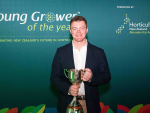
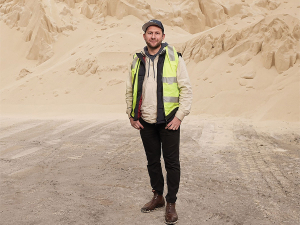
James Blair, an agronomist for AS Wilcox and the Pukekohe regional champion, has won the 2026 Young Grower national title.
With forecasters advising El Niño conditions will develop through winter and strengthen into spring and summer, Ballance Agri-Nutrients is encouraging farmers and growers to think ahead about nutrient planning and be prepared to work around challenging weather conditions.
Amelia Marsden has secured the 2026 Nelson Young Grower title for the second year running, earning another opportunity to represent the region at the national Young Grower of the Year competition later this year.
Every farmer knows the feeling of watching fertiliser go out the back of the spreader, along with the hopes for a productive season that will come off the back of it.

Dunedin-based company MastaPlex, which provides on-farm mastitis diagnostic platform globally, has named a new independent director.
An independent importer says National’s fertiliser security policy will only work if protects all players.
Nesting birds are behind around $1.2 million worth of tractor fire claims every year, according to rural insurer FMG, which is urging farmers to check under the bonnet before starting work.
Having Ravensdown as the naming rights sponsor of the Canterbury A&P Show demonstrates their confidence in the show as a long-term venture, says Canterbury Agricultural and Pastoral Association (CAPA) board chair Sir David Carter.
OPINION: As election day looms, rural NZ seems to have pressed the pause button – held somewhat in limbo on an orange light.
Will drones be the answer to tackling the problem of wasp and hornet nests high up in trees and other inaccessible places?



OPINION: The same mainstream media muppets that brought you Jacindamania in 2017 have been flat out pimping for the Opportunities…
OPINION: Your old mate reckons the atrocious way farmers in the UK are treated by their lords and masters in…