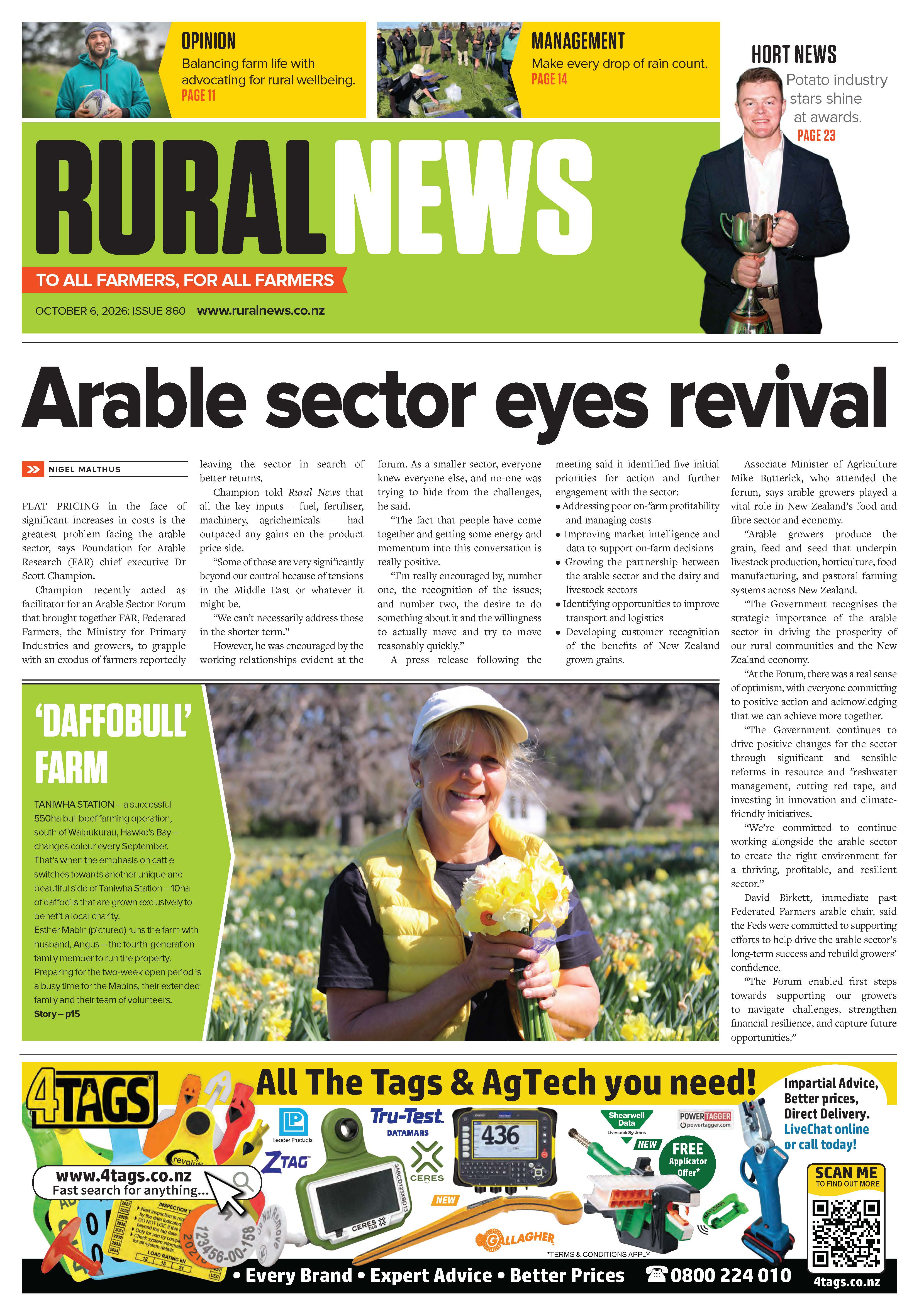
Industrial Hemp Regulations Revoked as New Zealand Opens New Era for Hemp Industry
From last week, the Industrial Hemp Regulations 2006 have been revoked.




 increase font size
 New Zealand is suited to large-scale hemp cultivation to deliver large returns to the regions.
OPINION: Local Government is badly underfunded. Economic circumstances demand a new approach to funding the constant burden of infrastructure delivery and renewal. The costs can be eased for rural ratepayers.
We need a new financial maturity using our local authorities’ ability to engage in the market by identifying sound investment in co-ownership and partnership profit-making initiatives that serve ratepayers.
The global industrial hemp market will grow from $4.6 billion in 2019 to $30 billion and more in a few years, with a projected compound growth rate of almost 20%. New Zealand is not exporting hemp products yet, but we have an environment and agricultural system suited to largescale hemp cultivation to deliver large returns to the regions.
Far beyond cannabinols and hemp seed, hemp is a superplant in its entirety, serving mankind for thousands of years.
Demonised in the 1930s through a deliberate and false drug connection stigma, industrial hemp was forced off the table for more than 80 years by chemical giants who feared its competition with the nylon and Teflon compounds they were producing.
By pushing the ‘evil drug’ lie the potential in high value and biodegradable hemp was never developed. Unbridled, the chemical companies choked the globe with plastics and blew the ozone to pieces.
Incredibly, the shadow of this folly resides in our laws today.
Hemp delivers fibre, textiles, food, oils, seeds, organic cellulose, ethanol, green biofuels, green bioplastics, animal feed, even high-protein vegan meat and nutritional supplements. Hemp stores far more carbon than pine. There is no forest ‘slash’ mess to clean up. Its uses range from building products to foods, medicines and cosmetics, to absorbing and removing toxins from soils (bioremediation).
Looking at one hemp product, hemp concrete, or ‘hempcrete’ gives a glimpse of the potential of this product. Hempcrete is a bio- composite alternative to concrete for construction and insulation.
Hempcrete is ‘carbon- negative’ or ‘better- than-zero-carbon’ because the hemp plant absorbs more carbon from the air during growth than it yields during its production. It continues to absorb carbon after being used in construction, storing more carbon over the building’s lifetime than was emitted during construction.
Grown from October to January, hemp is a perfect rotational crop for dairy, beef and sheep farms, with no change to existing land use.
Hemp is low in water use and needs similar fertiliser to maize. It smothers weeds after a few weeks’ growth and does not need pesticides.
Hemp grown for fibre alone will return at least $2000 per hectare. Higher value hemp seed, oils and animal feed can be produced from the same crop. Exporting the fibre is one option, and processing products here would show a far better return as the international demand steadily grows.
Each region in New Zealand could develop different products or combine to produce a lower number of ‘best return’ products.
Local authorities could partner with farmers and landowners, with the council’s profits used to subsidise rates.
Using local government could also help target the best scale, or capacity, for the hemp industry here.
The cost to set up processing is quite high. Establishing processing would be as much as $10 million depending on the product. The investment could replicate the best examples across the world where industrial hemp is already established.
Look at one district. South Wairarapa has 70,000 hectares in dairying, beef and sheep. In a crop rotation with existing farm practices many thousands of hectares could be in high-profit hemp production, contributing to the regional economy, infrastructure and well-being, and significantly easing the $30 million South Wairarapa rates burden on ratepayers.
There is a fitting provenance to fibre production. In 1793, in the hands of Māori, high quality rope and twine made from harakeke (flax fibre) was New Zealand’s first export, and the great Prime Minister Michael Joseph Savage worked in the biggest flax mill in the country at Manawatu.
Government is rightly sceptical of unfounded data, and farmers are conservative in adopting new crops. Hemp research is credible, concise, and backed by scientific evidence.
In her definitive study ‘New Zealand’s Industrial Hemp Industry’ Otago University’s Polly Brownlee spoke of the creative innovation and collaboration needed to realise hemp’s enormous potential.
The first spade in the ground needs to be visionary leadership.
Geoff Vause is a journalist based in Featherston
From last week, the Industrial Hemp Regulations 2006 have been revoked.
Hemp fibre processor Rubisco is relocating its core processing facility to Ashburton as part of a $20-$30 million expansion to leverage what it says is an accelerating global demand for sustainable and renewable fibres.
The New Zealand hemp industry is hoping for quick and comprehensive reform of its legislative framework after a recent "historic" visit to sites in Canterbury by a big group of politicians, officials and industry stakeholders.
OPINION: Local government is badly underfunded.
A study of hemp growing between the rows in New Zealand vineyards shows “exciting” results that the hemp beneficially affects soils and wines.

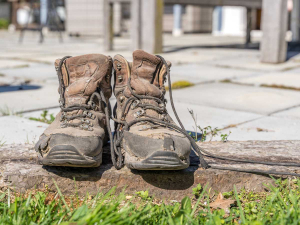
Safer Farms is urging farmers to make sure everyone working on farm has safe, suitable footwear for the job.

The Government is backing work on a community-led water storage scheme that could irrigate up to 11,000 more hectares of the Poverty Bay flats, Agriculture Minister Todd McClay says.
Agri-tech company Herd-i has become a new all-region sponsor of the New Zealand Dairy Industry Awards (NZDIA), the largest nationwide celebration of excellence in the dairy sector.
Four candidates have been confirmed for two director positions on Fonterra’s board.
Returning to the family dairy farm after playing 20 years of professional rugby around the world is no easy task.
After delivering another record farmgate milk price to 100 supplying farms, independent milk processor Tatua is entering thee new financial year with a positive outlook.


OPINION: The same mainstream media muppets that brought you Jacindamania in 2017 have been flat out pimping for the Opportunities…
OPINION: Your old mate reckons the atrocious way farmers in the UK are treated by their lords and masters in…