SWNZ Strengthens People Pillar for Global Markets
With ethical employment practices a "hot topic" in key markets, Sustainable Winegrowing New Zealand (SWNZ) is strengthening its People Pillar.




 increase font size
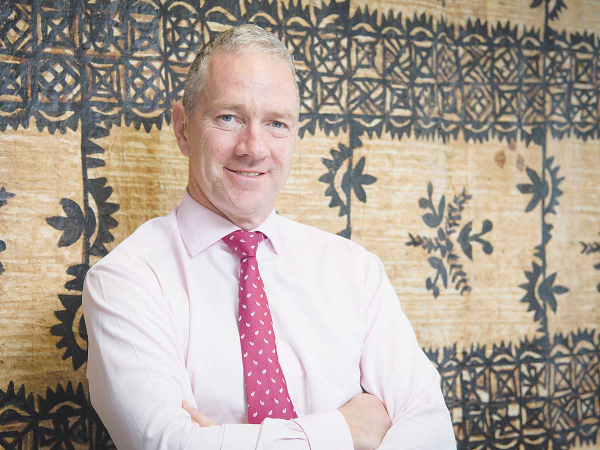 Tim Fowler.
Tertiary Education Commission chief executive, Tim Fowler, once worked on a dairy farm as a teenager ‘townie’ and appreciates how accommodating his boss was at that time.
In this article, he outlines more about the Apprenticeship Boost and the Targeted Training and Apprenticeships Fund schemes, which are open to employers in the primary sector.
OPINION: Taking on an apprentice or a trainee is a big commitment for any business.
It requires a significant investment of your time and money to bring someone on and give them the supervision and training they need. It can be hard to retain good staff when times get tough.
Hanging onto your apprentices and employing new ones is now a lot easier, even in the face of Covid-19, because of two new schemes – Apprenticeship Boost and the Targeted Training and Apprenticeships Fund (TTAF).
Apprenticeship Boost is a subsidy, which took effect in August. It is aimed at helping employers with the costs of retaining an apprentice or taking on new ones. It will pay employers up to $1,000 a month (plus GST) per first year apprentice and $500 for second year ones, for up to 20 months.
As well as supporting your costs, the boost aims to provide continuity of training and employment for apprentices, ensuring we continue to produce qualified and skilled practitioners. This is vital for industry and the New Zealand economy, particularly our primary sector, which is crying out for skilled staff.
It’s paid to you monthly in advance. You need to apply for your first month’s payment, then you’ll need to reapply each month after this to keep getting payments. There are also some restrictions. You can only get it if your apprentices are:
• employed by you, or in a self-employed contracting agreement with you
• actively training through a transitional Industry Training Organisation (ITO) or a New Zealand Institute of Skills and Technology subsidiary or a private training establishment (PTE)
• training for a New Zealand Apprenticeship or Managed Apprenticeship recognised by the Tertiary Education Commission (TEC)
Your apprentices must also be within their first 24 months of training, and this includes any previous apprenticeship enrolment with the same transitional ITO or provider. Only apprenticeship training is counted, so you don’t have to worry if the apprentice has done any other types of training, such as level 2 pre-trades training.
The demands and costs of training can also make it hard for staff to stay in the game, especially if they see a less demanding job is paying similar rates.
That’s where TTAF can help you keep them on track. It is making a range of vocational training programmes free for learners. That will give them qualifications of long term benefit, and it might help you retain valuable staff.
It’s not just aimed at apprenticeships. Because the primary sector has been identified as a priority industry, TTAF is available for Level 3-7 sub-degree programmes delivered by tertiary education organisations, outside of apprenticeships.
This includes training in agriculture, horticulture and viticulture, fisheries and forestry. Other priority areas are construction, community support, manufacturing and mechanical engineering and technology, electrical engineering and road transport.
More than 40 primary industries qualifications are now available under TTAF, and some training organisations are looking to increase their offering of primary sector courses.
The Apprenticeship Boost funding is managed by Work and Income. Full details on how to apply are on the website (www.workandincome.govt.nz/employers/subsidies-training-and-other-help/apprenticeship-boost.html).
In the last quarter this year, TEC will be rolling out our ‘Inspiring the Future’ (ITF) programme in schools. We need you, hundreds of you actually, to be role models in the ITF. By simply talking with young people about the work you do and the path you took to get there.
If you are interested in being a role model, please get in touch with our ITF team. For contact details, see https://www.inspiringthefuture.org.nz
With ethical employment practices a "hot topic" in key markets, Sustainable Winegrowing New Zealand (SWNZ) is strengthening its People Pillar.

OPINION: Farmers have been clear: it is getting harder, not easier, to find and keep good people.
Building on the success of last year's events, the opportunity to attend People Expos is back for 2025, offering farmers the chance to be inspired and gain more tips and insights for their toolkits to support their people on farm.
Historically payroll software was written for commercial businesses where everything was relatively stock standard.
With a 12-year history of recruiting specialised operators from overseas to service the agricultural contracting industry, Hanzon Jobs typically brings in around 200 people to New Zealand each year from the UK and Ireland.



Federated Farmers says it welcomes Labour's commitment to reviewing the Sharemilking Agreements Act, calling on other major parties to do the same.
For Canterbury dairy farmers Sian Meijer and Rick Wobben, wearable technology has become one of their most valuable on-farm tools - helping manage 1850 cows across an expansive, high-performing dairy operation while improving efficiency, mating outcomes and day-to-day decision making.
Fonterra has unveiled its annual results for the 2026 financial year, posting $27 billion in revenue and close to $20 billion returned to New Zealand farmer owners and unit holders.
The first major update to the Dairy Cattle Code of Welfare in more than a decade has been released, marking what DairyNZ describes as an important step in ensuring animal welfare standards continue to evolve alongside scientific evidence and on-farm realities.
Ravensdown shareholders have elected Jane Montgomery and Kate Acland to the Ravensdown Board for three-year terms, following a closely contested director election.
Federated Farmers says new legislation replacing the Resource Management Act will cut red tape, unlock investment and help grow New Zealand's export-led economy, after the Planning Bill and Natural Environment Bill passed their third reading in Parliament yesterday.





OPINION: The same mainstream media muppets that brought you Jacindamania in 2017 have been flat out pimping for the Opportunities…
OPINION: Your old mate reckons the atrocious way farmers in the UK are treated by their lords and masters in…




