
Damien O’Connor Criticises Budget 2026 as ‘Miserable’ for Rural New Zealand
A miserable budget that didn’t deliver much for anyone.




 increase font size
 Doug Edmeades
OPINION: The genie is well and truly out of the bottle.
Damien O’Connor, the Minister for Agriculture, has proudly informed the nation that MPI, through the Sustainable Farming Fund (SFF), has committed funding for 12 projects to investigate various aspects of regenerative agriculture (RA).
These projects are calculated to cost $57.6m, with about 70% coming from the taxpayer. This funding will be rolled out over a number of years; the longest project will run for 7 years.
As the story goes, once released, the genie, often the harbinger of bad news, cannot be readily put back. Or, I should say in this case, will only be recaptured after causing considerable damage to the farming sector.
Why so cautious?
Over the past millennium, New Zealand scientists have conducted much scientific research and accumulated much wisdom in the field of animal and pasture production, agronomy and soil science. One of the features of sound science is that it is predictive.
So, based on our accumulated scientific knowledge, I am going to make a prediction: RA will have no beneficial effects on soil, pasture and animal production, and quality, relative to conventional agricultural practices. It will only reduce GHGs in proportion to the associated decline in the number of animals.
I will assume that the current crop of experiments, as proposed in these 12 projects, will be planned, undertaken, analysed and reported, all applying the normal protocols used in scientific experiments, and will be conducted by suitably qualified and experienced scientists and science technicians.
Further, I will assume that the experiments are conducted over a sufficient length of time to allow the results to find their full expression. I add this qualification because one of the planks of RA is that no chemical fertilisers are required. It is easy to prove that no fertiliser is required in the short term if you begin with an already fertile soil. There are likely to be other time-dependant variables inherent in these experiments for which the same qualification applies.
reckon I am on safe ground. In fact, I think I am being abundantly cautious. Because, based on emerging evidence, it is more likely than not that RA will have negative effects on farm productivity. I did try to warn you that not all genies are benign.
We now have the results from two recent surveys. The Australian data (over a 10-year period) showed that the return on investment was about 4% on the conventional farms and only 1% on the RA farms. This difference was due to the lower production on the RA farms. Similar results have come from a NZ survey comparing 8 conventional farms with 8 paired RA farms over a 4-year period. In short, while there was no difference in farm gross expenses, gross farm revenue was higher (+39%) on the conventional farms.
These survey results are consistent with emerging on-farm experience. My mind turns to the Southland couple who were early RA adopters: They readily embraced the promises offered by RA, only to find that their farm “fell to bits” after a couple of years. The likely reason for this was that the soil fertility became exhausted.
Align farms, in Canterbury, are running a comparison of Conventional versus RA on their Clearview dairy farm, near Ashburton. Initial results are not encouraging. In the first year, operating profit was down 24% on the RA farmlet.
So, what are we to make of the genie’s offering? If my prediction based on past science is correct and that the emerging evidence is repeated, we are on a $57m hiding to nothing.
will be senseless to use RA as our leading marketing message when we learn that it is simply conventional agriculture in drag. When we learn that under RA we will have no effect on climate change by sequestering more soil carbon. When we demonstrate that multi-species pastures are not more productive and do not improve animal health, welfare and quality relative to conventional agriculture.
What will happen if farmers, or indeed the nation, goes broke clutching to the romantic RA dream. Remember Sri Lanka’s experiment with organic farming!
It reduces to a matter: be careful what you ask for!
Doug Edmeades is managing director agKnowledge Ltd, which offers independent and scientific advice to the farmer.
A miserable budget that didn’t deliver much for anyone.

National's decision to ‘dribble’ information about the NZ/India to Labour contributed to the delay in it deciding to supported the FTA.
When it comes to international trade, politicians from all sides of the aisle are united, says Labour's trade spokesman Damien O'Connor.
Federated Farmers have reiterated their support for the coalition Government to abolish the present ban on the live export of animals.
As the coalition Government mulls new regulations to reinstate the export of live animals, debate is heating up between supporters and opponents.


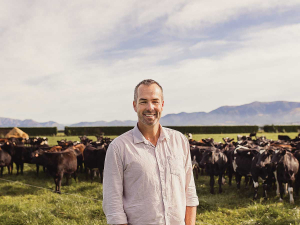
For Canterbury dairy farmer Cameron Henderson, supporting Meet the Need comes down to a simple question: how can the success of New Zealand farming benefit more than just those within the industry?
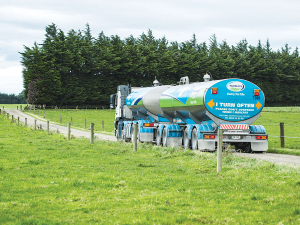
Fonterra board members are in line for a pay rise of around 3%.
Dairy processors are ready to further boost New Zealand’s export earnings but want the incoming government to match their ambition with good policy.
Massey University is best placed to solve the “problems” facing the dairy industry, says vice chancellor, Pierre Venter.
Synlait's longest serving employee – a man who joined the Canterbury-based milk processor even before it began processing milk – is now its newest executive.
A dairy industry leader believes eradicating the common and costly disease, Bovine Viral Diarrhoea (BVD) is within reach.

OPINION: The same mainstream media muppets that brought you Jacindamania in 2017 have been flat out pimping for the Opportunities…
OPINION: Your old mate reckons the atrocious way farmers in the UK are treated by their lords and masters in…




