
Owen Jennings to represent NZ at Global Livestock Forum
Farming leader and former MP Owen Jennings will represent New Zealand at the II Congreso Mundial de Ganadería Sostenible (II World Congress on Sustainable Livestock) in Spain next month.




 increase font size
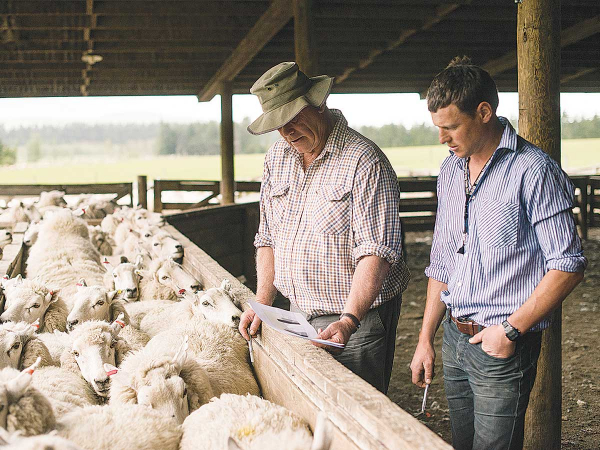 Farmers are already offsetting methane emissions.
OPINION: FARM (Facts About Ruminant Methane) is a group of farmers and scientists who question the need for drastic cuts in ruminant methane. Owen Jennings prosecutes FARM’s argument in the second of a two part opinion piece…
The other reason proponents, such as the Climate Change Commission, argue that we have to take actions is that methane is NZ’s big problem – because our livestock numbers are high relative to other GHG-producing activities – so we need to pull our weight and “do something”.
Answer: We are already doing something.
Our farmers are way ahead of the play. They are already offsetting all the methane they produce by sequestering huge amounts of CO₂. Their grass, soil and other farm vegetation absorbs as much GHG as their cows and sheep produce. All vegetation takes in CO₂ for photosynthesis.
This balanced situation using the age-old natural carbon cycle separates farming from other GHG emitters who have no natural offset. That is why farming should never be in the ETS or face any restrictions.
But wait there is more.
Of the one degree Celsius of warming we have recorded over the last 150 years, methane is allegedly responsible for a mere 10% -20% of this increase. Some 40%, at least, of methane emissions are natural. So, the effect of 10% reduction proposed by the Climate Change Commission makes no sense at all. It is pitiful.
Hang about – it gets even worse still. And it is going to get all complicated and ‘sciencey’.
GHGs operate in the electromagnetic spectrum. Figure 1 (shows the radiation transmitted by the atmosphere as UV, visible light and Infrared radiation (see the yellow band in the figure). The left-hand side of the figure (left of the red dotted line) shows the region of incoming solar radiation (0.2 to 3 micrometres wavelength span). The right-hand side denotes the re-radiation from earth as long-wavelength infrared energy covering the 3 to 70 micrometre span.
Each greenhouse gas is analysed separately in the lower part of the graph. The width and height of each absorption peak for each gas is clearly shown. The height of the peak denotes the maximum amount of radiant energy that each gas can possibly absorb over that range of wavelengths. The width of each absorption band shows the precise wavelengths to which that the particular greenhouse gas responds.
It you examine each gas, you will see that methane, nitrous oxide, and ozone, only have a few narrow absorption bands with none absorbing 100% of any wavelength. Even CO₂ has only four peaks where absorption is over 50% and these occur in narrow bands, meaning CO₂ absorbs little energy.
Water vapour, in stark contrast, absorbs over a far wider range of wavelengths with three broad peaks of maximum 100% absorption and multiple small peaks. Above about 18 micrometres water vapour absorbs 100% of outgoing infrared energy.
The published evidence shows that by far the dominant GHG absorbing solar radiation is water vapour. The absorption potential of solar radiation by the other GHGs is minuscule or absent.
From a farmer’s point of view, methane and nitrous oxide can clearly be ignored as having no appreciable effect on warming.
At a total only 0.012% of all the GHGs, or 0.00018% of the total atmosphere methane (and nitrous oxide) is physically incapable of impacting temperature.
And we are going to beat our chests over a 0.13% reduction per year of something already unbelievably trivial and inconsequential.
Time for a brain check, surely!
Even decimating our entire cow herd and all our sheep will not make any impact on temperature at all – so infinitesimal it could never be measured by the most effective measuring tool.
Meanwhile, the Climate Change Commission and the Government put their collective heads in the sand over Article 2 of the Paris Accord. Pretending we can cut the national herd by 15% plus other constraints, and not have a disastrous reduction in production and exports simply shows alarming ignorance.
One can only further conclude that something else is going on that isn’t science – virtue signalling by NZ leaders and dubious politics at international level.
Farming leader and former MP Owen Jennings will represent New Zealand at the II Congreso Mundial de Ganadería Sostenible (II World Congress on Sustainable Livestock) in Spain next month.

OPINION: Ruminant methane mitigation tools were a bit of a joke when first proposed; surely no one would be foolish enough to interfere with nature at its best. Any such propaganda from our sector on mitigation went straight into file 13.
OPINION: Not long after I started farming, I needed some bridge stringers to cross a small, on-farm stream.
OPINION: Few people have any idea of the huge contribution Jock Allison made to agriculture and to science.
Former ACT MP and Federated Farmers president Owen Jennings believes he's come across a new fertilising method in Australia that yields "outstanding results".


Waikato milk processor Tatua has again declared a record milk payout to farmer shareholders, leaving other processors in the dust.
A Labour-led Government won’t be bringing back the controversial freshwater rules of 2020.
National’s much-touted free trade deal with India featured in the Rural Issues Debate at Mystery Creek, Hamilton on Wednesday night.
New Zealand's 2026-27 freshwater fishing season has opened, with anglers encouraged to head to rivers and lakes over the coming days as conditions look favourable across much of the country.
Central Otago District Council (CODC) has voted against a plan to spread treated sewage sludge from Cromwell and Alexandra on farmland near Lauder, a decision Federated Farmers says reflects strong opposition from rural residents.
Pāmu has released its FY26 Integrated Annual Report, reporting a Net Operating Profit of $113 million, more than double the $49 million recorded in FY25.





OPINION: The same mainstream media muppets that brought you Jacindamania in 2017 have been flat out pimping for the Opportunities…
OPINION: Your old mate reckons the atrocious way farmers in the UK are treated by their lords and masters in…




