Too Lenient
OPINION: Reckless action by Greenpeace in 2024 forced Fonterra to shut down a drying plant for four hours, costing the co-op about $300,000.




 increase font size
 There are no easy answers to agriculture’s emissions profile.
OPINION: The ink was barely dry on the Government’s newly released emissions reductions plan before the whining began.
“Agriculture – New Zealand’s largest emitting sector – has got off scot-free, again!” the whiners cried. “And it is getting $339m for a new Centre for Climate Action on Agricultural Emissions, despite the sector not paying any money into the Emissions Trade Scheme.”
On the surface, that may be true. However, you only need to dig a little deeper to see there are no easy answers to agriculture’s emissions profile.
New Zealand is unique in that almost half of the country’s greenhouse gases come from the agricultural sector. However, as has been shown in the wake of Covid and the demise of NZ’s once bustling tourism sector, it’s our dairy, meat, horticulture and other primary produce that this country now relies on for income.
If the brains trust at Greenpeace and the like had their way, we’d just cull half the nation’s dairy herd and stop the use of nitrogen fertiliser. Easy! NZ’s climate ‘crisis’ would be resolved.
Not so fast. Just how would the country earn the necessary income to pay for things like schools, hospitals, subsidies for EVs, cycle lanes and trains etc, etc? Ask Sri Lanka how its recent move to organic farming worked out!
Not even the current government is silly enough to want to hamstring the country’s main source of export income without any solutions.
As a recent report by the Pastoral Greenhouse Gas Research Consortium pointed out, there are few, if any, silver bullets coming in the near future to deal with nitrous oxide and methane on NZ farms and the only way farmers can currently realistically reduce their emissions is to shrink their businesses.
As DairyNZ’s Tim Mackle says reducing agricultural greenhouse gas emissions “is a tough nut to crack”.
Therefore, the $339 million to establish a Centre for Climate Action on Agricultural Emissions should be seen as an investment for all of NZ, not a freebie for farmers.
By the way, when the finalised He Waka Eke Noa proposal is announced shortly, farmers will be paying for their emissions – so there’s no free lunch.
OPINION: Reckless action by Greenpeace in 2024 forced Fonterra to shut down a drying plant for four hours, costing the co-op about $300,000.

A day after selling its consumer businesses, Fonterra has settled a civil claim, filed by Greenpeace, out of court.
OPINION: Governments all over the world are dealing with the fuel crisis.
OPINION: Dark suited spin doctors exist to, well, spin, and the nice cuddly progressive types at Greenpeace Aotearoa practice this dark art with the same cynicism as your average corporate giant.
OPINION: In recent weeks beaches in Auckland, Wellington and Christchurch have been unsafe to swim in because of recent heavy rain triggering wastewater overflows throughout the region.

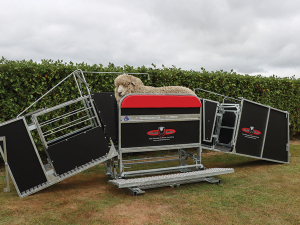
Oamaru-based livestock handling specialist Te Pari has bought Combi Clamp, the New Zealand manufacturer of Combi Clamp manual sheep handlers.

Agriculture Minister Todd McClay has admitted that a scheme bringing workers from Pacific nations to work on orchards has become too hard to navigate but says changes are coming.
A new app designed in New Zealand aims to help sheep, beef and deer farmers capture, analyse and use body condition score data more effectively.
Canterbury farmer Andy Macfarlane has been appointed to the board of AgriZeroNZ, the public-private partnership designed to accelerate the development and deployment of emissions reduction tools for New Zealand farmers.
For over 50 years Mel Ewers has been supporting the apple sector navigate through compliance and quality assurance issues.
The apple sector is enjoying a bumper harvest season.



A fair question has been raised about how member-funded organisations should conduct themselves when taking a public position on any…
OPINION: It really is getting harder to lampoon government bureaucrats when they do such a good job of it themselves.…