
Pāmu FY26 Report: Profit More Than Doubles to $113m
Pāmu has released its FY26 Integrated Annual Report, reporting a Net Operating Profit of $113 million, more than double the $49 million recorded in FY25.




 increase font size

THE TIDE appears to be running in on the numbers of students choosing studies that may lead to agri sector careers. We may be witnessing the end of schools careers advisors nudging only their less able students towards the industry.
As the head of Massey University’s Institute of Agriculture and Environment, Professor Peter Kemp, says, if you are bright enough perhaps a career in agribusiness is for you. Kemp discerns a change in attitude about channelling bright young people towards a career in the wider primary sector.
The industry’s key message, he says, must be that doing agriculture doesn’t mean just farming: there’s also banking, marketing, advisory, engineering and food, to name a few.
Kemp says for six years, student numbers in agriculture degree courses have been at their highest in 30 years. Young people are starting to recognise good job prospects in the sector and to see it as a place for talented people.
These courses at Massey have changed to keep pace with the changing demands of the primary sector, Kemp says. Degrees today have more science and new science. “Human resource management is also becoming important. Years ago in the classic ag degree you would have learned dairying, pasture, soils and farm management. No-one taught human resource management, or foreign exchange, or understanding environmental issues… but they’re now a part of the overall degree.”
Meanwhile, Lincoln University, also looking at the future, has established a department of informatics and enabling technologies. Department head Dr Stuart Charters says too many IT students are overlooking the technological needs and opportunities of the primary sector.
“While I don’t dismiss the value of IT in fields such as gaming or design, I worry about the possibility of an unfavourable distribution of students choosing [studies] in these areas at the expense of advancing IT in the primary sector.”
Charters sees this as an exciting time for primary industry IT and he emphasises the agri sector is bigger than just farming.
“Although there is much scope for technological advances in farming, it’s also important to realise that the primary sector is much broader than this. It also involves areas such as supply chain management, environmental management, GIS and even accounting.”
With the huge growth potential of the primary sector, and with this a high demand for skilled and talented people, the industry would do well to intone a new mantra: ‘Only the best and brightest’.
Pāmu has released its FY26 Integrated Annual Report, reporting a Net Operating Profit of $113 million, more than double the $49 million recorded in FY25.

Meat Industry Association data, released alongside the Red Meat Sector conference in Wellington, shows export value climbing across the US, China, UK and Canada.
Applications are set to open for the 2027 Zanda McDonald Award, a trans-Tasman award recognised for identifying and fast-tracking talented young leaders in agriculture and agribusiness.
Synlait has swung to second-half profit as operations stabilise, but the dairy processor still posted a $75.4m annual loss.
LIC shareholders have elected a new North Island representative to the co-operative's Board, along with five representatives to its Shareholder Reference Group (SRG), following the company's Annual Meeting held in Invercargill.


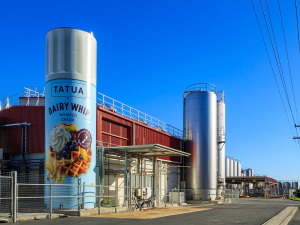
Waikato milk processor Tatua has again declared a record milk payout to farmer shareholders, leaving other processors in the dust.

A Labour-led Government won’t be bringing back the controversial freshwater rules of 2020.
National’s much-touted free trade deal with India featured in the Rural Issues Debate at Mystery Creek, Hamilton on Wednesday night.
New Zealand's 2026-27 freshwater fishing season has opened, with anglers encouraged to head to rivers and lakes over the coming days as conditions look favourable across much of the country.
Central Otago District Council (CODC) has voted against a plan to spread treated sewage sludge from Cromwell and Alexandra on farmland near Lauder, a decision Federated Farmers says reflects strong opposition from rural residents.
Pāmu has released its FY26 Integrated Annual Report, reporting a Net Operating Profit of $113 million, more than double the $49 million recorded in FY25.





OPINION: The same mainstream media muppets that brought you Jacindamania in 2017 have been flat out pimping for the Opportunities…
OPINION: Your old mate reckons the atrocious way farmers in the UK are treated by their lords and masters in…




