Election 2026: How Parties Would Lift the Arable Sector
As part of its Election 2026 coverage, Rural News asked political parties how they would help pull the arable sector out of the doldrums. Here's what they said:




 increase font size
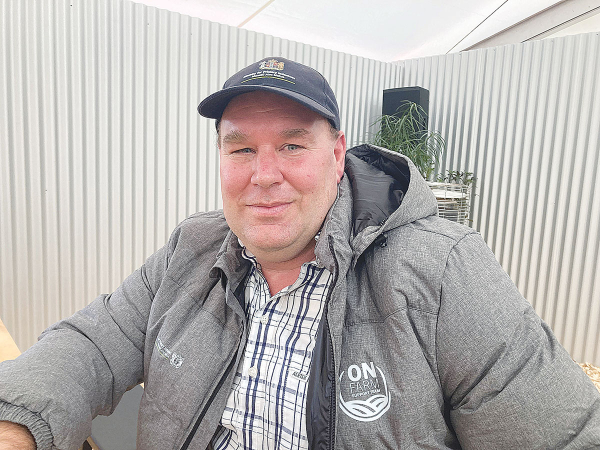 Andrew Hoggard
OPINION: Over the last two weeks we have seen a Bill pass through the house that removes the ETS backstop from agriculture emissions, and once again we heard some strange logic being presented.
It was amusing to hear several opposition MPs claim that it would have been okay to leave agriculture in the ETS as we were getting a 95% free allocation, so what’s the harm. Obviously, our issues with literacy in education go back further than just a few years, as it was obvious very few of them had managed to read up to page 60 of the report the previous government did on their final position on He Waka Eke Noa (HWEN). Because the tables on that page clearly show not only the huge impact that HWEN would have had on profitability and production, but that the ETS backstop was even worse.
The one that frustrated me the most, and has done for years, is this misguided belief that we need to put a price on agricultural emissions because the market supposedly wants it, and if we do this then all these customers are going to fall over themselves wanting to pay us more.
First point, the market from what I have seen wants to be able to claim that the carbon intensity of their products is lower. If you look at the commitments by several big players, they talk about reducing the carbon footprint/ intensity of their products.
HWEN and the ETS are not about intensity or efficiency, they were just about absolute reductions. This basically translated to less food being produced. If you look at where Fonterra’s focus is on, for example, it’s about the carbon intensity – how much emissions per kg of milk solids. In fact, the focus on absolute reductions could well have made farmers choose options that would have gone in the opposite direction for improving carbon efficiency.
Next point would be: If you legislate for something, you have completely removed any desire from the market to pay more. Why would a customer pay any more for a product just because your costs have gone up – because of government legislation?
If the market truly wants something, then the law of supply and demand applies. If we want our farmers to get premiums for doing various things, then we need to have that tension existing. At the moment, Nestlé might well say to one of our processors, “We want you to lower the carbon footprint by 20%”. That processor could respond to Nestlé and say, “Fine, but if we do that, then we need you to pay more coin to keep the farmers happy; if we don’t, they will go to a competitor who is paying the same, but without the need for reducing emissions”. It really is that simple.
Now if all those customers like Nestlé are saying that to all the producers, then okay, no extra coin – the market has spoken. But those tensions and hard conversations need to be had, otherwise farmers won’t get the best deal.
If you ever see a processor say government needs to legislate for something, that’s a sure sign there is zero market premium to be had. Sometimes it might be justified to remove the risk of all producers ending up receiving less, but let’s not kid ourselves there is anything more to be extracted from the market.
If a customer truly wants something, then they will be willing to pay more for it and incentivise the production of more of what they want. I learnt these basic concepts of the law of supply and demand in 3rd form Economics.
Any government that wants to consider pricing ag emissions needs to firstly make sure they are using the right science and thus applying the right targets in the first place. But most importantly, what is the problem we are trying to solve by taxing the most carbon efficient farmers in the world? Because if you argue the problem is reducing greenhouse gas emissions, then incentivising food production to move offshore at a higher emission rate doesn’t solve that problem.
Andrew Hoggard is Associate Minister of Agriculture
As part of its Election 2026 coverage, Rural News asked political parties how they would help pull the arable sector out of the doldrums. Here's what they said:
OPINION: Rivers never sit still. They start as snowmelt and rain in the high country, pick up a creek here and a stream there, and carry all of it down to where it's needed.
National’s much-touted free trade deal with India featured in the Rural Issues Debate at Mystery Creek, Hamilton on Wednesday night.
OPINION: Well, the silly season is upon us and all us politicians are running around shaking babies and kissing hands, or maybe the other way around.
Environment Minister Nicola Grigg has announced details of a new rural plastics recycling scheme.



Federated Farmers has welcomed new rural policies released by ACT, saying they align closely with its own election priorities.

Rural Contractors NZ says proposed changes to land transport rules for agricultural vehicles are a welcome response by the Government to out of date regulations which have seen members hit with huge fines.
Alliance is calling for final applications for its 2027 Graduate Programme, with applications closing on Sunday 25 October.
Decades piloting planes has ensured vet and farmer David Hayes is focused on safety. So, after a serious accident while welding on farm, he is sharing his experience so others can learn from it.
Canterbury milk processor, Synlait Milk has confirmed Leon Fung as its chief executive officer.
OPINION: Making it easier to collect rainwater and use it to grow crops and livestock is a no brainer.





OPINION: The same mainstream media muppets that brought you Jacindamania in 2017 have been flat out pimping for the Opportunities…
OPINION: Your old mate reckons the atrocious way farmers in the UK are treated by their lords and masters in…




