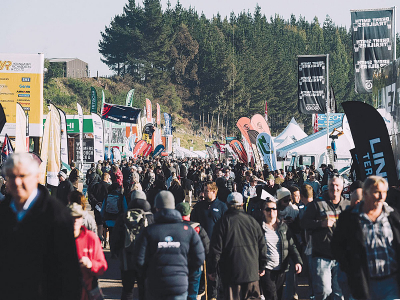
With another National Fieldays done and dusted for the year it is an opportune time to reflect on the current state of New Zealand’s primary sector.
Undoubtedly, the Fieldays spin doctors will soon be breathlessly trotting out all sorts of fanciful facts and figures claiming this year’s event was the biggest, brightest and most money spinning ever.
However, back in the real world, we need to take a more realistic and truthful look at the state of the farming sector.
At first glance, things do look pretty rosy.
According to the latest SOPI report from MPI, exports of NZ’s primary produce have increased by $7.5 billion over the last two years and now stand at $45.7b for the year ended June 2019.
The report shows all primary sectors performing well except for the perennial straggler strong wool. Dairy revenue is up 5.7% to $17.6b, meat and wool earned over $10b for the first time (up 6.4%) and forestry earned $6.8b. However, horticulture is the real star, growing faster in export dollars than all other sectors. It will hit $6.1b – an increase of 13.7% on the previous year.
Recent reports from the various banks – ANZ, Rabobank and BNZ to name a few – also predict positive outlooks for commodity prices. And KPMG’s annual Agenda report also predicts that NZ’s agri food sector is well positioned to take advantage of international opportunities arising.
However, despite the plethora of ‘good news’ reports, all forecasters convey a strong thread of nervousness, unease and concern from the sector. This is mirrored by feedback on the ground from Fieldays and around the country.
For all the Government’s talk about wanting to support and encourage the sector, it is failing to match all this talk with any actual walk.
The Zero Carbon Bill and its nonsensical methane reductions, uncertainty about what the proposed emissions trading scheme will mean for agriculture, the looming National Water Policy Statement, pro afforestation policies at the expense of farming and regular biosecurity incursions are all things that will not and do not inspire or build confidence in rural NZ.
More policy certainty and a willingness by Government not to place too many impediments in the way will help temper primary sector unease and allow it and the country as a whole to profit.