
Federated Farmers Praises Labour's Emissions Tax Backdown
For the first time in a quarter of a century, Federated Farmers has something positive to say about the Labour Party’s climate change policy leading into a general election.




 increase font size
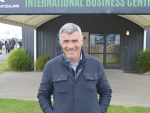
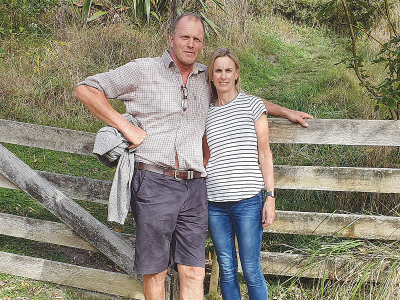 John and Jenny Jackson.
OPINION: New Zealand's Action on Agricultural emissions places us all in a very uncomfortable situation.
I'm no earth or space scientist, nor do I hold a particular view on who or what is responsible for global warming.
Given that most statistics indicate a warming change is happening, we should consider this a given.
So whether global warming is indeed anthropogenic or just a naturally occurring phenomenon, our approach to stabilising the environment in which we live should be the same.
Ask the simple question, what methodology should be taken in the best interests of global success? Global success in this instance is an attempt to limit the increase in global average temperatures to 1.5 degrees C above pre-industrial levels.
New Zealand has made an agreement which places us all in a very uncomfortable situation. We have agreed to reduce our greenhouse gas emissions (GHGs) and more specifically our Government has targeted agricultural production and its associated industries directly as the main contributor of NZ’s GHGs.
There is no argument, even from the Ministry for the Environment, “that NZ is amongst the most efficient producers and providers of agricultural products to the world’s tables per kilogram of product from an emissions viewpoint”.
It is also no secret that most food production in the world is in countries either not signed up to the Paris Accord or whose food production is government subsidised in one form or another. The former don’t care or believe in anthropology, while the latter might be taxed on their emissions but this will be balanced by an equivalent government handout in the normal manner to ensure their economic survival.
Under the proposals detailed for NZ food producers under the Action on Agricultural emissions, NZ’s ICCC recommends a levy on both agricultural produce and fertiliser inputs which will directly incentivise NZ farmers to reduce output.
The impact this will have on our economy will be substantial. The basic substitution effect of economic modelling will ensure that our production shortfall is picked up by less efficient producers the world over. Assuming a status quo situation, the global output of GHGs in respect of agricultural product per kg will increase.
Given that current annual global population growth is estimated at 82 million and rising, more food will be required and a greater proportion of GHG-rich product delivered. So we can expect a warmer world under the NZICCC policy.
If you are a believer in anthropogenic global warming, following the proposed ideology from NZICCC for agricultural greenhouse gas emissions will in fact work against potential gains made in other sectors.
If you are a sceptic, relax it was never your fault.
• John Jackson is a sheep and beef farmer at Te Akau, Waikato.
For the first time in a quarter of a century, Federated Farmers has something positive to say about the Labour Party’s climate change policy leading into a general election.
Climate, nature and animal wellbeing make up Fonterra's refreshed sustainability roadmap released last week.
A five-year study has found that the cost of reducing emissions without technology may be significant and unsustainable for Northland dairy farmers.
OPINION: With the winter months officially here, I trust all is well at your place.
OPINION: The global crusade against fossil fuel is gaining momentum in some regions.


Federated Farmers has welcomed new rural policies released by ACT, saying they align closely with its own election priorities.

Rural Contractors NZ says proposed changes to land transport rules for agricultural vehicles are a welcome response by the Government to out of date regulations which have seen members hit with huge fines.
Alliance is calling for final applications for its 2027 Graduate Programme, with applications closing on Sunday 25 October.
Decades piloting planes has ensured vet and farmer David Hayes is focused on safety. So, after a serious accident while welding on farm, he is sharing his experience so others can learn from it.
Canterbury milk processor, Synlait Milk has confirmed Leon Fung as its chief executive officer.
OPINION: Making it easier to collect rainwater and use it to grow crops and livestock is a no brainer.


OPINION: The same mainstream media muppets that brought you Jacindamania in 2017 have been flat out pimping for the Opportunities…
OPINION: Your old mate reckons the atrocious way farmers in the UK are treated by their lords and masters in…




