
Where Is The Honesty Among Our Representatives?
OPINION: A founding principle of Groundswell NZ is that farmers, and people generally, should be provided with full and accurate information about regulations that directly affect them.




 increase font size
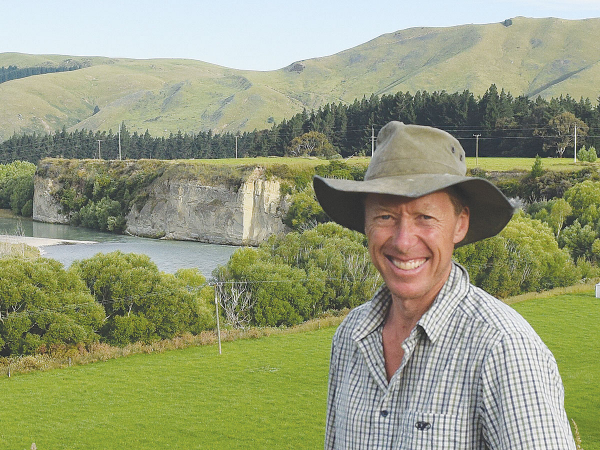 Jamie McFadden believes the Government's policy on FEPs is unprecedented state control over ordinary citizens.
Rural Advocacy Network chairman Jamie McFadden was a key speaker at the recent round of Groundswell NZ meetings. He spoke about the push for Farm Environment Plans (FEPs) and why these may not be the great cure-all many are claiming. Here is an edited version of the speech...
There are many different approaches to farm plans.
Taranaki Regional Council has, over the past 25 years, continued the catchment board approach to voluntary farm plans working in partnership with farmers. In Canterbury, ECan has taken a one-size-fits-all, tick box regulatory approach to farm plans. There are also a myriad of industry farm plan templates. An actions-focused, empowering farm plan is very different to the one the Government is mandating through the Resource Management Act (RMA).
Under New Zealand law we are supposed to be protected from unjustified state control. The Government is enforcing mandatory, certified, audited FEPs on every farmer - regardless of whether there is a freshwater issue in your catchment or whether your activity is having more than minor effect on the environment.
The only group of people being subject to mandatory environment plans are farmers. If the Government were being consistent then they would require everyone (including urban landowners) to do an Environment Plan as we all affect freshwater. But imagine the howls of protest against state control.
The Government claims that farmers need to do these FEPs to reassure our overseas markets. However, the RMA is related to environmental effects, not issues of market assurance. The Government is using this argument because it insufficient justification under the RMA.
Market assurance should be progressed through out industry and exporters, which is already happening with meat companies, Fonterra and industry groups.
The Government has attempted to sell their mandatory FEP policy with a $50 million sweetener and the promise (just prior to the election) of reducing compliance for every farmer. This misleading claim of reducing compliance ignores some facts.
A market assurance farm plan through your meat or milk company or industry group like Beef+Lamb NZ is confidential. None of your private property information is available to the public unless you require a consent or get caught in a compliance issue or for mapping the likes of Significant Natural Area's (SNA), but it is only information related to that specific issue.
However, when an FEP becomes compliance under the RMA it becomes public information. So, all that information on a dryland farm that was previously not accessible to the public now becomes public.
This represents a major breach of people's privacy rights.
It is for all these reasons we should reject the Government's legislation on RMA-mandated FEPs and call on all farmers to refuse to comply until such time the issues outlined above are resolved.
OPINION: A founding principle of Groundswell NZ is that farmers, and people generally, should be provided with full and accurate information about regulations that directly affect them.
Centre right parties are backing policy positions pushed by three farmer lobby groups ahead of the general election.
OPINION: Many sheep and beef farmers will be worse off under the new environment legislation than they were under the Resource Management Act (RMA), claims Beef+Lamb New Zealand (B+LNZ) in an email to levy payers.
A survey of 2000 farmers shows 94% of respondents believe that remaining in the Paris Agreement for climate change is not in the country's best interest.
OPINION: Defenders of New Zealand remaining bound to the Paris Agreement typically run the same argument. They do not explain the benefits of remaining bound to Paris, because there are none. At least none that are certain and enduring.


Pāmu has released its FY26 Integrated Annual Report, reporting a Net Operating Profit of $113 million, more than double the $49 million recorded in FY25.

Meat Industry Association data, released alongside the Red Meat Sector conference in Wellington, shows export value climbing across the US, China, UK and Canada.
Applications are set to open for the 2027 Zanda McDonald Award, a trans-Tasman award recognised for identifying and fast-tracking talented young leaders in agriculture and agribusiness.
The Royal New Zealand College of General Practitioners (the College) and Hauora Taiwhenua Rural Health Network are calling for investment in a proposed new training pathway for rural GPs, warning that many rural practices are struggling to recruit while a large share of the existing workforce nears retirement.
Federated Farmers has called on Central Otago District Council (CODC) to drop or vote down a plan to truck sludge from Alexandra and Cromwell to farmland near Lauder, warning it would compound an "outrageous" situation created by a separate council's decision weeks earlier.
Synlait has swung to second-half profit as operations stabilise, but the dairy processor still posted a $75.4m annual loss.




OPINION: The same mainstream media muppets that brought you Jacindamania in 2017 have been flat out pimping for the Opportunities…
OPINION: Your old mate reckons the atrocious way farmers in the UK are treated by their lords and masters in…




