
Federated Farmers Praises Labour's Emissions Tax Backdown
For the first time in a quarter of a century, Federated Farmers has something positive to say about the Labour Party’s climate change policy leading into a general election.




 increase font size
THE THREAT of climate change to global agriculture will be the focus of an international conference in the United States this month.
Scientists and policymakers will meet this week (March 20-22) at the University of California, to recommend science-based actions to slow the effects of climate change yet continue meeting the world’s need for food, livelihood and sustainability.
UC Davis Chancellor Linda Katehi says climate change, which brings severe weather events and more subtle but equally menacing temperature changes, presents unprecedented challenges to the global community.
Attendees will discuss the implications of cutting-edge agricultural, ecological and environmental research for improved design of policies and actions affecting agricultural management and development; identifying farm and food-system issues; determining research gaps; highlighting emerging research initiatives; and developing transformative policies and institutions.
The conference will conclude with a declaration on key research and policy messages expected to point toward science-based policies and actions for global agriculture that will mitigate climate change and encourage adaptation to maintain food security, livelihoods and biodiversity.
The conference comes as researchers in Germany develop a new model to allow agricultural landholders to determine the full range of causes of greenhouse gas emissions, including soil and climate conditions. They say agriculture causes 10-12% of greenhouse gases attributable to human activities.
The scientists spent three years investigating 40 organic and 40 conventional agricultural holdings in Germany’s four agricultural regions – focusing exclusively on crop and dairy farms. They recorded all climate gas streams during the production process, including methane, nitrous oxide and carbon dioxide. In the case of dairy farms, they also factored in the purchase of soybean meal from South America and all related greenhouse gas emissions.
Organic farming is more energy efficient and produces less land-specific CO2 emissions, but the researchers say this advantage is offset by the much lower yields of organic farming.
For the first time in a quarter of a century, Federated Farmers has something positive to say about the Labour Party’s climate change policy leading into a general election.
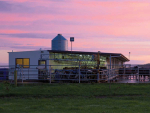
Climate, nature and animal wellbeing make up Fonterra's refreshed sustainability roadmap released last week.
A five-year study has found that the cost of reducing emissions without technology may be significant and unsustainable for Northland dairy farmers.
OPINION: With the winter months officially here, I trust all is well at your place.
OPINION: The global crusade against fossil fuel is gaining momentum in some regions.


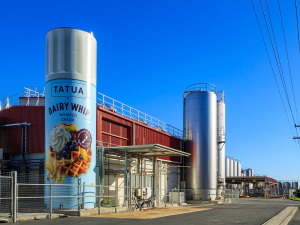
Waikato milk processor Tatua has again declared a record milk payout to farmer shareholders, leaving other processors in the dust.
A Labour-led Government won’t be bringing back the controversial freshwater rules of 2020.
National’s much-touted free trade deal with India featured in the Rural Issues Debate at Mystery Creek, Hamilton on Wednesday night.
New Zealand's 2026-27 freshwater fishing season has opened, with anglers encouraged to head to rivers and lakes over the coming days as conditions look favourable across much of the country.
Central Otago District Council (CODC) has voted against a plan to spread treated sewage sludge from Cromwell and Alexandra on farmland near Lauder, a decision Federated Farmers says reflects strong opposition from rural residents.
Pāmu has released its FY26 Integrated Annual Report, reporting a Net Operating Profit of $113 million, more than double the $49 million recorded in FY25.





OPINION: The same mainstream media muppets that brought you Jacindamania in 2017 have been flat out pimping for the Opportunities…
OPINION: Your old mate reckons the atrocious way farmers in the UK are treated by their lords and masters in…




